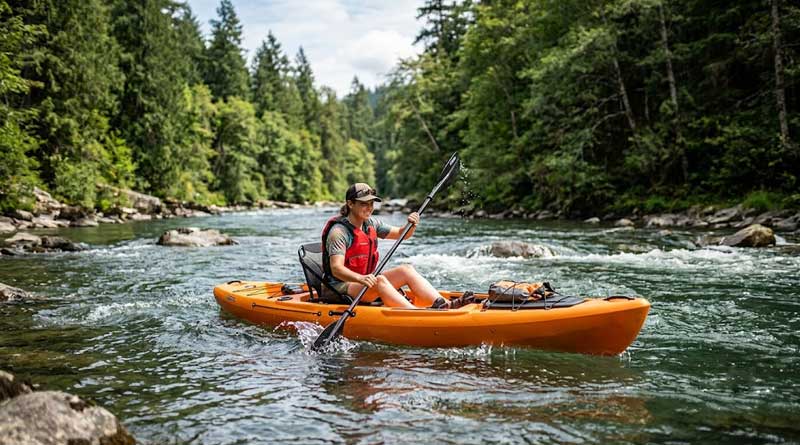
If you love paddling down rivers, a sit-on-top kayak is a smart choice. It is stable, easy to get on and off, and handles moving water really well. Unlike enclosed kayaks, it won’t fill up with water if you tip over—it just drains right out. Whether you are floating a gentle stream or tackling some lively rapids, the right boat makes all the difference. In this guide, we break down the best sit-on-top kayaks for rivers, so you can find one that fits your budget, skill, and adventure style.
1. Perception Rambler

- Boat Length: 13 feet 6 inches
- Boat Width: 34 inches
- Boat Weight: 78 lbs
- Maximum Capacity: 550 lbs
The Perception Rambler serves as a remarkably stable and versatile tandem option, proudly manufactured in the USA. Its design prioritizes accessibility, featuring a spacious, molded-in seating arrangement that makes entering and exiting the water a stress-free experience for paddlers of any skill level. Whether you are navigating calm lakes, ocean bays, light surf, or relaxed rivers, this kayak handles diverse environments with ease. You will appreciate the thoughtful inclusion of padded, removable seats and adjustable backrests, which maintain comfort and support throughout long afternoons on the water. It is a reliable platform designed to build confidence in beginners while delivering consistent, smooth performance across various types of waterways.
Beyond its basic functionality, this boat excels as a family-oriented vessel, featuring a unique center seat perfect for bringing a child or a dog along for the adventure. Ergonomics are prioritized through multiple molded-in footrest positions, allowing paddlers of different heights to find a comfortable posture quickly. While the 78-pound weight makes it heavier than solo alternatives, that mass translates into superior stability and a massive 550-pound weight capacity. You get generous storage space in the rear cargo area, ideal for coolers and dry bags. This kayak offers unmatched peace of mind for beginners who want a durable, multi-rider solution that sacrifices nothing in terms of safety or utility.
Pros:
- Highly versatile tandem design with an extra molded center seat for a child or pet.
- Exceptional 550 lb maximum weight capacity accommodates multiple riders and heavy gear.
- Multiple molded-in footrest positions ensure comfort for paddlers of all sizes.
Cons:
- At 78 lbs, it is relatively heavy and can be challenging for a single person to transport.
- The wider 34-inch beam makes it stable but reduces overall tracking speed.
2. Pelican Sentinel 100X

- Boat Length: 9 feet 6 inches
- Boat Weight: 44 lbs
- Seating System: Ergolounge cushioning
- Total Rod Holders: 4 built-in holders
For beginners craving an effortless on-water experience, the Pelican Sentinel 100X is a standout compact choice that balances ease of use with solid performance. Weighing only 44 pounds and measuring under ten feet, this lightweight craft is a dream to manage; you can easily load it onto a roof rack alone using the convenient molded-in handles. Once you are seated, comfort takes center stage thanks to the Ergolounge system. This setup incorporates extra-thick cushioning and a wide, high-padded backrest, specifically engineered to alleviate fatigue during extended sessions. It is the perfect vessel for those who want to spend more time paddling and less time struggling with heavy, cumbersome equipment.
Beyond comfort, this kayak is packed with clever storage features that make preparation simple for anglers and casual explorers. It utilizes the innovative ExoPak, a removable storage compartment that lets you organize all your gear at home before dropping it directly into the rear tank well at the shore. The setup includes two vertical rod holders within the pack, plus two additional flush-mount holders on the hull, providing ample space for fishing gear. While the shorter waterline means you might sacrifice some top-end cruising speed or straight-line tracking compared to larger boats, the sheer convenience and thoughtful design make it an exceptionally rewarding entry-level choice.
Pros:
- Extremely lightweight and compact hull makes loading and storage simple for solo paddlers.
- Ergolounge seating provides superior lower back support and extra-thick cushioning.
- Removable ExoPak compartment simplifies gear packing and organization before leaving home.
Cons:
- Shorter waterline length limits tracking straight and reduces maximum cruising speed.
- The weight capacity is lower compared to larger ten-foot or twelve-foot recreational kayaks.
3. Pelican Sentinel 80X

- Boat Length: 7 feet 9 inches
- Boat Weight: 34 lbs
- Maximum Capacity: 225 lbs
- Hull Material: RAM-X Polyethylene
The Pelican Sentinel 80X is designed for paddlers who prioritize extreme simplicity and absolute confidence. At just 34 pounds, it is incredibly easy to move from your vehicle to the water, making it a favorite for solo beginners. The secret to its accessibility is the twin-arched multi-chine hull, which provides superb initial stability. You can step in and out of this kayak with minimal wobble, while integrated foam flotation blocks and a flatter hull profile ensure you feel secure even on the calmest waters. It is a no-frills, highly approachable craft that removes the anxiety often associated with learning to kayak.
Durability meets portability through its construction with patented RAM-X high molecular weight polyethylene, a material that offers fantastic impact resistance while keeping the weight impressively low. This boat is built to withstand knocks against rocks or logs without flinching. Despite its tiny 7’9″ frame, it remains functional for short day trips, featuring a stern tank well with bungee tie-downs and a dedicated bottle holder for your gear. While it is certainly not built for speed or long-distance touring, and it has a 225-pound capacity limit, it is undeniably one of the most convenient and confidence-inspiring hard-shell kayaks available for recreational use.
Pros:
- Weighs just 34 lbs, making it one of the easiest hard-shell kayaks to transport.
- Twin-arched multi-chine hull provides excellent rock-solid stability for nervous beginners.
- Patented RAM-X material resists heavy impacts and easily bounces off rocks or logs.
Cons:
- The short 7’9″ frame is not suitable for taller individuals or paddlers over 225 lbs.
- Suboptimal tracking and speed mean it requires more effort to paddle long distances.
4. Pelican Catch Mode 110

- Boat Length: 10 feet 8 inches
- Boat Weight: 63 lbs
- Maximum Capacity: 375 lbs
- Seating System: ERGOBOOST Adjustable Chair
For beginner anglers looking for a dedicated fishing platform without the complexity of tournament-grade vessels, the Pelican Catch Mode 110 is an ideal solution. Its specialized tunnel hull configuration is the star feature here, providing such high levels of stability that you can confidently stand up on the wide deck to cast or reel in your catch. Safety is built into the core, as the manufacturing process integrates extra flotation into the hull, meeting strict industry standards. While it weighs 63 pounds, it is still manageable for solo loading, making it a practical choice for those who frequently head out on fishing trips alone.
The standout comfort feature is the ERGOBOOST seating system, which arguably sets the standard for fishing kayak chairs. You can fold the seat to elevate your position by six inches, significantly improving your sightline over the water while keeping you comfortable with an EVA pad. Storage and organization are well-handled, with three flush-mount rod holders keeping your fishing setup ready at a moment’s notice. It is important to note that the design emphasizes stability over speed; its wide, tunnel-hull shape is built for standing and fishing, which makes it less efficient for long-distance paddling, but perfect for its intended purpose.
Pros:
- Tunnel hull offers a rock-solid deck platform that allows safe stand-up casting and reeling.
- ERGOBOOST chair elevates by six inches to provide a superior vantage point for fishing.
- High weight capacity of 375 lbs accommodates heavier paddlers and substantial fishing gear.
Cons:
- The wide, stable hull is built for fishing stability rather than tracking speed.
- At 63 lbs, it is noticeability heavier to lift compared to standard recreational models.
5. Lifetime Kokanee Sit-On-Top Kayak
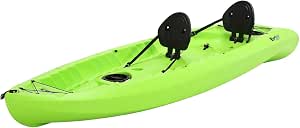
- Hull Material: High-Density Polyethylene (HDPE)
- UV Protection: Integrated UV inhibitors
- Paddling Options: Solo or Tandem configuration
- Storage Features: One under-deck storage hatch
The Lifetime Kokanee Sit-On-Top Kayak offers incredible value for families seeking flexibility, as its hybrid design allows you to transition between solo and tandem paddling seamlessly. Built from blow-molded high-density polyethylene and enhanced with UV inhibitors, this kayak is exceptionally rugged and designed to withstand harsh sun exposure without cracking or fading. The hull itself is engineered for maximum stability, offering a reliable, steady ride that lets newcomers focus entirely on learning proper technique on quiet lakes or slow rivers. It is an excellent, worry-free option for those who want a boat that grows with their experience levels and accommodates changing group sizes.
Customization is a major benefit for riders of this kayak, utilizing two adjustable quick-release seat backs that can be positioned for solo operation or dual-rider setups. The deck features multiple molded-in footrests, catering to paddlers of virtually any height and making it a true “one-size-fits-all” family boat. Storage is equally practical, featuring a convenient under-deck hatch that provides a secure spot for snacks, personal items, or extra clothing, alongside open cargo areas. While the stock seat backs may not offer the plush ergonomics of more expensive fishing chairs and solo tracking can feel a bit loose, its versatility remains unmatched.
Pros:
- Highly versatile design allows for easy reconfiguration between solo and tandem riding.
- UV-protected HDPE construction provides great impact resistance and weather durability.
- Adjustable quick-release seat backs and multiple footrests comfortably support various riders.
Cons:
- The basic seat backs offer less padding compared to premium ergonomic lounge chairs.
- Tracking can feel slightly loose when paddling solo due to the tandem-optimized hull shape.
How to Choose the Right Sit-On-Top Kayak for River Paddling
Selecting the perfect sit-on-top (SOT) kayak for river use is a balance between understanding the environment you plan to explore and the specific performance characteristics required to handle moving water. Unlike flatwater touring, rivers introduce dynamic elements such as current, obstacles, varying depths, and changing water speeds. A sit-on-top kayak is an excellent choice for these environments because they are generally stable, easy to board, and—most importantly—self-bailing. If you capsize or take on water, the cockpit drains automatically, providing an extra layer of security in technical settings.
Understanding River Classification
Before selecting a kayak, you must define the type of river you will frequent. Rivers are generally categorized by the International Scale of River Difficulty:
- Class I: Fast-moving water with riffles and small waves. Few obstructions.
- Class II: Straightforward rapids with wide channels and moderate technical maneuvering.
- Class III: Rapids with moderate, irregular waves that may be difficult to avoid. Requires experience.
Key Factors to Consider
When shopping for a river-ready SOT kayak, focus on hull design and material integrity rather than just features like cup holders or rod mounts.
Hull Design and Rocker
The “rocker” is the curvature of the kayak from bow to stern. A high-rocker kayak looks like a banana, which allows the boat to rise over waves and turn quickly in tight currents. For river use, look for a moderate-to-high rocker. A flat-bottomed hull offers the best primary stability, allowing you to remain upright while navigating eddies, whereas a V-shaped hull tracks better in open water but can feel unstable in shallow, rocky river sections.
Kayak Length
Length influences speed and maneuverability. For rivers, shorter is almost always better.
| Length Category | Best For | Characteristics |
|---|---|---|
| Under 9 feet | Technical creeks and Class II+ rivers | Highly maneuverable, easier to transport |
| 9 to 11 feet | General river cruising | Balance of tracking and agility |
| Over 12 feet | Long, slow-moving rivers/expeditions | Fast, but difficult to turn in tight spots |
Material Durability
River beds are often unforgiving. You will encounter submerged logs, shallow rock shelves, and gravel bars. Your kayak material must be able to withstand repeated abrasion and high-impact strikes.
- Rotomolded Polyethylene: The gold standard for river kayaks. It is extremely durable, affordable, and flexible enough to bounce off rocks without cracking.
- Thermoformed Plastic: Lighter than rotomolded options but more susceptible to cracking upon high-impact strikes against jagged rocks.
- Inflatable SOTs: Modern high-pressure inflatable kayaks have become very popular for rivers. They are incredibly buoyant and can effectively bounce off obstacles that would damage a hard-shell boat.
Safety Features and Self-Rescue
Safety should be your primary concern when choosing a vessel for moving water. Even if a boat looks good, it is useless if it lacks proper safety outfitting.
Essential Features
- Scupper Plugs: Ensure your kayak has high-quality scupper plugs that are easy to remove and insert. They allow you to drain water but can also be closed to keep your seat dry in calm sections.
- Grab Handles: Look for solid, ergonomic handles at the bow and stern. These are vital for portaging (carrying the boat around dangerous rapids) and for holding onto the boat during a rescue.
- Deck Rigging: Bungee cords and perimeter lines are necessary for securing gear, but ensure they are not so loose that they could entangle a swimmer.
- Foot Braces: Adjustable, solid foot braces provide the leverage needed for “eddy turns” and maneuvering through currents.
The Importance of Weight and Portability
You will inevitably encounter sections of the river that are too shallow to paddle or blocked by fallen trees. In these instances, you will need to portage your kayak. If you choose a boat that is too heavy for you to move alone, you will be limited to put-in and take-out points that are easily accessible by vehicle. Aim for a kayak that balances durability with a manageable weight—typically between 45 and 65 pounds for a standard solo SOT.
Conclusion
Choosing a sit-on-top kayak for river use is about finding a boat that matches your skill level and the water conditions you intend to tackle. Prioritize a durable hull material like polyethylene, choose a length that allows for nimble maneuvering, and ensure your boat has essential safety features like grab handles and sturdy foot braces. By carefully evaluating these factors, you ensure that your time on the river is defined by exploration and fun rather than equipment failure or frustration. Always remember: no matter how capable your kayak is, your safety depends primarily on your gear—specifically a well-fitted PFD—and your understanding of river currents and hazards.