Inflatable kayaks have revolutionized solo water adventures, offering outdoor enthusiasts an unmatched blend of portability, durability, and convenience. No longer do you need a massive roof rack or a spacious garage to enjoy a day on the lake, ocean, or river. Modern engineering ensures these single-person vessels inflate in minutes while providing the rigidity and puncture resistance needed to handle diverse aquatic environments safely. Whether you are an avid angler or a casual paddler, finding the right one-person inflatable kayak will elevate your time on the water.
1. INTEX Challenger Inflatable Kayak
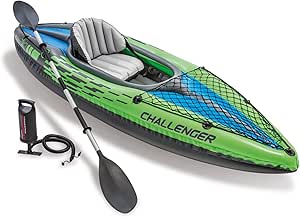
- Material: SuperStrong enhanced molecular formulation PVC
- Dimensions: 9 feet x 2.6 feet x 1.1 feet
- Weight Capacity: 220 pounds
- Tracking System: Single removable underside skeg
This budget-friendly inflatable kayak is engineered for flatwater enthusiasts who crave spontaneous weekend getaways. The streamlined low-profile hull glides smoothly through calm lakes and mild rivers, making it incredibly easy to paddle even for complete beginners.
Inside the cockpit, you will find a surprisingly spacious layout that leaves plenty of room for your legs and essential day gear. The adjustable, removable seat provides decent back support, while the heavy-duty PVC construction gives you peace of mind against accidental scrapes during your casual aquatic journeys.
- Pros: Highly affordable, easy to maneuver, quick inflation.
- Cons: Limited weight capacity, tracking suffers in high winds.
2. INTEX Excursion Pro K1

- Construction: 3-ply laminate with SuperStrong PVC formulation
- Dimensions: 10 feet x 3 feet x 1.6 feet
- Weight Capacity: 220 pounds
- Accessories: Two removable skegs and fishing rod holders
This model brings tracking performance and durability to a higher level for rugged adventures. The high-pressure inflation allows the vessel to achieve excellent rigidity, closely mimicking the stability and feel of a traditional hardshell kayak on moving water.
Anglers will particularly appreciate the integrated fishing rod holders and the versatile mounting bracket for cameras or mobile devices. Ample storage space in the bow and stern, secured by stainless steel D-rings, ensures your dry bags remain safely tucked away during long paddling excursions across large bays.
- Pros: Superb structural rigidity, great accessory mounts, deep and shallow water skegs.
- Cons: Relatively heavy for an inflatable, paddle quality is basic.
3. Nuwani Inflatable Fishing Kayak

- Weight: 15 pounds total weight
- Dimensions: 9 feet x 2.5 feet x 1.58 feet
- Weight Capacity: 220 pounds
- Complete Kit: Aluminum oars, hand pump, seat, and cargo net
This lightweight solo vessel excels at providing a hassle-free entry into recreational paddling and casual shoreline fishing. Weighing just fifteen pounds, it is exceptionally easy to transport from your vehicle trunk directly to any remote water edge without physical strain.
The inclusion of a front cargo storage net allows you to secure tackle boxes, dry packs, or small coolers within arm’s reach. A reinforced bottom construction handles minor impacts well, while the cozy cockpit seat supports your posture during extended hours exploring calm bays, inlets, and winding streams.
- Pros: Exceptionally lightweight, generous storage net, comprehensive accessory bundle.
- Cons: Material is thinner than premium models, not suited for rough rapids.
4. OCEANBROAD Inflatable Sit-in Kayak

- Floor Type: High-density rigid drop-stitch floor
- Dimensions: 10.5 feet x 2.95 feet x 0.79 feet
- Weight Capacity: 308 pounds
- Valve Type: Leak-free Halkey-Roberts valves
Featuring a professional drop-stitch floor, this kayak offers a remarkably flat and stiff surface that dramatically improves overall paddling efficiency. The enhanced rigidity allows for superior weight distribution, making it an ideal choice for larger paddlers or adventurers carrying significant amounts of heavy equipment.
Comfort is prioritized through an ergonomic padded EVA seat that delivers strong lumbar support, accompanied by adjustable footrests for an optimal sitting position. A built-in drain hole effectively evacuates any excess water splashing into the cockpit, keeping your ride remarkably dry and stable throughout your entire journey.
- Pros: Impressive weight capacity, incredibly rigid floor, premium comfort features.
- Cons: Takes longer to inflate completely, bulkier to pack away.
5. Advanced Elements Lagoon1

- Beam Width: Wide beam design for enhanced stability
- Weight: 23 pounds total weight
- Folded Size: 29 inches x 18 inches x 5 inches
- Storage: Integrated deck lacing for gear
This premium solo kayak blends an efficient tracking hull with the unmatched convenience of a highly portable inflatable craft. The wide beam profile creates a reassuringly stable footprint on the water, giving beginners immediate confidence while navigating light lake chops or slow-moving river currents.
The rugged multi-chamber design ensures you remain safely afloat even in the rare event of an outer layer puncture. Packed with thoughtful details like integrated deck lacing and an adjustable padded seat, this model delivers a smooth, predictable ride for relaxing day trips or long weekend explorations.
- Pros: Excellent tracking accuracy, very stable wide beam, compact folded dimensions.
- Cons: Higher price point, does not include a pump or paddle.
How to Choose a 1-Person Inflatable Kayak
Selecting the ideal single-person inflatable kayak requires looking beyond aesthetics to evaluate how a boat builds its core structure, manages weight, and interacts with the water. Because inflatable technology ranges from simple vinyl recreational hulls to advanced high-pressure drop-stitch designs, understanding these technical variations ensures your chosen vessel aligns perfectly with your paddling ambitions, local waterways, and body type.
Understanding Material Configurations and Durability
The baseline durability of an inflatable kayak depends entirely on its fabric and construction chemistry. Manufacturers balance weight, cost, and puncture resistance through various material layups.
Standard Polyvinyl Chloride
Standard PVC serves as the foundational material for budget-friendly recreational models. To enhance basic vinyl, quality models utilize proprietary formulations that boost molecular density, rendering the skin less susceptible to abrasions from underwater logs, rocks, and shoreline gravel. This material keeps the boat highly flexible, making it easy to fold down into exceptionally compact storage dimensions.
Heavy-Duty Laminates and Multi-Ply Formulations
Mid-tier and premium tracking kayaks utilize a layered defense strategy. A three-ply laminate typically sandwiches a tough polyester or nylon mesh core between two thick layers of specialized PVC. This configuration prevents structural stretching when inflated to higher pressures, dramatically increases puncture resistance against hooks or sharp branches, and shields the hull against long-term breakdown from intense sunlight exposure.
Evaluating Hull Architecture and Performance Types
The interior architecture of an inflatable boat determines how stiff it feels beneath you and how efficiently it converts your muscle power into forward motion across open water.
| Floor Type | Average Pressure | Primary Benefit | Best Used For |
|---|---|---|---|
| Standard I-Beam Floor | 1.0 to 2.0 PSI | Flexible, highly cushioned, cost-effective | Calm lakes and casual recreation |
| High-Pressure Drop-Stitch Floor | 6.0 to 10.0+ PSI | Rigid, completely flat surface, high efficiency | Long-distance paddling and choppy bays |
Standard I-Beam Construction
Traditional inflatable floors feature internal PVC ribs running longitudinally, creating a series of soft ridges. While comfortable to sit on for short periods, these floors sag slightly under a paddler’s concentrated weight, which causes a minor curvature in the hull that slightly increases water resistance and reduces tracking efficiency.
Drop-Stitch Technology
For high performance, advanced floors connect thousands of tiny, interlocking nylon threads between the top and bottom fabric layers. When pumped up, these threads pull tight simultaneously, allowing the chamber to handle pressures up to ten times higher than standard PVC. The result is a rock-hard, perfectly flat floor that mimics a hardshell kayak, allowing you to transfer force efficiently through each paddle stroke.
Matching Hull Dimensions to Your Body and Environment
The physical footprint of a solo kayak impacts both your comfort inside the cockpit and how the boat behaves when exposed to waves and windy weather conditions.
Length Considerations
Shorter kayaks measuring around nine feet excel at quick pivoting and tight maneuvers, making them highly responsive in narrow streams or twisting mangrove channels. Conversely, longer options scaling past ten feet track straighter over long distances because their prolonged lines slice through water with less lateral deviation, saving you significant energy during all-day touring trips.
Beam Width and Stability Profile
The beam represents the widest cross-section of the boat. A wider beam extending around thirty inches or more creates a remarkably stable platform that resists tipping, making it incredibly forgiving for beginners, photography enthusiasts, or anglers casting heavy fishing rigs. Narrower beams reduce drag for faster travel but demand better core balance from the person paddling.
Weight Capacity and Storage Dynamics
Overloading a solo vessel degrades its handling, lowers its speed, and compromises its safety margins on open water by reducing its clearance above the waterline.
- Calculate Total Working Load: Always add your personal body weight to the combined weight of your dry bags, fishing gear, paddles, safety vests, and hydration packs to ensure it fits within the specified limits.
- Account for Specialized Gear: Heavy gear collections or large tackle boxes require a hull rated for three hundred pounds or more to ensure the floor maintains its rigid profile without dipping.
- Analyze Storage Solutions: Look for integrated front cargo storage nets, bungees, or heavy-duty stainless steel D-rings to securely anchor your essential gear against unexpected flipping.
The Importance of Tracking Systems
Without solid underwater components, a lightweight solo inflatable boat will spin awkwardly or drift sideways with every alternating paddle stroke.
Removable Skegs and Fins
A skeg acts as an underwater rudder that stabilizes your heading. Deep fins are vital when navigating large, breezy lakes to prevent the wind from pushing your bow off course. Double-skeg configurations offer a distinct advantage, pairing a shallow tracking fin with a deep fin so you can adapt your setup based on shallow river beds or deep open water.
Valves and Inflation Management
Your user experience on the shoreline depends significantly on the efficiency of your kayak’s inflation valves.
Boston Valves
Common on recreational models, these two-way screw valves feature an internal cap that keeps air inside while you pump, venting rapidly only when the entire base is unscrewed.
Halkey-Roberts Valves
Found on high-pressure systems, these mechanical valves use a spring-loaded central pin. Pressing and twisting the pin secures it in an airtight seal, allowing high-velocity inflation while completely preventing accidental air loss when disconnecting heavy-duty pumps.
An inflatable solo kayak is an investment in freedom. By matching fabric durability, floor rigidity, and tracking mechanics to your typical destination, you ensure a safe, efficient, and thoroughly enjoyable journey every time you launch.