
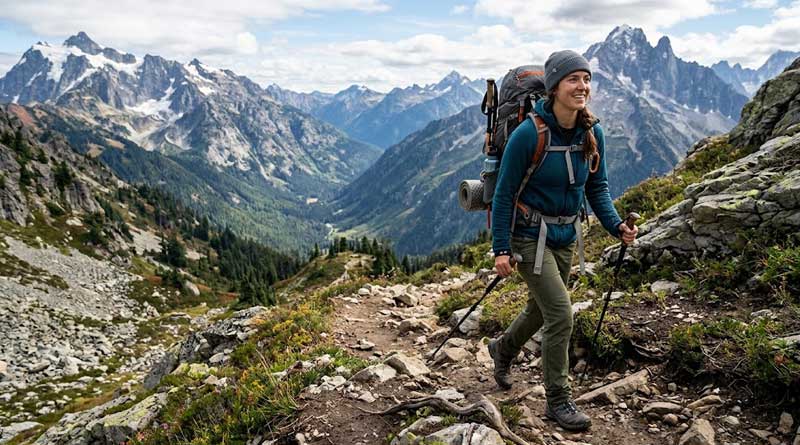
A fleece midlayer is the quiet workhorse of a backpacking kit. It never gets the glory of a puffy or a shell, yet it handles the unglamorous job of regulating your temperature from the first cold trailhead to the last windy ridge. We sorted through eight popular options, from featherweight hoodies to cozy knit sweaters, and broke down what each does well, where it falls short, and which type of hiker will truly appreciate it most out on the trail.
1. Patagonia R1 Air Full-Zip Hoody

- Fabric: 100% recycled polyester jacquard fleece with hollow-core yarns
- Fleece Weight: Light
- Hood: Yes
- Weight: 13 ounces
Think of the R1 Air as a fleece that behaves like a vent. Its hollow-core yarns hold onto body heat while letting moisture slip away, so a steep, sweaty climb doesn’t leave you clammy and chilled at the top. The attached hood handles wind on exposed saddles, and the recycled polyester keeps its environmental footprint modest.
The jacquard texture reads slimmer than old-school fleece, which means easy arm swings whether you’re hiking, running, or scrambling. It works on its own or tucked under a shell, then squishes down small and springs back when you pull it out of your pack. Expect less warmth than thicker pieces and a higher price than basic fleeces.
Pros:
- Extremely breathable for high-output activities
- Packs down small for travel
- Sustainable recycled fabric
Cons:
- Less warmth than heavier fleece options
- Pricier than basic fleece jackets
View Men’s at REI View Women’s at REI
2. Columbia Steens Mountain Full Zip 2.0
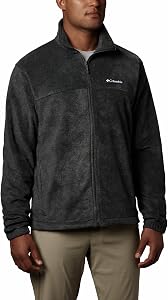
- Fit: Classic modern fit
- Pockets: Two zippered security pockets
- Collar: Collared neck with zippered closure
- Feel: Soft, lightweight fleece
Columbia’s Steens Mountain is the fleece you grab without thinking: soft, familiar, and easy on the wallet. The classic modern cut and collared full-zip neck seal out cold air on frosty mornings, making it a natural for campsite coffee, dog walks, and easy day hikes where nobody is counting grams.
Two zippered pockets keep your phone and keys from escaping mid-stride, a small touch that matters outdoors. It won’t match pricier jackets for breathability or technical polish, and it carries more weight for the warmth it provides. Still, for casual wearers who value comfort and savings over performance, it earns its spot in the closet.
Pros:
- Affordable price point
- Comfortable classic fit
- Secure zippered pockets
Cons:
- Not as technical or breathable as premium options
- Heavier for its warmth level
View Men’s at Amazon View Women’s Benton Springs at Amazon
3. REI Co-op Trailmade

- Fabric: 100% recycled polyester fleece
- Fleece Weight: Medium
- Back Length: 28 inches
- Weight: 12.7 ounces
REI’s Trailmade splits the difference between a comfy hangout layer and a legitimate trail piece. Its medium-weight recycled polyester delivers dependable warmth on cool hikes and chilly camp mornings, while the hip-length hem covers your lower back without binding when you step up or reach for a branch.
With no hood, it stays low-profile, which suits layering beneath a shell hood or under pack straps. It’s a tidy, sustainably made option for hikers who want honest warmth without boutique pricing. Just know it’s happier ambling than sprinting, so save it for moderate-effort days rather than hard, sweaty pushes up big climbs.
Pros:
- Great value for the price
- Versatile for hiking and casual wear
- Made from recycled materials
Cons:
- No hood for added warmth
- Not ideal for high-intensity activities
View Men’s at REI View Women’s at REI
4. REI Co-op Flash Hyperstretch

- Fabric: 54% recycled polyester/35% nylon/11% spandex
- Fleece Weight: Medium
- Hood: Yes
- Back Length: 27.75 inches
If you’ve ever felt a fleece fight you during a scramble, the Flash Hyperstretch is the cure. Its nylon-spandex blend flexes with every reach, step, and twist, which makes it a smart pick for thru-hikers and anyone moving over uneven terrain. The hood adds wind protection on exposed stretches of trail.
Because of that blended fabric, it runs a touch warmer than a typical medium fleece, a real plus in shoulder-season weather. The close, stretchy fit slides neatly under a shell without bunching or feeling tight over long days. The trade-off is a bit more weight and slightly less venting when you’re working hard.
Pros:
- Excellent stretch and mobility
- Warmer than average medium-weight fleece
- Hood adds versatility
Cons:
- Slightly heavier due to fabric blend
- Not the most breathable for high-output efforts
View Men’s at REI View Women’s at REI
5. Patagonia Better Sweater

- Fabric: Recycled polyester knit fleece
- Fleece Weight: Medium
- Warmth: Warmer
- Weight: 1 lb. 6.5 oz.
The Better Sweater wears two hats: a knit, sweater-like face outside and a cozy fleece lining inside. It looks equally natural on a city sidewalk and at a backcountry campsite, with understated styling that never shouts “technical gear.” Its warmer rating also helps it handle colder conditions than the lighter fleeces here.
The clean, hoodless silhouette layers easily beneath a shell or stands alone on crisp days. It’s heavy by backpacking standards, but that bulk converts directly into warmth and comfort. Choose it if you value coziness and all-around versatility over shaving ounces, and you’re not planning to carry it up an ultralight route.
Pros:
- Stylish enough for everyday wear
- Excellent warmth-to-comfort ratio
- Durable knit fleece construction
Cons:
- Heavier than most fleece options
- No hood included
View Men’s at REI View Women’s at REI
6. Patagonia R1

- Fabric: Polartec Power Grid recycled polyester/spandex grid fleece
- Fleece Weight: Medium
- Best Use: Fitness, Running, Multisport
- Weight: 12.1 ounces
The R1 was designed around one problem: staying comfortable while you generate a lot of heat. Its Polartec Power Grid fabric uses a waffled grid that traps warmth in the channels yet breathes through the gaps, and lighter jersey panels under the arms dump extra heat when the effort ramps up on runs, climbs, or ski tours.
It’s light, packs small, and slips into a pack easily for shoulder-season trips. With no hood, the profile stays slim enough to fit under a helmet or hard shell. This is a purpose-built layer for people who move fast and want performance over lounge-around styling. Standing still in the cold isn’t its strength.
Pros:
- Outstanding breathability during exertion
- Lightweight and packable
- Great for multisport use
Cons:
- No hood for extra warmth
- Less suited for low-activity, cold-standing use
View Men’s at REI View Women’s at REI
7. Arc’teryx Kyanite

- Fabric: Torrent fleece, 84% polyester/16% elastane
- Fleece Weight: Light
- Hood: Yes
- Weight: 10.6 ounces
The Kyanite is Arc’teryx doing what it does best: stripping a garment down to what matters and executing it cleanly. Torrent fleece pairs polyester with elastane for a soft, stretchy hand that follows your movement. At 10.6 ounces, it’s among the lightest hooded fleeces you can buy without giving up useful warmth.
On the move, it delivers measured warmth that keeps you comfortable without cooking you, and the hood blocks wind without adding bulk. The price is steep, as with most Arc’teryx gear, but the fit and construction justify it for dedicated hikers and ski tourers. Anyone heading into truly cold climates may want something warmer.
Pros:
- Very lightweight for a hooded fleece
- Soft, stretchy, comfortable fabric
- Excellent build quality
Cons:
- Higher price point
- Light warmth may not suit very cold climates
View Men’s at REI View Women’s at REI
8. Cotopaxi Otero

- Fabric: 97% recycled polyester/3% spandex shell
- Fleece Weight: Light
- Hood: Yes, with thumbholes
- Weight: 1 lb. 2.4 oz.
The Otero pairs a fitted, technical shape with a soft, friendly feel. Its recycled polyester shell stays light yet warm enough for cool days, and the built-in thumbholes anchor the sleeves at your wrists so drafts can’t sneak in while you hike, scramble, or stand around camp waiting for water to boil.
It transitions smoothly from trail to town, so one jacket can cover a weekend trip from the first hike to dinner afterward. The hood adds windy-day coverage, and Cotopaxi’s emphasis on sustainable, ethical manufacturing is a bonus for conscious shoppers. It weighs a bit more than comparable light fleeces, and the trim cut won’t flatter every build.
Pros:
- Comfortable fitted design
- Thumbholes add wrist coverage
- Sustainable and ethical production
Cons:
- Slightly heavier than similar light fleeces
- Fitted cut may not suit all body types
View Men’s at REI View Women’s Abrazo at REI
How to Choose Backpacking Fleece Midlayers
Picking a fleece sounds simple until you’re standing in front of a wall of near-identical jackets. The right choice comes down to how hard you work, how cold it gets, and how much weight you’re willing to carry. Use the steps below to narrow the field.
Start With How You Actually Move
Your output level matters more than any spec sheet. A layer that feels perfect at a standstill can turn into a sauna on a steep climb.
High-Output Hikers
If you hike fast, run trails, or tackle big elevation gain, prioritize breathability. Grid fleeces and hollow-core or jacquard fabrics vent heat quickly and dry fast. The Patagonia R1 and R1 Air are built for this style.
Steady, Moderate Walkers
If your pace is relaxed and you take frequent breaks, you’ll benefit from a bit more insulation and a softer feel. Medium-weight fleeces like the REI Co-op Trailmade or Flash Hyperstretch hit a comfortable middle ground.
Camp-Focused Layering
If your jacket mainly gets worn at camp, in the morning chill, or on cold evenings, warmth and coziness trump breathability. A heavier knit such as the Patagonia Better Sweater makes sense here.
Understand Fleece Weight
Weight categories are loose, but they give you a reliable starting point for matching a jacket to temperatures.
| Fleece Weight | Best For | Typical Conditions | Tradeoff |
|---|---|---|---|
| Light | Fast hiking, ski touring, summer nights | Cool to mild | Less warmth when you stop |
| Medium | All-purpose backpacking | Cool to cold | Moderate weight and bulk |
| Heavy | Camp, cold-weather trips | Cold to very cold | Bulky and slower to dry |
Look Closely at Fabric and Construction
Two fleeces with the same weight can behave very differently depending on how they’re made.
- Grid fleece: Raised channels trap warmth while open gaps release moisture, ideal for aerobic effort.
- Hollow-core yarn: Air pockets inside the fibers add insulation without extra weight.
- Knit-face fleece: A sweater-like exterior adds durability and style but also weight.
- Stretch blends: Nylon or spandex adds flex for scrambling, though it can slightly reduce breathability.
Decide Whether You Want a Hood
A hood adds noticeable warmth for very little weight and gives you a pocket of protection when the wind picks up. The downside is that it can clash with a shell hood or a helmet. Hoodless designs feel cleaner under outer layers and tend to be lighter.
| Option | Advantages | Drawbacks |
|---|---|---|
| Hooded | Extra warmth, wind protection, doubles as a sleep layer | Can bunch under shell hoods or helmets |
| Hoodless | Slim profile, easier to layer, usually lighter | Less coverage for your head and neck |
Get the Fit Right
A midlayer should sit close enough to trap warmth but leave room to move and to wear a base layer underneath. Check these points:
- Sleeves should reach your wrists when your arms are overhead.
- The hem should cover your lower back when you bend forward.
- Shoulders should not feel tight when you reach across your body.
- A shell should still fit comfortably over the top without compressing the fleece.
Weigh Weight and Packability
Every ounce counts over long distances. Light fleeces weigh around 10 to 13 ounces and compress to roughly the size of a water bottle. Heavier knits can top a pound and a half and take up much more room. If you’re an ultralight hiker, favor lighter fabrics. If comfort at camp matters more, accepting extra bulk is perfectly reasonable.
Consider Useful Extras
- Thumbholes: Keep sleeves in place and add warmth at your wrists.
- Zippered pockets: Secure small items and give your hands a warm place to rest.
- Chest pocket: Handy for a phone, map, or snack.
- Underarm panels: Boost ventilation during hard efforts.
Think About Sustainability
Many fleeces now use recycled polyester, which reduces reliance on virgin materials. Fleece does shed microfibers when washed, so wash it less often, use cold water, and consider a filter bag to catch particles.
Match Your Budget
| Price Tier | What You Get | Examples from This List |
|---|---|---|
| Budget | Reliable warmth, simple features | Columbia Steens Mountain, REI Co-op Trailmade |
| Mid-range | Better stretch, hoods, more refined fit | REI Co-op Flash Hyperstretch, Cotopaxi Otero, Patagonia Better Sweater |
| Premium | Technical fabrics, low weight, superior build | Patagonia R1 and R1 Air, Arc’teryx Kyanite |
Quick Matching Guide
- Fast and sweaty: Patagonia R1 or R1 Air
- Ultralight with a hood: Arc’teryx Kyanite
- Scrambling and thru-hiking: REI Co-op Flash Hyperstretch
- Value for everyday trail use: REI Co-op Trailmade
- Casual and budget-friendly: Columbia Steens Mountain
- Cozy camp and town wear: Patagonia Better Sweater
- Trail-to-town with thumbholes: Cotopaxi Otero
Care Tips to Make It Last
Wash your fleece in cool water with a gentle detergent, skip fabric softener because it clogs the fibers, and tumble dry on low or hang it up. Store it loosely rather than compressed for long periods so the loft recovers fully. With basic care, a good fleece will keep you warm for many seasons.


