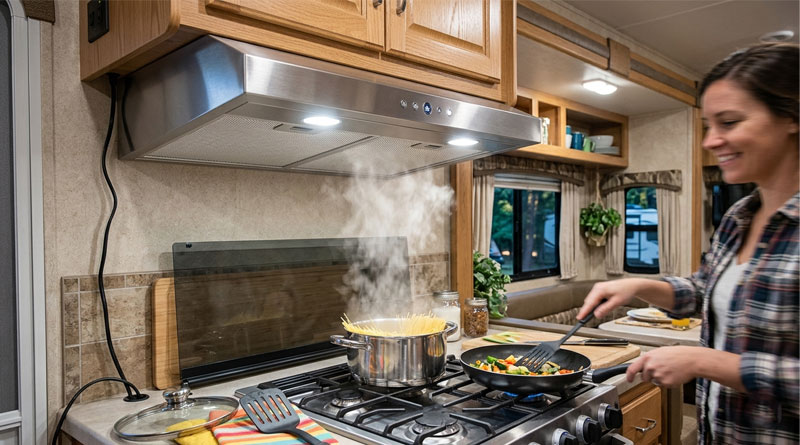
Cooking in a compact camper often leads to unwanted moisture and lingering odors, but the range hoods provide an essential ventilation solution. These units effectively exhaust steam and grease while operating on your vehicle’s DC power system. Our guide helps you find a durable, energy-efficient 12V RV model to keep your mobile kitchen air fresh and your surfaces clean.
1. High Pointe 12V Stainless Steel Range Hood

- Power Consumption: 13.5W total rated power
- Lighting: Integrated energy-efficient LED lamp
- Venting Type: External exterior venting design
- Installation: 22-inch hard-wired mounting
The High Pointe 12V Range Hood is a sleek addition to any modern RV kitchen, finished in professional stainless steel. It excels at maintaining air quality by effectively expelling smoke and cooking odors directly outside the vehicle. The low power draw of just 13.5W ensures you won’t drain your battery bank while preparing elaborate meals during off-grid stays.
This unit features a built-in LED lamp that provides excellent illumination over your cooktop, eliminating the need for secondary lighting. Installation is straightforward for those comfortable with hard-wiring, as it mounts securely just 20 inches above your stove. It is a perfect blend of performance and energy efficiency for dedicated road travelers.
- Pros:
- Very low 13.5W power consumption
- Bright LED improves cooking visibility
- External venting removes moisture completely
- Cons:
- Requires cutting an exterior vent hole
- Hard-wire only installation
2. Furrion 12V RV Ductless Range Hood

- Technology: VibrationSmart and ClimateSmart
- Filter: Replaceable/cleanable charcoal filter
- Dimensions: 23.50 x 4.75 x 17.75 inches
- Warranty: 12-month manufacturer coverage
The Furrion Ductless Range Hood is engineered specifically for the rigors of the road, featuring proprietary VibrationSmart technology to withstand constant travel movement. Because it is ductless, it doesn’t require an external vent, instead utilizing a high-quality charcoal filter to scrub air before recirculating it. This makes it a fantastic choice for retrofitting campers without existing ductwork.
Built to handle extreme temperatures via ClimateSmart engineering, this hood remains reliable in any season. The unit includes a simple push-button LED light to brighten your workspace. With all mounting hardware and screws included in the box, it offers one of the most user-friendly installation processes on the market for 12V kitchen upgrades.
- Pros:
- Ductless design requires no exterior holes
- Resistant to road vibrations and climate
- Easy to maintain cleanable filters
- Cons:
- Doesn’t remove heat as well as vented models
- Charcoal filters require periodic replacement
3. RecPro RV Range Hood with Charcoal Filter
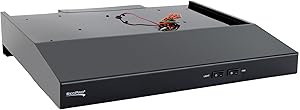
- Fan Motor: 0.8A powerful DC motor
- Total Power: 60W energy-efficient operation
- Filtering: Built-in accessible charcoal filter
- Color Options: Available in Black or Stainless Steel
The RecPro 12V Range Hood combines a sleek aesthetic with a powerful 0.8A fan motor that effectively pulls steam and heat away from your face. Designed with a built-in charcoal filter, it ensures that recirculated air is fresh and free of heavy cooking smells. The hard-wired 12V DC connection provides a stable and reliable power source for full-time van dwellers.
Beyond its venting capabilities, the long-lasting LED lamp is a standout feature, providing a bright glow while consuming minimal energy. The hood is built for durability, standing up to the rigorous use typical of a busy RV kitchen. Available in both black and stainless steel, it can be matched to almost any interior cabinetry style.
- Pros:
- High-torque fan removes heat effectively
- Multiple color finishes to match decor
- Simple charcoal filter access for cleaning
- Cons:
- 60W draw is higher than some competitors
- Fan can be audible on high settings
4. CAMPLUX Ultra Quiet 22-inch Range Hood
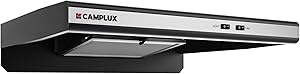
- Dimensions: 22.05 x 17.76 x 4.65 inches
- Suction: Powerful fan for smoke removal
- Filter Type: Removable aluminum grease filter
- Light: 1W energy-saving LED lamp
The CAMPLUX RV Range Hood is designed for those who want a modern look combined with ultra-quiet performance. Its built-in aluminum grease filter is completely removable and washable, allowing you to maintain peak airflow without constantly purchasing replacements. This vented model is ideal for off-grid living where keeping the indoor air cool and smoke-free is a top priority.
Installation is made easy with the included hardware and a detailed manual. The 1W LED lamp is exceptionally energy-efficient, providing just enough light to monitor your pans without draining your auxiliary batteries. It is a sturdy, well-constructed unit that works perfectly in motorhomes, travel trailers, or even small yachts where space and power are limited.
- Pros:
- Removable aluminum filter is easy to wash
- Ultra-quiet fan operation for peaceful cooking
- Modern, low-profile stainless steel build
- Cons:
- Vent ducting not always included
- Requires precise cabinet measurements
5. RecPro Suburban Non-Ducted Vent Hood

- Type: Non-ducted under cabinet vent
- Finish: Available in Black or Stainless Steel
- Filtration: Integrated grease trapping filter
- Mounting: Under-cabinet hardwired 12V DC
The RecPro Suburban Range Hood is a specialized under-cabinet solution for campers that lack the space for bulky ductwork. As a non-ducted unit, it focuses on trapping grease and circulating air through its internal filter system. This helps keep the air clear of steam and smoke that can often trigger sensitive RV smoke detectors during breakfast prep.
This model is praised for its ease of installation, fitting neatly into standard cabinet configurations. The built-in LED lighting is a massive upgrade over older incandescent models, illuminating the entire cooktop area with a clean, white light. It is a reliable, no-nonsense appliance that helps any traveler “breathe easy” while maintaining a clean, grease-free interior.
- Pros:
- Fits perfectly under standard RV cabinets
- No external venting required for setup
- Brightens dark kitchen areas effectively
- Cons:
- Recirculates air rather than removing it
- Grease filters require frequent cleaning
6. Heng’s Black 12V Range Hood with Axial Fan

- Dimensions: 20L x 5H x 18D inches
- Fan Type: Quiet axial fan motor
- Body Material: Heavy-gauge sheet steel
- Switches: Exterior rocker style controls
Heng’s offers a heavy-duty, traditional solution with their JENSEN-powered 12V range hood. Built from heavy-gauge sheet steel, this unit is designed to survive years of road vibrations and frequent use. It features a quiet axial fan that effectively draws smoke and heat into the removable filter, which is designed for easy cleaning with standard household degreasers.
The design includes exterior rocker switches that are positioned away from direct heat and grease for long-term reliability. A unique feature is the rear wall opening guides, which assist installers in running wiring correctly. Whether you are replacing an older non-power hood or installing a new one, this pre-assembled unit is an industry standard for reliability.
- Pros:
- Durable heavy-gauge steel construction
- Rocker switches are shielded from heat
- Easy-to-clean removable filter system
- Cons:
- Traditional boxy design lacks modern flair
- Light is enclosed and harder to reach
How to Choose 12v RV Range Hoods
Cooking inside an RV is a central part of the nomadic lifestyle, but it comes with unique challenges. Without proper ventilation, the steam from a boiling pot of pasta or the smoke from a morning fry-up can quickly overwhelm a small living space. Choosing the best 12v RV range hood is about more than just aesthetics; it is about moisture control, air quality, and protecting your camper’s interior from grease buildup. In this guide, we will break down everything you need to know to make an informed purchase.
Vented vs. Ductless Range Hoods
The most critical decision you will make is how the air is handled once it enters the hood. There are two primary types of 12V range hoods used in RVs today.
Vented (Ducted) Models
Vented range hoods pull air from the kitchen and push it through a duct to an exterior vent on the side of your RV. [Image showing an RV exterior vent flap] This is the most effective way to remove heat, moisture, and odors completely. If you do a lot of heavy cooking or live in your RV full-time, a vented model is highly recommended because it prevents condensation from building up on your windows and walls.
Ductless (Recirculating) Models
Ductless hoods do not require a hole in your RV’s exterior wall. Instead, they pull air through a series of filters—usually a mesh grease filter followed by a charcoal filter—and then blow the “cleaned” air back into the cabin. While easier to install, they do not remove heat or moisture. They are best for light cooking or for RVs where cutting a hole in the exterior is not feasible.
Understanding Power Consumption and Your Battery
Since these hoods run on your 12V DC system, power draw is a major factor, especially for boondockers. Most 12V range hoods draw between 1 and 5 amps. If you spend a lot of time off-grid, look for a model with an “energy-efficient” or “low-wattage” motor. For example, some modern units use only 13W to 15W, which is negligible even on a small battery bank. However, more powerful fans may draw upwards of 60W, so you must balance suction power with your available amp-hours.
Fan Suction and Noise Levels
Suction power is typically measured in Cubic Feet per Minute (CFM). While RV manufacturers rarely list the exact CFM for 12V units, you can judge performance by the fan type. Axial fans are common and quiet but have lower pressure, while centrifugal blowers (squirrel cage fans) move much more air but can be louder. Look for “ultra-quiet” designations if you enjoy listening to music or chatting while you cook, as a loud range hood can quickly become an annoyance in a small space.
Filtration Systems: Keeping it Clean
Grease is the enemy of a clean RV. Every range hood uses a filter to catch airborne grease particles before they coat your cabinets. There are two main types you should know about:
- Aluminum Mesh Filters: These are standard in vented models. They are durable and can be washed in a sink with dish soap and reused indefinitely.
- Charcoal Filters: These are found in ductless models. They are designed to trap odors. Unlike aluminum filters, charcoal filters cannot be washed and must be replaced every 3 to 6 months depending on how often you cook.
Lighting: Upgrading to LED
Older RV range hoods often used incandescent bulbs that produced a lot of heat and drained the battery. Most modern 12V hoods come with integrated LED lamps. These provide a much brighter, “whiter” light that makes it easier to see if your steak is perfectly seared. When choosing a hood, ensure the LED is positioned toward the front or center to avoid casting a shadow on the back of your stove.
Size and Clearance Requirements
The standard widths for RV range hoods are 20 and 22 inches, though some larger fifth wheels may use 24-inch models. [Image showing how to measure the space between RV cabinets] Measure the width of your cooktop and the space between your overhead cabinets carefully. You also need to consider the mounting height; most manufacturers recommend a clearance of at least 18 to 20 inches above the burners to prevent heat damage to the hood’s components.
Materials and Construction Quality
RV appliances take a beating on bumpy roads. A range hood made of heavy-gauge sheet steel or high-grade stainless steel will hold up much better than thin plastic versions. Stainless steel is also much easier to wipe clean of grease. Check that the switches—usually rocker or slide style—feel sturdy and are protected from the direct heat of the stove, as cheap plastic switches can melt or become brittle over time.
Installation Considerations
Installing a 12V range hood is a manageable DIY project for most owners. Vented models require an exterior vent kit, which includes a flapper door to keep out bugs and rain when the fan isn’t in use. Most units come “pre-wired,” meaning you just need to connect the positive and negative wires to your RV’s 12V circuit. Always ensure you use waterproof sealant around any exterior vent holes to prevent leaks.
Conclusion
The best 12V RV range hood is one that strikes the right balance between effective ventilation and battery conservation. If you can handle the installation, a vented stainless steel model is the superior choice for air quality and moisture control. However, for quick upgrades or older campers, a high-quality ductless unit with a charcoal filter can still make a massive difference. By focusing on low-draw LED lighting, washable filters, and durable construction, you’ll ensure your camper kitchen remains a fresh and inviting place to cook, no matter where you are parked.