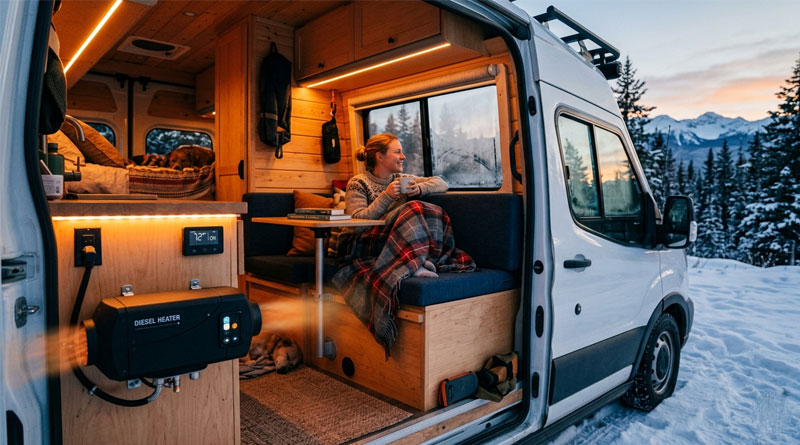
If you love RV camping but hate waking up to a freezing cabin, a diesel heater is a game changer. Unlike noisy propane furnaces, these units run off your RV’s fuel tank, providing dry, consistent heat that keeps windows fog-free. They’re efficient, quiet, and perfect for boondocking in cold weather. In this guide, we’ll break down the best diesel heaters for RVs to help you stay warm and comfortable on every adventure.
1. VEVOR 8KW Diesel Heater

- Heating Power: 8 KW
- Coverage Area: 215-269 sq. ft.
- Altitude Compensation: Up to 18,045 feet
- Control Methods: Bluetooth App, Remote, and LCD
The VEVOR 8KW Diesel Heater is a powerhouse designed for those who need rapid warmth without the hassle of a complex setup. Its all-in-one, installation-free design makes it an ideal companion for outdoor adventures, whether you are camping in a tent or heating a large van. The innovative sandblasting aluminum heat exchanger works impressively fast, bringing a cold space to a comfortable temperature in roughly ten minutes.
What sets this unit apart is its intelligent connectivity and high-altitude adaptability. With the upgraded Bluetooth app, you can preheat your vehicle from nearly 100 feet away, while the automatic altitude compensation ensures the fuel-to-air ratio stays perfect even deep in the mountains. It is a highly efficient unit that consumes about one gallon per night, making it both a cost-effective and reliable choice for serious winter explorers.
Pros:
– Intelligent Bluetooth app control
– Automatic altitude adjustment for mountain use
– Rapid heating with aluminum exchanger
Cons:
– Larger footprint than 5KW units
– Fuel pump can be audible during startup
See the VEVOR 8KW Diesel Heater
2. Orion Motor Tech 5kW Diesel Heater

- Heating Power: 5 KW
- Operating Temp: -49°F to 122°F
- Safety Features: Flame-retardant casing and CO alarm
- Altitude Support: Up to 18,045 feet
The Orion Motor Tech 5kW Diesel Heater is built with a primary focus on safety and versatility. Unlike many entry-level heaters, this model includes a dedicated CO alarm to monitor air quality in real-time, providing significant peace of mind for overnight sleepers. The flame-retardant casing and automatic shut-off feature ensure that the device remains safe even if internal temperatures spike, making it a top choice for small cabins or sedan interiors.
Performance remains consistent across extreme environments, functioning reliably in temperatures as low as -49°F. The dual control system allows you to adjust the heat from your sleeping bag via the smartphone app or the long-range remote. Because it operates independently of the vehicle’s engine, it provides focused warmth without adding mechanical wear to your car or RV, making it a smart long-term investment for cold-weather commuters.
Pros:
– Included CO alarm for enhanced safety
– Extremely low operating temperature range
– Compact size fits easily in smaller vehicles
Cons:
– Lower heat output compared to 8KW models
– App setup can be finicky on some devices
See the Orion Motor Tech 5kW Diesel Heater
3. VEVOR 8KW Diesel Heater (Basic)

- Fuel Tank Capacity: 10 Liters (2.6 gal)
- Voltage: DC 12V-24V
- Combustion Efficiency: ≥90%
- Max Altitude: 9,843 feet
This version of the VEVOR 8KW heater is designed for long-duration use and enhanced physical safety. The standout feature is the massive 10-liter fuel tank, which significantly extends the time between refills compared to standard all-in-one units. It also features an upgraded heat-insulated exhaust shield to prevent accidental burns, alongside a leak-proof fuel cap that is specifically designed to handle the vibrations and tilts of rough, off-road terrain.
The ceramic igniter facilitates quick starts even when the temperature drops, ensuring you aren’t waiting long for the interior to thaw. While it lacks the high-altitude compensation of its more expensive siblings, it remains highly effective for most camping locations below 10,000 feet. The combination of high combustion efficiency and dual-voltage support makes it a rugged, dependable choice for RV owners and boaters who prioritize tank capacity and physical durability.
Pros:
– Extra-large 10L fuel tank for long runs
– Heat-insulated exhaust shield for safety
– Leak-proof cap design for bumpy roads
Cons:
– Limited to altitudes below 9,843 feet
– Lacks Bluetooth smartphone connectivity
See the VEVOR 8KW Diesel Heater (Basic)
4. Aoteda 8500W Diesel Heater

- Heating Power: 8.5 KW
- Power Compatibility: 12V/24V DC and 110V AC
- Fuel Consumption: 0.03–0.11 gal/h
- Noise Reduction: Built-in muffler included
The Aoteda 8500W Diesel Heater is a versatile hybrid unit that transitions seamlessly between mobile and stationary use. Thanks to the included 110V AC adapter, you can move this heater from your RV to your home garage or workshop without needing to buy extra power converters. The 8.5KW output is exceptionally powerful, capable of warming spaces up to 286 square feet in just ten minutes, making it one of the most potent options for larger cabins.
Efficiency is a major highlight here, as the precision oil pump and ceramic glow plug achieve near-complete combustion. This translates to a 35% reduction in fuel use compared to traditional vehicle heaters. Furthermore, the inclusion of a built-in muffler addresses the common complaint of ticking noises, allowing for a much quieter environment that is conducive to sleeping or working. It is a comprehensive package for users who value power and multi-source power adaptability.
Pros:
– Includes 110V adapter for home use
– Higher 8.5KW peak power output
– Extremely quiet operation with muffler
Cons:
– Heavier than standard 5KW units
– Plastic casing feels less premium than metal options
See the Aoteda 8500W Diesel Heater
5. Kedite 8500W Diesel Heater
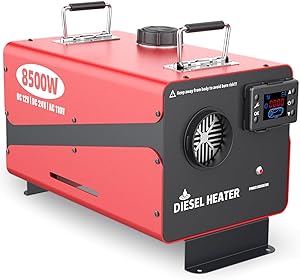
- Construction: Full-metal body
- Efficiency Rate: ≥97%
- Noise Level: ≤50 dB
- Timer: 24-hour programmable
The Kedite 8500W Diesel Heater stands out with its robust full-metal construction and impressive 97% heating efficiency. This all-in-one unit comes pre-installed, meaning you only need to connect the exhaust and power to begin heating. It is engineered to be a true plug-and-play solution, and its upgraded silent fuel pump keeps the noise level under 50 decibels, which is roughly the same as a quiet office environment.
This heater is particularly effective for those who want a set-it-and-forget-it experience. The 24-hour timer and thermostatic control allow you to maintain a precise temperature through the night, while the 110V converter expands its utility beyond the vehicle. The metal housing provides better durability against impacts during transport, and the tight fuel seal prevents the common issue of diesel fumes leaking into your living space, ensuring a clean and warm winter experience.
Pros:
– Durable full-metal body construction
– Very high 97% fuel efficiency
– Silent pump for better sleep quality
Cons:
– Metal body gets very hot to the touch
– Remote range is slightly shorter than advertised
See the Kedite 8500W Diesel Heater
6. HCALORY 8KW Diesel Heater

- Unique Feature: Remote with built-in thermostat
- Max Runtime: 62.5 hours on min setting
- Warm-up Time: 3 minutes
- Altitude Support: 18,000 feet
The HCALORY 8KW Diesel Heater introduces a clever innovation: a wireless remote that acts as a portable thermostat. By sensing the temperature at the remote’s location rather than the heater’s, it ensures that your actual living area stays perfectly comfortable even if the unit is placed outside. This “true” remote sensing makes it arguably the best choice for tent camping or van setups where space and noise management are top priorities.
Beyond its smart controls, the HCALORY is exceptionally fast, providing noticeable warmth in just three minutes. The 7.5-liter fuel tank is sized perfectly for long weekends, offering up to 62.5 hours of continuous heat on lower settings. Whether you are at a high-altitude alpine site or a remote forest, the intelligent combustion system adjusts itself to ensure efficiency and performance don’t drop, making it a highly sophisticated tool for serious adventurers.
Pros:
– Remote acts as a local thermostat
– Rapid 3-minute heating response
– Large 7.5L tank for extended trips
Cons:
– Remote batteries drain faster due to sensor
– Exhaust pipe is slightly shorter than competitors
See the HCALORY 8KW Diesel Heater
7. LF Bros All-in-One 5L
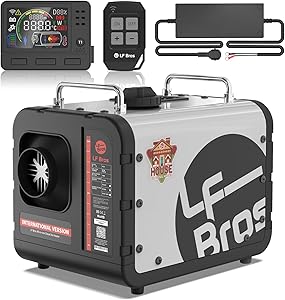
- BTU Range: 4,700–17,000 BTU
- Voltage Support: 12V, 24V, and 110V
- Fuel Cap Design: Internal thread (car-style)
- Remote Range: 100 feet (pre-paired)
The LF Bros All-in-One heater is a meticulously packaged and highly reliable unit that emphasizes user-friendliness. One of its most practical features is the car-style internally threaded fuel cap. This design prevents the messy and dangerous oil leaks that can occur when driving over rough, bumpy terrain. It arrives with a pre-paired remote and a detailed instruction manual, making it one of the easiest heaters to get running straight out of the box.
The inclusion of a 110V transformer makes this unit a “real use anywhere” solution, perfect for those who want to heat a basement or garage using the same unit they use in their camper. While the 5L tank is standard, the efficiency is high enough to keep you toasty through the coldest nights. The packaging is notably superior, using plastic foam to ensure the unit arrives in pristine condition, reflecting the overall quality and care put into the product’s design.
Pros:
– Secure, leak-proof internal thread fuel cap
– Comes with 110V transformer included
– Excellent packaging and documentation
Cons:
– Only 5KW, may struggle in very large spaces
– LCD screen is basic compared to Bluetooth models
8. GEARLASSO Diesel Heater
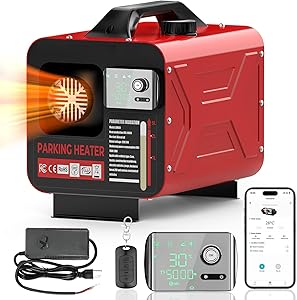
- Control System: AI-driven thermostatic control
- Combustion Rate: 100% efficiency
- Temperature Range: 46.4°F to 96.8°F
- Compatibility: 12V/24V/110V
The GEARLASSO 8KW Diesel Heater is a high-tech solution that utilizes AI-driven protocols to manage climate and safety. It features proactive shutdown protocols and intelligent overheating prevention, ensuring that the unit operates safely during extended overnight use. The “Eco-Fuel Intelligence” system uses a micro-metering oil pump to reach 100% combustion efficiency, which minimizes both emissions and fuel waste while providing a consistent heat output of up to 17,000 BTU.
Control is incredibly flexible, offering Bluetooth connectivity, a long-range remote, and a modern LCD interface. This allows you to manage your comfort from a distance of 98 feet using the dedicated app. Designed for professional-grade integration, it works equally well in greenhouses and workshops as it does in RVs and boats. If you are looking for a heater that balances modern smart features with robust, high-output performance, the GEARLASSO is a top-tier contender for the winter season.
Pros:
– Advanced AI-driven safety protocols
– 100% combustion efficiency for low emissions
– Tri-mode control (App, Remote, LCD)
Cons:
– Premium features come at a higher price
– High power draw during the initial glow-plug phase
See the GEARLASSO Diesel Heater
The Ultimate Guide to Choosing a Diesel Heater for Your RV
For many RV enthusiasts, the “camping season” traditionally ends when the first frost hits the ground. However, with the right heating solution, your adventures don’t have to be dictated by the thermometer. Among the various options available—ranging from propane furnaces to electric space heaters—diesel heaters have emerged as the gold standard for off-grid comfort and efficiency.
Choosing the right diesel heater isn’t just about picking the first unit you see online. It requires an understanding of heat output, fuel consumption, altitude compensation, and installation complexity. This guide will walk you through everything you need to know to make an informed decision for your home on wheels.
Understanding How Diesel Heaters Work
Before diving into the “how-to” of selection, it is vital to understand the “what.” A diesel air heater is an autonomous device that burns diesel fuel to generate heat. It draws air from outside into a sealed combustion chamber, where it mixes with diesel and ignites. This process heats a heat exchanger. Simultaneously, a fan draws air from the cabin, passes it over the hot heat exchanger, and blows the warmed air back into the living space.
Crucially, the combustion exhaust is vented entirely outside the RV. This makes diesel heaters much safer and drier than “buddy-style” propane heaters, which release moisture and carbon monoxide into the cabin.
Determining the Right Heat Output (kW)
The most common mistake RVers make is buying a heater that is too powerful for their space. Diesel heaters are generally rated in kilowatts (kW), typically coming in 2kW or 5kW versions (though 8kW units exist, they are often just rebranded 5kW units).
Choosing a 2kW Heater
A 2kW heater is the sweet spot for small to medium-sized campervans (like Sprinters, Transits, or Promasters) and well-insulated truck campers. Because these units run at higher speeds to maintain temperature in a small space, they stay cleaner. Diesel heaters thrive when they run “hot.” Running a large heater on a low setting for extended periods leads to “sooting” or carbon buildup, which can cause the unit to fail.
Choosing a 5kW Heater
If you have a large Class A motorhome, a fifth wheel, or a poorly insulated vintage trailer, a 5kW unit is likely necessary. This size provides the “oomph” needed to move air through longer ducting runs and heat larger volumes of air. However, if you use a 5kW in a small van, you’ll find yourself constantly turning it off because it gets too hot, which leads to the aforementioned carbon buildup issues.
Name Brand vs. Budget Chinese Diesel Heaters
This is the biggest debate in the RV community. On one side, you have premium European brands like Webasto and Eberspächer (Espar). On the other, you have the “Chinese Diesel Heaters” (CDH) found on major e-commerce sites.
The Case for Premium Brands
Webasto and Espar units cost anywhere from $800 to $2,000. For that price, you get high-quality components, superior safety certifications, quieter fuel pumps, and—most importantly—excellent altitude adjustment. If you plan to live in your RV full-time or travel to remote areas where a heater failure could be life-threatening, the reliability of a premium brand is a worthwhile investment.
The Case for Budget Units
Chinese Diesel Heaters often cost between $100 and $200. Surprisingly, they work remarkably well. They are excellent for the DIYer on a budget or the weekend warrior. However, they often require “tinkering.” You may need to replace the fuel lines, upgrade the hose clamps, or spend time troubleshooting the controller. They also typically lack automatic altitude adjustment, though newer models are improving in this area.
The Importance of Altitude Compensation
If you plan to camp in the Rockies or the High Sierras, altitude is your heater’s worst enemy. As you go higher, the air becomes thinner. Since the heater’s fuel pump usually delivers a fixed amount of fuel, the mixture becomes “rich” (too much fuel, not enough oxygen). This leads to rapid carbon buildup and “flame out.”
Premium heaters often feature an automatic altitude sensor that adjusts the fuel-to-air ratio. Many budget heaters now offer a manual “High Altitude Mode” that allows you to adjust the Hertz (Hz) of the fuel pump. If you frequently camp above 5,000 feet, ensure your chosen heater has a proven track record at elevation.
Key Features to Look For
When comparing models, keep these specific features in mind:
- Fuel Source: Most RVers with diesel engines tap directly into their vehicle’s main fuel tank using a “standpipe.” If your RV runs on gasoline, you will need a heater that comes with a separate small diesel reservoir (usually 5–10 liters).
- Noise Levels: The “clicking” of the fuel pump can be annoying. Look for kits that include a “silent” fuel pump or plan to purchase an aftermarket rubber mount to dampen the vibration.
- Controller Type: Look for an LCD controller that displays error codes. Older “knob” style controllers make troubleshooting much more difficult. Many modern units now include a remote control or Bluetooth app connectivity.
- Power Consumption: While these heaters run on diesel, they require 12V electricity to run the fan and the glow plug. The initial startup draws about 8–10 amps for a few minutes, while continuous running draws only 1–2 amps. Ensure your battery bank can handle the overnight draw.
Installation Considerations
Installation is a significant project that involves cutting a hole in your RV floor. You must ensure the exhaust is pointed away from windows and that the intake is not positioned where it can suck in its own exhaust fumes.
Standard vs. All-in-One Units
A standard diesel heater consists of the unit, a separate fuel pump, and a separate tank (if needed). These are best for permanent, space-saving installations under seats or in cabinets. An “All-in-One” unit houses the heater and fuel tank in a single metal box. These are portable and great for people who want to set the heater outside and duct the heat in through a window, though they are less efficient for permanent RV setups.
Maintenance and Longevity
To ensure your diesel heater lasts for years, follow these maintenance tips:
- Run it once a month: Even in summer, fire up the heater for 20 minutes to keep the fuel from geeling and to lubricate the internal components.
- Burn it on High: Before shutting the heater down for the season, run it on its highest setting for 30 minutes to burn off any accumulated carbon.
- Check your Exhaust: Periodically ensure the exhaust pipe hasn’t been bent or clogged by mud or insects.
Final Thoughts
Choosing a diesel heater for your RV is a balance of your budget, your technical DIY skills, and your travel style. If you want a “set it and forget it” experience and have the budget, a Webasto or Espar is the way to go. If you enjoy a bit of mechanical tinkering and want to save significant money, a high-quality budget unit can keep you just as warm.
Regardless of the brand you choose, adding a diesel heater is one of the single best upgrades you can make to an RV. It transforms your vehicle from a fair-weather camper into a true four-season home, allowing you to wake up to a snowy landscape while staying perfectly cozy in your pajamas.