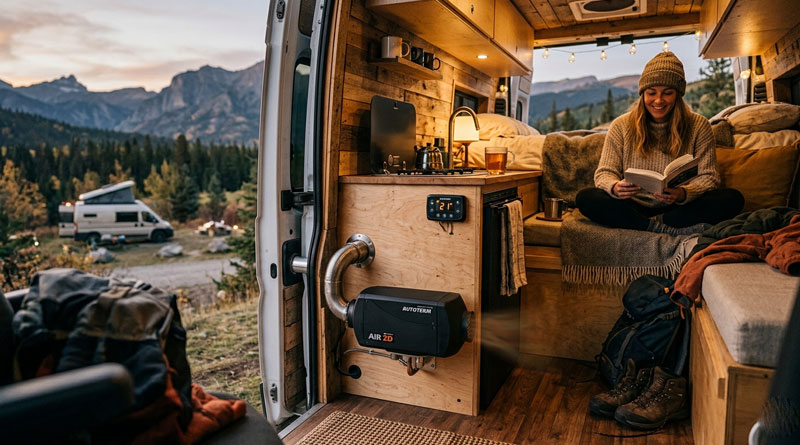
If you live or travel in a van, staying warm is a must, especially in cold weather. Diesel heaters are a top choice because they run off your van’s fuel, use little power, and pump out dry, comfortable heat. This guide breaks down the best diesel heaters for vans, comparing easy-to-install models, budget picks, and reliable all-in-one units to help you choose wisely.
1. VEVOR 8KW Diesel Heater

- Power: 8KW, 12V
- Heating Range: 215–269 ft²
- Fuel Consumption: 0.16–0.62 L/h
- Control: App, remote, LCD
The VEVOR 8KW Diesel Heater is a strong all-in-one solution for tent and outdoor heating. Its installation-free design makes it ideal for campers who want quick setup. Within 10 minutes, it delivers noticeable warmth thanks to its efficient aluminum heat exchanger. The heating coverage is impressive, making it suitable for medium-sized tents, vans, or boats.
The Bluetooth app control adds convenience, allowing remote operation from a distance. It also performs well at high altitudes with automatic adjustment, which is useful for mountain camping. Fuel efficiency is another highlight, offering long runtime with minimal consumption. Safety features like overheating protection and stable temperature control make it reliable for overnight use.
- Pros: Easy setup, app control, high altitude support, efficient fuel use
- Cons: Slightly bulky, app setup may take time
See the VEVOR 8KW Diesel Heater
2. Orion Motor Tech 5kW Diesel Heater

- Power: 5KW
- Temperature Range: 46°F–97°F
- Altitude Support: Up to 18,045 ft
- Safety: CO alarm + auto shutoff
This Orion Motor Tech heater is a dependable option for tent campers who prioritize safety. It operates independently from your vehicle, reducing wear while providing consistent heat. The included CO alarm and flame-retardant casing make it one of the safer options for enclosed spaces like tents.
It performs well in extreme weather, functioning from freezing to very hot conditions. Remote and app controls add convenience, letting you adjust heat without leaving your sleeping bag. The altitude compensation ensures steady performance in mountainous terrain. Overall, it balances safety, usability, and performance effectively.
- Pros: Strong safety features, wide temp range, remote control, reliable in extreme weather
- Cons: Lower power than 8KW models, slightly slower heating
See the Orion Motor Tech 5kW Diesel Heater
3. VEVOR 8KW Diesel Heater (Basic)

- Power: 8KW, 12–24V
- Heating Area: 161–215 ft²
- Fuel Tank: 10L
- Consumption: 0.18–0.37 L/h
This basic VEVOR 8KW heater delivers reliable performance without extra features. It heats quickly thanks to a ceramic igniter, making it suitable for cold camping nights. The larger fuel tank ensures longer operation, reducing the need for refueling during extended trips.
It includes essential safety upgrades like overheat protection and a secure fuel cap. The remote control and LCD display provide simple operation. While it lacks advanced app features, it remains a solid budget-friendly option for campers who need dependable heat.
- Pros: Large fuel tank, efficient heating, simple controls, affordable
- Cons: No Bluetooth, lower altitude limit
See the VEVOR 8KW Diesel Heater (Basic)
4. Aoteda 8500W Diesel Heater

- Power: 8500W
- Coverage: Up to 286 ft²
- Fuel Consumption: 0.03–0.11 GAL/h
- Voltage: 12V/24V/110V
The Aoteda 8500W heater stands out with powerful output and wide coverage. It heats large tents or small cabins quickly, even in freezing conditions. The aluminum heat system ensures rapid warmth, making it ideal for cold-weather camping.
It is also highly efficient, consuming less fuel compared to many competitors. The quiet operation is a major advantage for overnight use. Multi-voltage compatibility makes it versatile for both outdoor and indoor setups. Overall, it offers strong performance with good efficiency.
- Pros: High power, wide coverage, quiet, multi-voltage support
- Cons: Slightly heavier, setup may take time
See the Aoteda 8500W Diesel Heater
5. Kedite 8500W Diesel Heater
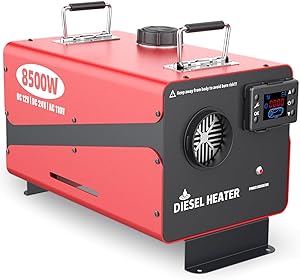
- Efficiency: ≥97%
- Fuel Use: 0.02–0.12 GAL/h
- Noise: ≤50 dB
- Voltage: 12V/24V/110V
The Kedite 8500W heater is designed for maximum efficiency and ease of use. Its plug-and-play setup makes it beginner-friendly. The heating performance is strong, quickly warming tents or vehicles even in sub-zero conditions.
Its quiet fuel pump is a big plus for peaceful sleep. The heater also includes useful features like a timer and thermostat. With low fuel consumption and high efficiency, it is a cost-effective option for long camping trips.
- Pros: Very efficient, quiet operation, easy setup, versatile power options
- Cons: Build quality feels average, basic display
See the Kedite 8500W Diesel Heater
6. HCALORY 8KW Diesel Heater

- Power: 8KW
- Fuel Tank: 7.5L
- Runtime: Up to 62.5 hours
- Altitude: Up to 18,000 ft
The HCALORY 8KW heater is ideal for tent setups where the heater is placed outside. Its remote temperature sensing ensures accurate indoor comfort. This design improves safety and reduces noise inside the tent.
It heats up quickly and offers long runtime, making it perfect for extended trips. The silent fuel pump enhances comfort during sleep. Its altitude adaptability makes it reliable for mountain camping. Overall, it is a premium option for serious campers.
- Pros: Long runtime, accurate temp control, quiet, high altitude support
- Cons: Higher price, slightly complex setup
See the HCALORY 8KW Diesel Heater
7. LF Bros All-in-One 5L
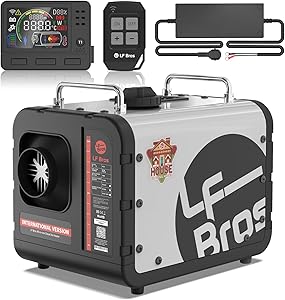
- Power: 5KW
- Output: 4700–17000 BTU
- Fuel Consumption: 0.18–0.53 L/h
- Voltage: 12V/24V/110V
The LF Bros heater offers a balanced mix of power and portability. It is easy to set up and works well for tents and small campers. The included transformer makes it flexible for home or outdoor use.
Its leak-proof fuel cap improves safety during travel. The remote control is pre-paired, making operation simple. While not as powerful as 8KW units, it still delivers solid performance for smaller spaces.
- Pros: Easy to use, portable, safe fuel design, versatile
- Cons: Lower power, shorter heating range
8. GEARLASSO Diesel Heater
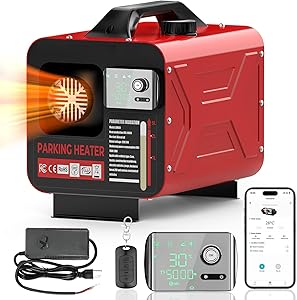
- Power: 8KW
- Heating Area: Up to 269 ft²
- Fuel Consumption: 0.15–0.45 L/h
- Control: App, remote, LCD
The GEARLASSO diesel heater combines smart features with strong heating performance. Its AI-driven thermostat ensures consistent temperature control. It heats quickly and works well in extreme cold conditions.
The multiple control options make it convenient to use in tents. Its efficient fuel system reduces consumption while maintaining output. The safety system ensures reliable overnight use. Overall, it is a modern and efficient heater for camping.
- Pros: Smart controls, efficient fuel use, fast heating, safe operation
- Cons: Slightly expensive, app may need setup
See the GEARLASSO Diesel Heater
The Ultimate Guide to Choosing a Diesel Heater for Your Van
For many van lifers, the transition from summer wandering to winter adventuring is marked by one significant challenge: staying warm. While a thick sleeping bag and a heavy wool sweater can get you through a chilly night, they don’t do much for the dampness that accumulates or the biting cold of a sub-zero morning. This is where the diesel heater comes in. Often cited as the single most important upgrade for year-round van living, a diesel heater provides dry, consistent heat that transforms a cold metal box into a cozy home.
Choosing the right heater involves more than just picking the first unit you see online. You must balance heat output, power consumption, altitude performance, and your specific budget. This article will break down every factor you need to consider to ensure you make the right investment for your mobile lifestyle.
Understanding How Diesel Heaters Work
Before diving into brands and specs, it is helpful to understand the basic mechanics. A diesel heater is a “dry” heat source. It draws diesel from your vehicle’s main tank (or a dedicated secondary tank) and air from outside into a combustion chamber. A glow plug ignites the fuel, heating up a metal heat exchanger. A fan then blows interior cabin air over that hot exchanger and back into the van. Crucially, the combustion exhaust is vented entirely outside, meaning you get warmth without the moisture or carbon monoxide risks associated with portable propane heaters.
Determining the Right Size: 2kW vs. 5kW
The most common mistake van owners make is “over-sizing” their heater. In the world of diesel heaters, bigger is not always better. Most units come in two primary sizes: 2kW and 5kW.
The Case for 2kW Heaters
For the vast majority of standard-sized vans (Sprinters, Transits, Promasters), a 2kW heater is actually the superior choice. Diesel heaters run most efficiently when they are working hard. If you install a 5kW heater in a small, well-insulated space, the van will reach the target temperature very quickly, causing the heater to cycle down to its lowest setting or turn off entirely. Running a heater consistently on its lowest setting leads to “carbon soot buildup,” which can eventually choke the combustion chamber and require a full teardown and cleaning. A 2kW unit running at a medium-to-high “burn” will stay cleaner for longer.
When to Choose a 5kW Heater
You should only consider a 5kW heater if you have a very large, poorly insulated vehicle (like a school bus or a long-wheelbase box truck) or if you frequently camp in extreme arctic conditions (consistently below -20°C / -4°F). If you have a high-roof van but have invested in high-quality insulation (like 3M Thinsulate or Havelock Wool), the 2kW will still likely be sufficient.
Brand Choice: Premium vs. Budget Units
The market is currently split into two distinct tiers: premium European brands and “Chinese Diesel Heaters” (CDHs). Both have their pros and cons.
Premium Brands: Webasto and Eberspächer
Webasto and Eberspächer (Espar) are the gold standards. They are engineered with high-quality components, offer excellent fuel efficiency, and operate much more quietly than budget models. Most importantly, they are backed by extensive warranty networks and have proven reliability over decades. However, they come with a significant price tag, often ranging from $800 to $1,500.
Budget Alternatives: The “Chinese Diesel Heater”
The market has been flooded with generic diesel heaters that retail for $100 to $200. While the price is tempting, there are trade-offs. The components (fuel pumps, fans, and motherboards) are of lower quality, and the instructions are often poorly translated. That said, they have a massive community of users and a wealth of YouTube tutorials for troubleshooting. If you are mechanically inclined and on a tight budget, these can be a viable option, provided you replace the cheap fuel lines that often come in the kit.
Altitude and Airflow Considerations
If you plan on chasing fresh powder in the mountains, altitude is a critical factor. As you go higher, the air becomes thinner (less oxygen). If your heater continues to pump the same amount of fuel but has less oxygen to burn it, the mixture becomes “rich,” leading to rapid carbon buildup and failure.
High-Altitude Kits
Premium heaters like the Espar Airtronic S2 come with integrated altitude sensors that automatically adjust the fuel-to-air ratio. For budget heaters, you usually need to ensure the controller allows for manual “tuning” of the Hertz (pump speed) to lean out the mixture at high elevations. If you plan to spend significant time above 5,000 feet, do not buy a heater without checking its altitude rating.
Fuel Source: Tapping the Main Tank vs. External Tank
You have two choices for supplying fuel to your heater:
- Main Vehicle Tank: This is the most convenient method. You install a “standpipe” or use a factory-installed auxiliary fuel port. You never have to worry about filling a separate tank, and you can fill up at any gas station. Note: most installers set the heater straw to reach only 1/4 of the way down the tank so the heater doesn’t accidentally leave you stranded with an empty tank.
- External Tank: This is common for gasoline-powered vans (which require a separate diesel source) or budget installs. While easier to install initially, you have to deal with the smell of diesel inside the van during refills and the hassle of monitoring a second fuel level.
Noise Mitigation
Diesel heaters are not silent. There are two main sources of noise: the “clicking” of the fuel pump and the roar of the exhaust. To ensure a peaceful night’s sleep, look for heaters that include or allow for:
- Silent Fuel Pumps: Aftermarket “silent” pumps use dampened solenoids to eliminate the rhythmic ticking sound.
- Exhaust Silencers: A high-quality muffler on the exhaust pipe significantly reduces the “jet engine” sound outside your van, making you a much better neighbor at campsites.
- Rubber Mounts: Mounting the fuel pump on a rubber dampener rather than directly to the metal chassis will prevent vibrations from echoing through the van walls.
Installation Safety Essentials
Regardless of the heater you choose, safety is paramount. Because you are dealing with combustion, you must follow these rules:
- Carbon Monoxide (CO) Detector: This is non-negotiable. Even the best heater can develop a leak in the exhaust system. A CO detector is your life insurance policy.
- Proper Exhaust Routing: Ensure the exhaust pipe extends past the side of the van so that fumes don’t get trapped underneath and seep up through the floorboards.
- Air Intake: Never draw combustion air from inside the living space; it must come from outside the vehicle.
Conclusion
A diesel heater is more than a luxury; for many, it is the piece of equipment that makes van life sustainable. If you have the budget, a 2kW Espar or Webasto with an altitude sensor is the most “set it and forget it” solution. If you are handy and cost-conscious, a well-maintained 2kW budget heater can perform admirably for a fraction of the cost. By matching the heater size to your insulation and planning for your typical camping altitude, you can ensure that your van remains a warm, dry sanctuary no matter how low the mercury drops.
Take the time to do the installation correctly, prioritize safety sensors, and enjoy the freedom of truly limitless, all-season travel.