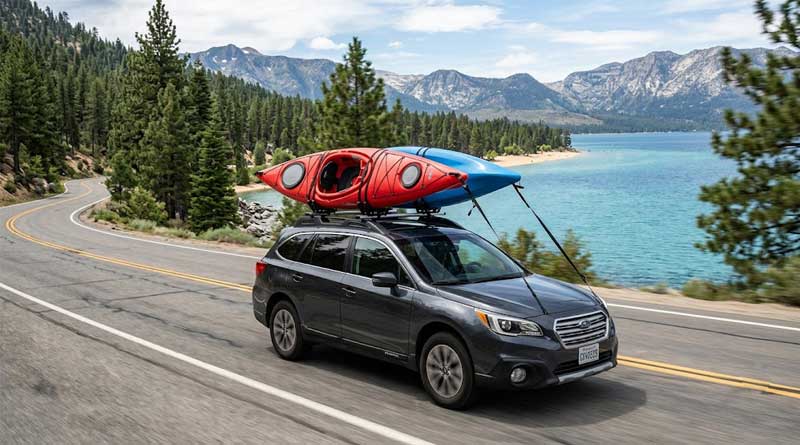
Transporting two kayaks to your favorite water spot requires a reliable and spacious vehicle setup. Dual kayak roof racks maximize top storage space by positioning your watercraft securely on their sides or back-to-back using J-bar and bilateral mounting designs. With the right carrier, you can safely transport two boats without damaging your car’s roof or risking highway accidents. This guide explores top-rated kayak roof racks engineered for two kayaks to help you find the perfect balance of durability, protection, and value.
1. PIRIPARA Kayak Roof Rack 2 Pairs J-Bar Carrier

- Material: Sturdy Alloy Steel
- Load Capacity: Up to 150 lbs
- Crossbar Compatibility: Square, Oval, and Flat (Not Round)
- Included Accessories: 4 Racks, 4 x 8ft Tie-Down Straps
The PIRIPARA Kayak Roof Rack set offers a dependable and budget-friendly solution for paddling enthusiasts looking to transport two kayaks simultaneously. Built with high-strength alloy steel framing, this system incorporates wide-mouth J-bar carriers designed to make loading and unloading your watercraft straightforward and efficient on various vehicles.
To shield your equipment during travel, the heavy-duty framing is wrapped with adjustable protective padding that prevents hull scratch damage. Quick-on and quick-off mounting hardware makes setup straightforward on most crossbar types, while the rust-resistant surface coating ensures durability across long outdoor journeys.
Pros:
- Heavy-duty alloy steel frame supports up to 150 lbs.
- Wide-mouth J-bar style allows effortless loading.
- Comes complete with 8-foot heavy-duty tie-down straps.
Cons:
- Does not fit round crossbars.
- Fixed J-bar structure does not fold flat.
2. ARTIPOLY 4-in-1 Bilateral Kayak Roof Rack

- Material: Aviation Grade Aluminum Alloy
- Load Capacity: Up to 165 lbs
- Adjustment Range: 180-Degree Quick Folding
- Crossbar Compatibility: Universal (Round, Oval, Square, Flat)
Engineered with lightweight aviation-grade aluminum alloys, the ARTIPOLY 4-in-1 Bilateral Rack delivers exceptional structural stability without adding unnecessary weight to your car roof. Its unique horizontal bar design enhances stability, making it a reliable option for carrying dual kayaks, canoes, or paddleboards on long highway trips.
This carrier stands out for its high-density foam padding and protective rubber pedals that safeguard both your vehicle crossbars and kayak hulls from scratch damage. The single-handed lockdown mechanism allows for effortless 180-degree angle adjustments, letting you fold the rack flat when not in use to reduce wind resistance.
Pros:
- Lightweight aluminum build with 165 lb capacity.
- Convenient 180-degree folding feature saves overhead space.
- Includes integrated paddle holders and extra safety ropes.
Cons:
- Slightly more complex initial mounting setup.
- Folding joint requires periodic tightness checks.
3. XGeek 4-in-1 Folding Bilateral J-Style Rack

- Material: 2.2mm Thick Space Aluminum
- Load Capacity: 158 lbs (72 kg)
- Accommodates: Up to 42-inch Wide Kayaks
- Hardware Included: 75mm and 65mm Mounting Screws
The XGeek 4-in-1 Bilateral Rack is designed for versatile outdoor adventurers needing flexibility to haul diverse sports equipment. Constructed using 2.2mm thick space aluminum tubing, this rack achieves an optimal ratio between lightweight overhead agility and rugged, rust-free durability under tough weather conditions.
Vehicle roof safety is prioritized with two included screw lengths (75mm and 65mm), preventing roof contact during road vibration. The quick fold-down mechanism accommodates various kayak hull shapes and vertically mounts up to two boats, while foam rubber protective pads safeguard your gear during transit.
Pros:
- Thick space aluminum tubing resists rust and corrosion.
- Dual screw options protect vehicle roof paint.
- Bilateral J-style easily holds extra-wide kayaks up to 42 inches.
Cons:
- Requires careful selection of screw length for custom fit.
- Instructions can be brief for first-time builders.
4. FORWODE Premium Folding Kayak Roof Carrier

- Material: Thickened Carbon Steel (1.2mm wall)
- Load Capacity: Up to 160 lbs
- Adjustability: Metal Handle 0 to 180 Degrees
- Included Straps: 4 Ratchet Belts, 4 S-Hook Pulleys, 4 Anchors
FORWODE elevates heavy-duty kayak transport by incorporating high-strength carbon steel frames built with 1.2mm thick, 25mm diameter tubing. This reinforced construction supports up to two heavy kayaks with ease, maintaining rigidity on high-speed routes without flexing under heavy wind pressures.
Unlike racks using plastic adjustment components, FORWODE utilizes solid carbon steel handles to fold the arms from 0 to 180 degrees. Thickened rubber pedal protectors and 1cm foam padding cushion the watercraft hull, while dedicated paddle slots eliminate clutter inside your vehicle cabin.
Pros:
- All-metal carbon steel adjustment joint provides superior strength.
- Generous bundle includes ratchet pulleys, belts, and anchor straps.
- Integrated paddle holder design saves internal car storage.
Cons:
- Steel construction makes the rack slightly heavier than aluminum units.
- Requires rust checking over extended outdoor exposure.
5. IKURAM R Aluminum Universal 4-in-1 Rack

- Material: Anodized Aviation Grade Aluminum
- Padding: TopGuard All-Weather Rubber Saddles
- Crossbar Compatibility: Universal Mounting System
- Design Style: Space-Saving Folding J-Style
The IKURAM R Aluminum Kayak Roof Rack combines premium anodized aviation-grade aluminum with advanced protective features to deliver an exceptionally durable carrier system. Designed for long-term outdoor endurance, the anodized finish provides continuous protection against salt water corrosion, rust, and harsh UV exposure during summer trips.
Hull protection is exceptional thanks to oversized TopGuard rubber saddles and padded uprights that absorb road vibration and stop destructive rubbing. The space-saving folding construction lowers wind resistance when unloaded, while native paddle holders keep equipment organized and secure throughout your drive.
Pros:
- Anodized aviation aluminum delivers superior rust and weather protection.
- TopGuard rubber saddles prevent scuffs and hull friction.
- Folds down flat effortlessly to enhance aerodynamics when empty.
Cons:
- Higher price point than basic steel alternatives.
- May require adapter bracket adjustments on extra wide factory bars.
How to Choose Kayak Roof Rack for Two Kayaks
Selecting the ideal roof rack system to carry two kayaks on a single vehicle requires careful consideration of structural weight limits, rack design styles, materials, and vehicle crossbar compatibility. Transporting two watercraft at once doubles the surface area exposed to wind resistance and significantly increases the load borne by your car roof. Understanding key features ensures safe travel, effortless loading, and reliable protection for both your automobile and your kayaks.
Understanding Carrier Styles for Dual Kayak Transport
When hauling two kayaks, space on your car roof is at a premium. Standard flat pads rarely allow two boats to lie side-by-side unless you drive an unusually wide vehicle with oversized commercial crossbars. Specialized dual-kayak mounting configurations are required to utilize vertical height efficiently.
J-Bar Carriers
J-Bar racks mount at an angle, tilting the kayak onto its side in a “J” shaped cradle. This angled orientation frees up substantial roof real estate, making it possible to place two sets of J-bars side-by-side or use a bilateral setup. J-bars provide secure support along the sturdy sides of the hull and make loading straightforward from the side of the car.
Folding Bilateral Racks
Bilateral racks feature a central vertical upright with cradle arms extending outward on both sides. This 4-in-1 design allows you to secure two kayaks back-to-back using a single central mounting tower structure. Folding models allow the center uprights to lay flat when not in use, improving fuel efficiency and clearance when driving into garages.
Frame Materials and Structural Durability
The build material dictates the weight capacity, durability, and weather resistance of your roof rack. Dual kayak racks typically use either coated alloy steel or specialized aluminum alloys.
| Material Type | Strength Profile | Corrosion Resistance | Weight Impact |
|---|---|---|---|
| Alloy / Carbon Steel | High structural rigidity | Requires powder coating | Heavier on roof bars |
| Aviation Aluminum | High strength-to-weight ratio | Naturally rust & weather resistant | Lightweight and agile |
Steel provides rigidity at a budget-friendly price point, though scratches in the paint layer can lead to rust over time. Aviation-grade aluminum and anodized metal finishes resist corrosion from rain, snow, and saltwater exposure while remaining lightweight, which makes installing and removing the racks easier.
Vehicle Crossbar Compatibility
Before purchasing any dual kayak carrier system, you must identify the crossbar profile installed on your car or SUV. Crossbars generally fall into four design categories:
- Square Bars: Traditional steel bars with flat, sharp-angled edges.
- Round Bars: Tubular metal bars requiring specialized curved clamps.
- Oval / Factory Bars: Aerodynamic factory-installed bars found on many modern SUVs.
- Flat / Wing Bars: Wide, low-profile aerodynamic bars designed to minimize wind noise.
Most modern dual kayak racks utilize universal mounting hardware with broad clamp brackets and elongated bolts. However, always verify that bolt lengths match your bar thickness and that clamps securely grip round or extra-wide flat aerodynamic bars without twisting during movement.
Weight Capacity and Safety Strapping Systems
To safely carry two kayaks, your roof rack system must comfortably support their combined weight. Standard recreational kayaks weigh between 40 and 70 pounds each, meaning a dual system should offer a weight capacity of at least 150 to 165 lbs.
Essential Tie-Down Hardware
A reliable dual kayak rack package should always come equipped with heavy-duty securing accessories:
- Cam Buckle Straps: Heavy-duty webbing straps with padded buckles that wrap around the hull and rack frame without crushing plastic or fiberglass hulls.
- Bow and Stern Lines: Safety ropes anchored to the front and rear bumpers of your vehicle. These lines prevent uplift wind forces from tearing crossbars off the roof at highway speeds.
- Ratchet Pulleys and S-Hooks: Mechanism hooks that make tensioning bow and stern safety lines quick and effortless.
Protection Features and Foam Cushioning
Transporting kayaks over bumpy roads subjects both the vehicle and the kayak hulls to continuous friction and vibration. Quality dual kayak carriers feature dense rubber saddles or high-density foam padding along contact points. Thick rubber pedals prevent metal-on-metal contact with your car crossbars, protecting painted surfaces from deep scratches. Meanwhile, weather-resistant foam sleeves conform to the contours of your boat hull, distributing load pressure evenly and preventing plastic indentation on hot summer days.
Ease of Installation and Storage Convenience
Unless you intend to leave your kayak racks mounted year-round, ease of installation and removal is a major convenience factor. Quick-on and quick-off hardware utilizing ergonomic hand knobs or tool-free lever locks allows you to mount or detach the racks within minutes. Furthermore, choosing folding carriers means you do not have to uninstall the racks every time you need to park in a low-clearance garage or automated car wash, offering practical everyday usability.