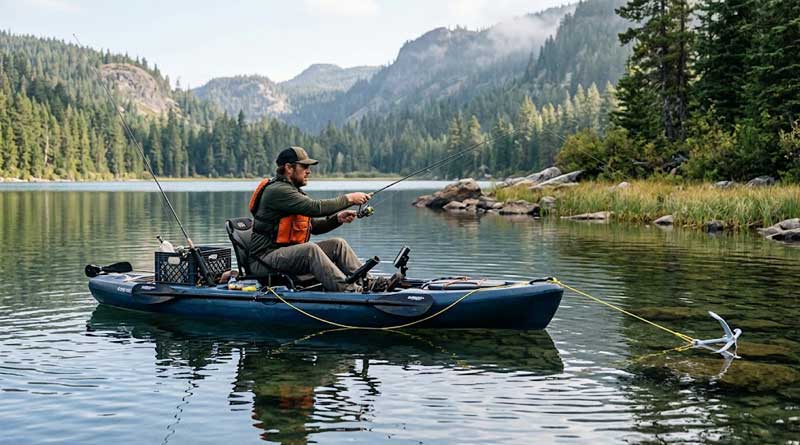
Finding the right kayak anchor is essential for any water enthusiast looking to stay put while fishing, taking photos, or simply relaxing on the water. Without a reliable anchor system, current, wind, and tide can quickly drift your vessel away from your target location. Compact, lightweight, and efficient anchors are specifically designed for small watercraft like kayaks, paddleboards, and canoes. This guide reviews top-rated folding grapnel anchor kits, highlighting their unique features, build quality, and value to help you choose the ideal setup for your aquatic adventures.
1. Gradient Fitness Kayak Anchor Kit

- Weight: 3.5 lbs
- Rope Length: 25 ft (7mm thick)
- Dimensions: 12″ x 3″ (folded)
- Includes: Buoy, snap hook, padded bag
The Gradient Fitness kit offers a compact folding 4-fluke anchor designed specifically for small watercraft. Its 3.5-pound weight provides solid holding power without adding excessive bulk to your setup.
Equipped with 25 feet of marine-grade rope, a flotation buoy, and a stainless steel snap hook, this kit ensures smooth deployment and quick retrieval. The padded drawstring bag protects your hull from scratches during transport.
Pros:
- Fully padded protective storage bag
- Quick fluke locking mechanism
- Heavy-duty rust-resistant construction
Cons:
- Rope length is shorter than some competitors
2. Best Marine and Outdoors Kayak Anchor

- Weight: 3.5 lbs
- Rope Length: 40 ft marine-grade
- Material: Heavy-duty carbon steel
- Attachment: Multi-point shackle setup
Engineered for strength and durability, this 3.5-pound carbon steel anchor is ideal for securing kayaks, SUPs, and jet skis across varying bottom conditions including mud, sand, rocks, and thick weeds.
Featuring an extended 40-foot marine-grade line, it offers superior horizontal scope for extra holding power. The multi-point shackle design allows easy rock rigging to prevent lost gear in snag-heavy areas.
Pros:
- Generous 40ft line length
- Supports rock rigging setups
- Resistant to saltwater corrosion
Cons:
- Slightly heavier for lightweight paddleboards
3. SeaSense Folding Grappling Anchor

- Weight: 1.5 lbs
- Material: Galvanized iron
- Compatibility: Boats 5 ft to 10 ft
- Design: Compact folding 4-fluke
The SeaSense Folding Grappling Anchor provides reliable holding power in an ultra-lightweight 1.5-pound frame. Made from galvanized iron, it stands up well to tough water conditions and resists rust over time.
Designed for watercraft between 5 to 10 feet, it folds up rapidly for seamless stowage in tight storage hatches. It works effectively in sandy, muddy, or heavily weeded lake and river bottoms.
Pros:
- Extremely lightweight and easy to carry
- Durable galvanized finish
- Great value for small watercraft
Cons:
- Does not include line, buoy, or bag
4. Alpinista Kayak Anchor System

- Weight: 3.5 lbs
- Rope Length: 40 ft high-quality line
- Dimensions: 12″ x 3″ (folded)
- Material: Coated carbon steel
Crafted from coated, high-strength carbon steel, the Alpinista anchor kit delivers excellent stability across diverse underwater terrains. Its specialized coating provides additional resistance against fresh and saltwater corrosion.
This comprehensive kit features 40 feet of durable rope, a high-visibility retrieval buoy, and a protective storage bag to keep your gear safe. The retractable claw design folds neatly for effortless transport.
Pros:
- Protective anti-corrosion coating
- Includes 40 feet of strong line
- Folds compactly to protect hull
Cons:
- Storage bag drawstring clip can feel flimsy
5. CHERAINTI Folding Marine Grapnel Kit
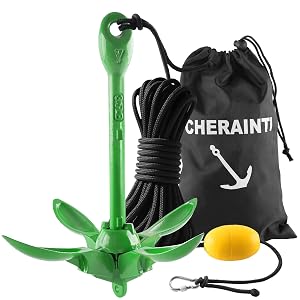
- Weight: 3.5 lbs
- Rope Length: 40 ft (6mm thickness)
- Hardware: Stainless steel carabiner
- Accessories: Buoy, collar lock, storage bag
The CHERAINTI anchor kit is a versatile option suitable for kayaks, canoes, SUP yoga, and small inflatables. Its four-prong grapnel design quickly locks into place using a simple sliding collar mechanism.
Built from rust-resistant metal, this set comes complete with a 40-foot marine rope, bright yellow marker buoy, stainless steel carabiner, and a protective carrying bag for complete ease of use on the water.
Pros:
- Complete all-in-one setup
- High-visibility marker buoy
- Secure sliding lock ring system
Cons:
- Rope thickness is slightly thin at 6mm
How to Choose Kayak Anchor
Selecting the right kayak anchor involves understanding your specific watercraft, the environments you frequent, and how wind and currents affect your stability. A proper anchoring system ensures safety, convenience, and peace of mind while paddling, fishing, or relaxing on the water.
Understanding Anchor Types for Kayaks
While larger boats use heavy fluke, plow, or claw anchors, small watercraft rely on lightweight, portable designs. Choosing the right style depends on bottom conditions and storage capacity.
Grapnel Anchors
Grapnel anchors are by far the most popular choice for kayakers. They feature four folding arms (flukes) that lock open during deployment and fold flat against the shank for storage. They excel in rocky areas, heavy weeds, submerged timber, and gravel bottom structures.
Brush Grippers and Stake-Out Poles
For shallow waters, alternative options exist. Stake-out poles push directly into soft mud or sand to hold a kayak in place without dropping line. Brush grippers clip directly onto overhanging branches or mangrove roots along shorelines.
Key Factors to Consider Before Buying
To narrow down the options, consider these essential attributes before picking a model for your setup.
1. Weight and Size
Anchor weight directly correlates with holding power, but carrying excess weight reduces paddling efficiency. For standard kayaks and paddleboards, a 1.5 lb to 3.5 lb anchor is typically sufficient for most calm to moderate water conditions.
2. Line Length and Scope Ratio
Scope refers to the ratio of anchor line deployed relative to water depth. A standard rule of thumb is a 5:1 or 7:1 ratio. For example, in 5 feet of water, deploying 25 to 35 feet of line allows the anchor to lay flat and grip the bottom effectively.
3. Material and Corrosion Resistance
Water conditions dictate material needs. Galvanized iron and coated carbon steel offer excellent resistance against rust and corrosion in both freshwater lakes and harsh saltwater coastal marine environments.
Kayak Anchor Comparison
| Anchor Style | Ideal Bottom Type | Best Weight Range | Portability |
|---|---|---|---|
| Folding Grapnel | Rocks, Weeds, Gravel, Mud | 1.5 lbs – 3.5 lbs | High (Folds compact) |
| Stake-Out Pole | Shallow Sand, Soft Mud | N/A (Poles 6-8ft) | Moderate (Long shaft) |
| Brush Gripper | Shoreline Trees, Reeds | Under 1 lb | Very High (Pocket-sized) |
Essential Accessories for Kayak Anchoring
An anchor kit requires supporting accessories to function safely and efficiently on a small watercraft.
Flotation Buoys
A bright buoy connected near the anchor line keeps the line visible on the surface. If you need to disconnect rapidly due to unexpected weather or a large fish, the buoy marks your line for quick recovery later.
Anchor Trolley Systems
An anchor trolley uses a pulley loop running along the side of your kayak from bow to stern. It allows you to shift the anchor attachment point forward or backward, keeping your vessel facing directly into wind or current to prevent capsizing.
Safety Tips When Anchoring a Kayak
- Never tie an anchor line off to the side or center of your kayak in strong currents, as this can pull the gunwale under water and flip the boat.
- Always attach anchor lines to the extreme bow or stern, preferably using an anchor trolley system.
- Keep a quick-release clip or sharp knife accessible in case of emergency cut-offs.
- Rig your anchor with a breakaway zip-tie method when fishing in rocky bottoms to easily free snagged flukes.