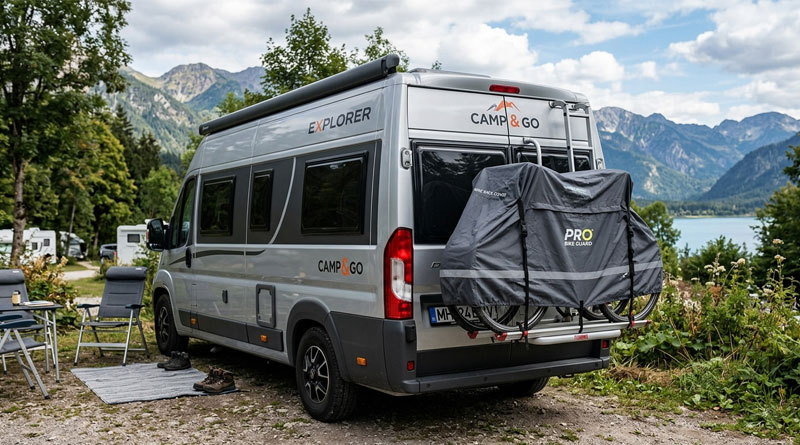
Your bikes endure a brutal gauntlet every time you hit the road — pelting rain, scorching UV rays, flying gravel, and sticky road grime. A motorhome bike rack cover is the unsung hero standing between your prized rides and all of that punishment. It also quietly discourages thieves from taking a closer look. Get the right one and your bikes roll off the rack at your destination exactly as they loaded — clean, scratch-free, and ready to ride.
1. STARTWO Bike Cover for Transport On Rack
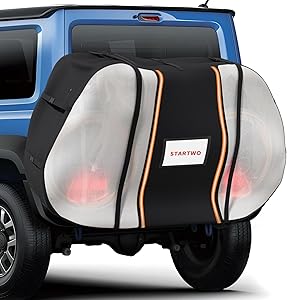
- Cover Size: 80″L x 36″W (Top) x 18″W (Bottom) x 50″H (fits 2 standard bikes)
- Material: Premium 400D oxford cloth with PU coating, clear PVC panels
- Visibility Features: License plate window, translucent PVC for taillights, reflective strip
- Windproof Design: 9 quick-release buckles, drawstring, 2 tie-down straps
Most bike covers treat road safety as an afterthought. STARTWO doesn’t. Built from 400D oxford cloth with a PU coating, ripstop weave, double stitching, and heat-sealed seams, it handles the weather side of things without complaint. What makes it genuinely different is the visibility engineering: a dedicated clear PVC pocket slots your license plate neatly into view, while strategically positioned translucent PVC panels let your rear brake lights and turn signals bleed right through the fabric. For anyone hauling bikes on an SUV or RV where obscured lighting is a real concern, that’s a meaningful design decision.
Keeping the cover locked down at speed is where the nine quick-release buckles and drawstring earn their keep, cinching the cover into a snug, rattle-free fit. Two supplemental tie-down straps add another layer of grip, and STARTWO even suggests pairing it with a 4×6 cargo net at highway speeds for maximum confidence. One honest caveat: wipe the transparent panels clean before departure, since road film can cloud visibility quickly. Taillight bleed-through also depends on your specific vehicle geometry, so results may vary.
- Pros:
- Integrated license plate window keeps you legally visible
- Translucent PVC panels allow taillights and signals to show through
- Durable 400D oxford with ripstop weave and heat-sealed seams
- Cons:
- Taillight visibility not guaranteed across all vehicle types
- Cargo net separately recommended for high-speed travel
2. Zettum Bike Cover for Transport 2 Bike

- Cover Size: 81″ x 37″ x 51.5″ (L x W x H) for 2 bikes
- Material: Premium 600-Density oxford cloth with PU coating
- Windproof Design: 9 quick-release buckles, 2 buckle straps, 2 hook traps
- Durability: Fading-resistant for at least 3 years
Where lighter covers struggle after a season of hard use, the Zettum is built to outlast them by a significant margin. The 600-density oxford cloth with robust PU coating handles sunlight, rain, snow, wind, dust, tree sap, and bird droppings without flinching — the kind of comprehensive elemental resistance that matters on extended motorhome tours where you can’t predict what conditions you’ll drive through. The heavier fabric also resists tearing far better than thinner alternatives, so sharp handlebar ends and pedal edges are far less likely to punch through over time.
The windproofing system is where Zettum pulls ahead of the competition at this price point. Nine quick-release elastic buckles create an initial snug envelope around your bikes, and then two additional buckle straps and two hook traps lock everything down further — a layered approach that genuinely prevents the flapping and shifting that can cause chafing damage on long hauls. The material is independently tested to resist fading and fabric degradation for at least three years. One practical note: this cover can block taillights on smaller vehicles, so carrying supplemental clip-on lights is advisable.
- Pros:
- Heavy-duty 600D fabric resists tearing and degradation
- Superior all-element waterproofing and weather resistance
- Layered 9-buckle-plus-strap windproof system
- Cons:
- Can obscure taillights on lower-profile vehicles
- Supplemental taillights recommended for full road safety
3. Favoto Bike Cover for Transport 2 Bikes
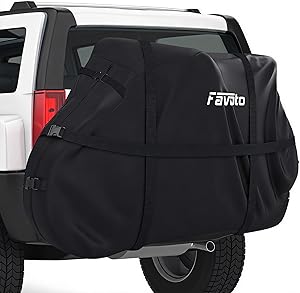
- Cover Size: 79″ L x 35.4″ W x 49.2″ H (fits 2 bikes)
- Material: 600D Oxford tear-resistant fabric, soft cotton interior
- Water Resistance: Water pressure ≧ 5000 mmH₂O
- Windproof Features: Adjustable drawstrings, 9 windproof buckles
Most bike rack covers focus entirely on what’s happening outside. The Favoto quietly solves the problem that develops inside: friction damage to your bike’s finish. The soft cotton interior lining acts as a buffer between the cover fabric and your paintwork, absorbing vibration and preventing the abrasion marks that can appear after a few hundred miles on rougher roads. On the outside, 600D Oxford tear-resistant material with double-stitched seams and heat-sealed construction handles the environmental punishment — and water pressure resistance exceeding 5000 mmH₂O means genuine waterproofing rather than just water repellency.
The PU coating doubles as UV protection, keeping your bike’s paint from sun-bleaching during long sunny stretches. At 5.14 lbs it’s a hefty cover, but that weight translates directly into durability. Nine windproof buckles and adjustable drawstrings dial in the fit across different bike configurations, and the whole assembly folds compactly into an included storage bag when you’re ready to ride. The main thing to get right upfront is measurement — confirm your bikes fit within the 79″ x 35.4″ x 49.2″ envelope before purchasing, as there’s no taillight transparency feature to compensate for a poor fit.
- Pros:
- Soft cotton interior prevents scratches and abrasion to bike finishes
- Robust 600D Oxford outer shell with heat-sealed seams
- Impressive 5000 mmH₂O waterproof rating
- Cons:
- Requires accurate pre-purchase bike measurement
- No integrated taillight visibility panels
4. NEVERLAND Bike Cover for Transport on Rack

- Material: 5-layer heavy duty 600D ripstop oxford fabric
- Visibility Features: 2 striking orange reflective inverted triangle signs
- Windproof Design: 4 adjustable straps, 3 separate straps
- Cover Size: 83″ L x 40″ W x 48″ H (fits 2 standard bikes)
Five layers of protection sounds like marketing speak until you’re driving through an unexpected hailstorm and your bikes emerge completely unscathed. NEVERLAND constructs this cover from 5-layer heavy-duty 600D ripstop oxford with waterproof tape reinforcement and double stitching throughout — a construction approach that takes seriously what most covers handle casually. The result is a cover that holds its own across all four seasons, shielding your bikes from sun, rain, wind, and dust without the material fatigue that plagues single-layer competitors over a couple of years of regular use.
The safety thinking here is also unusually specific. Rather than passive reflective strips, NEVERLAND plants two vivid orange reflective inverted triangle signs on the cover — a shape the brain registers as a hazard warning, which is exactly the response you want from following drivers in poor visibility. Seven total strap attachment points (four adjustable plus three independent straps) create a windproofing system with genuine redundancy. Worth flagging: the individual straps need to be pre-threaded before the cover goes on, and the cover itself will block your vehicle’s taillights, so plan for supplemental lighting.
- Pros:
- Five-layer 600D ripstop construction for exceptional durability
- High-contrast orange reflective triangle signs for low-light visibility
- Seven-point strap system for superior windproofing
- Cons:
- Blocks vehicle taillights — additional lighting required
- Individual straps need pre-installation before fitting
5. JUIN Bike Covers Outdoor Storage

- Cover Size: 80″ x 36″ x 50″ (L x W x H) for 2 bikes
- Material: Premium 900-density Oxford fabric with PU coating
- Waterproof Rating: Withstands water pressure exceeding 16,000 Pa
- Safety Features: Transparent PVC panels for taillights, 2 fluorescent reflective strips
If 600D is heavy duty, 900D is in a different category altogether. JUIN’s cover is made from 900-density Oxford fabric — a material density rarely seen in bike covers — combined with a high-performance PU coating that stays supple and crack-resistant long after cheaper PVC covers have gone brittle. The practical result is a cover that shrugs off abrasion and tearing under conditions that would compromise lighter options. And the waterproofing figure of 16,000 Pa isn’t a typo — that’s not resistance to drizzle, that’s resistance to sustained heavy rain and driving storm conditions.
Eight secure fasteners and two independent webbing straps handle wind without drama, keeping the cover anchored even when passing trucks create significant turbulence. The transparent PVC panels on both sides solve the taillight visibility problem cleanly, allowing your vehicle’s lights to show through without any modification or additional hardware. Two fluorescent reflective strips add passive nighttime visibility. The 900D material does add some weight compared to lighter covers, and you’ll want to measure your bikes carefully before buying, but for travellers who prioritize longevity and genuine weather protection above all else, this is the cover to beat.
- Pros:
- Ultra-robust 900D Oxford fabric — highest density on this list
- Exceptional 16,000 Pa waterproof rating for extreme conditions
- Transparent PVC side panels maintain taillight visibility
- Cons:
- Heavier than standard 600D alternatives
- Bike dimensions need careful verification before purchase
6. iCOVER Bike Cover for 2 Bikes transport on Hitch Rack

- Cover Size: 80″ L x 36″ W x 50″ H (fits 2 bikes or 1-2 e-bikes)
- Material: 600D heavy-duty polyester oxford with PU coating
- Included Accessories: DOT approved 12V magnetic towing light kit, bungee cargo net
- Safety Features: Tail lights, reflective tapes, clear license plate pocket
Every other cover on this list asks you to think about what to do when your taillights are obscured. iCOVER solves it outright by including a DOT-approved 12V magnetic towing light kit in the box — a $20+ accessory that plugs into your vehicle’s trailer connector and gives you fully functional brake lights, turn signals, and running lights even with bikes completely blocking the originals. The 600D polyester oxford shell with waterproof PU coating handles snow, hail, rain, wind, and UV exposure competently, while the bundled bungee cargo net keeps the whole assembly locked down at highway speeds.
A clear license plate pocket is integrated directly into the cover, keeping you compliant with traffic regulations without the fumbling improvisation that other covers demand. Reflective tape strips on both sides handle passive low-light visibility. The cover is also explicitly rated for e-bikes, accommodating the bulkier frames and wider footprints that standard covers often struggle with. Two important compatibility notes before purchasing: your vehicle needs a tow adapter to use the included light kit, and this cover is engineered specifically for hitch-mount racks — trunk-mount rack owners should look elsewhere.
- Pros:
- Includes DOT-approved 12V magnetic towing light kit — no separate purchase needed
- Integrated clear license plate pocket for legal compliance
- Heavy-duty 600D waterproof fabric rated for e-bikes
- Cons:
- Requires a tow adapter — not compatible with all vehicles
- Not designed for trunk-mount racks
7. Puroma Bike Cover for Transport on Rack

- Cover Size: Up to 82″ x 38″ x 47″ (L x W x H) for 2 bikes
- Material: 600D waterproof fabric
- Water Resistance: Withstands water pressure up to 29400 Pa
- Security Features: 5 adjustable windproof buckles, 2 lock holes, reflective strips
The waterproof rating on the Puroma cover is genuinely remarkable: 29,400 Pa. For reference, that’s roughly six times the water pressure threshold most covers advertise and well beyond what any road weather condition will throw at you. The 600D waterproof fabric also delivers reliable UV resistance, so both the cover itself and the bike paint underneath are protected from long-term sun bleaching — relevant for anyone doing extended summer tours in high-altitude or desert environments where UV exposure is intense and sustained.
Five adjustable windproof buckles let you customize the tension across different bike configurations, ensuring the cover wraps snugly rather than flapping loose on irregularly shaped loads. But the standout differentiator here is the dual lock holes — positioned front and back, they let you thread a cable lock through the cover, rack, and bikes simultaneously, turning the cover itself into a theft deterrent rather than just a concealment layer. Reflective strips around the exterior handle nighttime visibility. The one recurring caveat: this cover will obscure taillights on smaller vehicles, so plan accordingly.
- Pros:
- Industry-leading 29,400 Pa waterproof rating
- Dual lock holes enable cable-lock theft deterrence
- Five adjustable buckles accommodate varied bike shapes
- Cons:
- Will block taillights on lower-profile vehicles
- Requires attentive bike positioning for the best fit
How to Choose the Right Motorhome Bike Rack Cover
Every kilometre your motorhome travels exposes your rack-mounted bikes to a relentless parade of hazards: stone chips thrown up by passing trucks, UV radiation that slowly bleaches paint and degrades rubber, wind buffeting that makes a loose cover into a flapping, abrasive menace, and rain that finds its way into every unprotected joint and mechanism. A good bike rack cover neutralises all of that. A bad one just adds a new category of damage. Here is exactly what to look for when making your decision.
Understand What a Bike Rack Cover Actually Does
It is tempting to think of a bike rack cover as a simple bag that keeps rain off. In practice it does considerably more than that. The cover acts as an aerodynamic shroud that reduces wind resistance and prevents the fabric from flapping against your bike frames — a surprisingly common cause of paint chips and scratch damage on long drives. It provides UV protection that stops sun bleaching of frame paint, saddle materials, and tyre compounds. It keeps road grime, oil mist, and fine particulates out of drivetrains, brake mechanisms, and electronic components on e-bikes. And it makes your bikes visually anonymous to opportunistic thieves scanning motorhome parks and overnight stops.
Understanding the full scope of protection the cover provides will help you identify which features genuinely matter for how you travel and which are optional extras.
Fabric Weight and Construction: The Numbers That Matter
The denier rating of the fabric — the D number — tells you the density of the weave. A 400D fabric is the lightest you should consider for motorhome use. It offers adequate protection for short trips and mild weather but will show wear sooner than heavier options. 600D is the sweet spot for most travellers: genuinely tough, tear-resistant, and available across a wide price range. 900D is the heaviest commonly available weight and is worth the extra cost if you do extended tours in genuinely harsh conditions.
Beyond the denier rating, look for ripstop weave construction, which adds a grid of reinforcing threads that prevent small punctures from propagating into large tears. Double stitching at seams and heat-sealed tape over those seams prevents water infiltration at the points where plain stitching would otherwise wick moisture inward. PU (polyurethane) coating on the outer surface provides the waterproofing layer — check that this coating extends to the seams, not just the flat panels.
Waterproofing Ratings Explained
Manufacturers express waterproofing in two different units, which causes confusion when comparing covers. The mmH₂O figure (millimetres of water column) and the Pa figure (Pascals) measure the same thing — how much water pressure the fabric can withstand before water begins passing through. A rating of 1500 mmH₂O is considered shower-proof. 3000 mmH₂O handles moderate rain. Anything above 5000 mmH₂O is genuinely waterproof in heavy rain. The covers in this review range from 5000 mmH₂O up to ratings equivalent to well over 20,000 mmH₂O — meaningful differences if you regularly drive through Atlantic weather systems or mountain storm fronts.
If a cover lists no waterproof rating at all, treat it as water-resistant at best and plan accordingly.
Measuring Your Setup Correctly
The single most common mistake when buying a bike rack cover is relying on approximate bike dimensions. The cover needs to fit not your bikes as they sit on the ground, but your bikes as they sit on your specific rack, on your specific motorhome, with all accessories attached.
Mount your bikes on the rack before measuring. Take the overall length from the front wheel to the rear of the furthest protruding element — often a pannier rack, child seat mount, or rear light cluster. Measure the total height from the rack platform to the highest point of the handlebar or saddle, whichever is taller. Measure the width across the widest point, typically the handlebars of the outermost bikes. Add at least 5cm of clearance to each dimension when selecting your cover size. A cover that is marginally too small cannot be forced into position and will tear at the seams; a cover that is significantly too large will collect wind and billow destructively.
Also note whether your rack holds bikes side by side or one in front of the other — this affects the width dimension considerably.
Windproofing: The Feature Most People Underestimate
At motorhome cruising speeds, wind force against a poorly secured cover is substantial. A cover that lifts even partially creates a sail effect that strains attachment points, flaps the fabric against your bike frames, and — in extreme cases — can strip the cover off entirely on the motorway. The securing system is therefore not a secondary consideration; it is as important as the fabric quality.
Look for a minimum of four buckles, but eight or nine provides meaningfully better security. Quick-release elastic buckles are preferable to simple strap buckles because elastic accommodates the slight variations in bike size without leaving slack. Drawstring hems around the bottom of the cover cinch the cover against the underside of the rack. Independent tie-down straps that loop underneath the rack platform provide the final layer of security. Covers that include all three of these securing methods — buckles, drawstring, and under-rack straps — will stay in place at motorway speeds without constant readjustment.
Road Safety Features You Cannot Ignore
A bike rack cover that makes your motorhome harder to see on the road is not just an inconvenience — it is a legal and safety issue. Before purchasing, check three specific things.
First, does the cover block your vehicle’s taillights? On most motorhomes with rear-mounted racks, the answer is yes unless the cover specifically addresses this with transparent PVC panels or unless you add external towing lights. Check local traffic regulations for your travel region — in most European countries and most US states, functional taillights are legally required at all times.
Second, does the cover have a license plate solution? Many jurisdictions require your license plate to be visible even when bikes are mounted. A clear pocket that holds the plate, or transparent fabric over the plate location, solves this cleanly. Some travellers use a printed photocopy of the plate in a waterproof sleeve as a backup.
Third, does the cover have reflective elements? Reflective strips or panels significantly increase your motorhome’s visibility in low-light conditions and at night, giving following traffic more time to react to your presence.
Anti-Theft Considerations
A cover provides visual obscurity that reduces opportunistic theft — if thieves cannot see the bikes, they are less likely to target them. However, a determined thief can remove a cover in seconds unless it is physically secured. Look for covers with integrated lock holes: eyelets through which you can thread a cable lock, securing the cover to the rack and making it significantly harder to remove quietly. Pair this with a quality cable or chain lock through the bike frames, and the combination creates a deterrent that most opportunistic thieves will simply walk past.
Ease of Use Over the Long Run
A cover you rarely use because it is fiddly to install is worse than no cover at all. Before committing, consider how easy the cover is to fit on your specific rack configuration. Covers with bottom openings are generally easier to slide over bikes from below than covers that require threading from the top. A storage bag that compresses the cover into a manageable package makes it practical to keep in the motorhome rather than leaving it permanently on the bikes. And a soft interior lining — cotton or fleece — means you do not need to pad handlebar ends and pedals before fitting, saving time at every stop.
Maintenance to Extend Cover Life
Rinse the cover with fresh water after any trip involving road salt — particularly winter driving or coastal routes — as salt accelerates fabric degradation and attacks metal buckles and hardware. Wash the cover with mild soap and lukewarm water when road grime builds up; avoid machine washing as the agitation damages seam tape and PU coating. Before folding for storage, ensure the cover is completely dry to prevent mildew from developing inside the storage bag. Inspect the seams, buckle attachment points, and any transparent PVC panels periodically for cracking or delamination, and address small damage with seam sealer before it becomes a larger failure.
Making the Final Decision
Match the cover to how you actually travel. Short weekend trips on dry roads with a two-bike standard rack and a budget constraint points toward the STARTWO or Zettum. Extended all-season touring with e-bikes on a hitch rack and a priority on safety lighting points firmly toward the iCOVER. Maximum weather protection above all other criteria points to the JUIN or Puroma. Scratch protection for high-end bike finishes makes the Favoto’s cotton interior uniquely valuable. And if you simply want the most durable fabric regardless of everything else, the NEVERLAND’s five-layer ripstop construction is the answer.
No single cover is right for every situation. But the wrong cover — or no cover at all — will cost you in bike maintenance, premature wear, and the kind of slow deterioration that only becomes obvious when you try to sell a bike and notice the paint is gone on the back half.