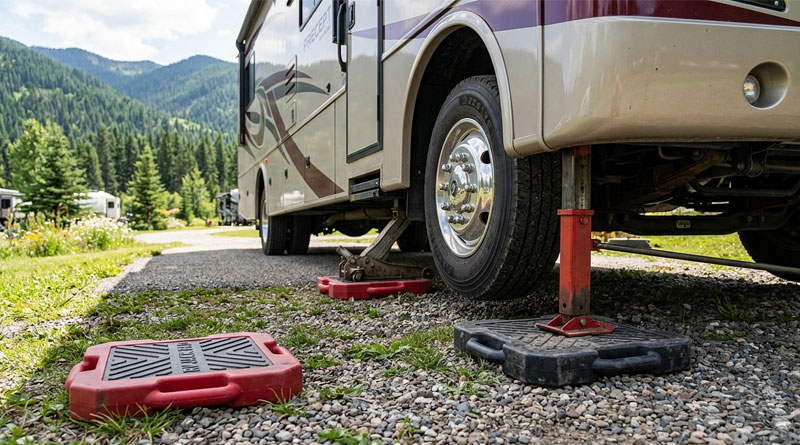
Hitting the open road in an RV is the ultimate dream of liberty, but a shaky living space can quickly turn a sunset view into a balancing act. Achieving a rock-solid foundation is the unsung hero of a successful trip. To prevent your rig from sinking into the earth or wobbling during a midnight trek to the fridge, you need the right ground support. Let’s explore the top-tier jack pads designed to keep your adventure grounded and stable.
1. SnapPad Xtra Permanent RV Leveling System Jack Pads

- System Compatibility: LCI four-point automatic leveling systems with 9” jacks
- Material: Recycled American tires (rubber, high-strength resin)
- Surface Area Increase: Over 61% additional surface area
- Installation: Permanent, snap-on installation
The SnapPad Xtra 4-Pack is the ultimate “set it and forget it” upgrade for the modern traveler. Specifically tailored for LCI automatic systems with 9-inch jack feet, these pads are forged in the USA from recycled tire crumb and high-strength resin. By snapping directly onto your existing metal feet, they expand your footprint by a staggering 61%, significantly lowering the pressure exerted on the ground. This extra surface area doesn’t just stop the sink; it creates a massive friction barrier that keeps your rig from sliding on slick concrete or shifting in high winds.
Beyond the impressive stability, these pads act as a permanent protective armor against the elements. They shield your metal components from rust-inducing moisture and the abrasive nature of gravel or salt. Because they remain attached during travel, you can say goodbye to crawling in the mud to position heavy blocks or cleaning dirty pads before storage. The natural vibration-dampening properties of the heavy-duty rubber also result in a much quieter interior experience, making every footstep inside feel more solid and secure. For those prioritizing efficiency and long-term durability, this is a premium, hassle-free investment.
- Pros:
- Permanent, hassle-free installation
- Significantly increases stability and grip
- Protects jack feet from environmental damage
- Cons:
- Specific compatibility requirements
- Higher initial investment
2. Camco Camper/RV Large Stabilizer Jack Pads

- Dimensions: 14″ x 12″ x 7/8″ (large footprint)
- Material: Reinforced, UV-stabilized resin
- Design: Honey-comb load bearing, interlocking
- Compatibility: Stack jacks, slide-out supports, fifth wheel/swing-down stabilizers
If you find yourself camping on soft forest floors or sandy coastal spots, the Camco Large Stabilizer Jack Pads offer the expansive support you need. These pads feature a massive 14″ x 12″ footprint, designed specifically to prevent stabilizer jacks from plunging into the earth. Crafted in the USA from UV-stabilized resin, they utilize a patented honeycomb internal structure. This clever engineering allows the pads to remain relatively lightweight while possessing the structural integrity to disperse massive loads without cracking or warping under pressure, making them a staple for travel trailers and fifth wheels.
User convenience is at the forefront of this design. The pads include a built-in handle for quick positioning and an interlocking mechanism that keeps the pair together during transit. A heavy-duty strap is included to ensure they don’t rattle around in your storage bay. While they are incredibly versatile for everything from awning arms to slide-out supports, remember they are strictly for stabilization and not intended for high-pressure hydraulic leveling. For the RVer who needs reliable, broad-base support that is easy to carry and store, Camco provides a time-tested solution that balances size with portability perfectly.
- Pros:
- Large footprint provides excellent stability
- Durable, UV-stabilized resin construction
- Interlocking design for compact storage
- Cons:
- Not suitable for hydraulic jacks
- Can be bulky despite interlocking design
3. Kohree 4 Pack RV Stabilizer Jack Pads

- Compatibility: Scissor jack bases 8.75″-9.5″ length, 5.51″ width
- Material: High-strength solid rubber
- Weight: 2.9 pounds per pad
- Installation: Snap-in, with optional cable tie/screw reinforcement
Scissor jacks are notorious for slipping on slick surfaces, but the Kohree 4-Pack of Solid Rubber Pads solves this with brute force and clever grip. Unlike thin plastic alternatives, these pads are molded from thick, industrial-grade rubber that naturally bites into the ground. They are designed to fit standard scissor jack feet, providing a cushioned barrier that prevents the metal from digging into asphalt or sliding on wet grass. Each pad features a specialized drainage bottom to prevent water from pooling against your jack, which is critical for preventing the rust and corrosion that typically shortens the life of leveling gear.
Installation is a breeze—simply snap them onto the foot of your scissor jack. For those who want extra peace of mind during long hauls, Kohree includes hardware for optional screw or cable tie reinforcement to ensure they stay put permanently. Because they are made of solid rubber, they excel at absorbing the micro-vibrations of people walking inside the RV, creating a much more “planted” feeling. While they are slightly heavier than plastic blocks, the tradeoff in durability and grip is well worth the weight. They are an economical and rugged choice for anyone tired of hauling around heavy wooden planks or cracked plastic blocks.
- Pros:
- Highly durable solid rubber construction
- Protects jacks from damage and elements
- Enhances stability on uneven/slippery ground
- Cons:
- Specific size compatibility check required
- Heavier than some plastic alternatives
4. Camco RV Stabilizing Jack Pads

- Support Area: 6 3/16″ x 6 3/16″ per pad
- Material: UV-stabilized polypropylene resin
- Design: Quad-Grid load bearing, interlocking
- Storage: Interlocking with built-in handle and strap
For the RVer who values organization and lightweight gear, the Camco 44595 4-Pack is a masterclass in utility. These pads use a unique Quad-Grid pattern that distributes the vertical pressure of your stabilizer jacks across the entire surface area of the pad. Molded from high-impact, UV-stabilized polypropylene, they are built to resist the cracking and fading that typically occurs after long summers in the sun. Though they have a smaller footprint than their “large” siblings, they are exceptionally rigid, making them ideal for use on gravel or packed dirt where a larger, floppier pad might be unnecessary.
One of the standout features of this set is how they handle storage. The four pads interlock into a single, tight block, secured by a heavy-duty strap with a built-in handle. This means they take up minimal space in your storage bay and won’t scatter during travel. While they are perfect for stack jacks, fifth-wheel stabilizers, and awning supports, they are not rated for the high-intensity loads of hydraulic leveling systems. If you are looking for an affordable, American-made set of pads that are easy to carry and will last for seasons of weekend getaways, this Camco set is a reliable workhorse.
- Pros:
- Robust, UV-stabilized polypropylene construction
- Quad-Grid design for effective load dispersion
- Interlocking for compact, organized storage
- Cons:
- Not intended for hydraulic jacks
- Smaller individual footprint than some alternatives
5. OULEME RV Leveling Block Flex Pads

- Dimensions: 12″ (L) x 12″ (W) x 3/4″ (H) per pad
- Weight: 1.6 kg (3.5 lbs) per pad
- Functionality: Non-slip, anti-friction, shock-absorbing
- Versatile Use: RV jacks, stabilizers, tire protection
The OULEME Flex Pads are the “Swiss Army Knife” of ground support. Measuring 12 inches square, these pads are made from a heavy, flexible rubber that acts as both a stabilizer and a protective mat. Their primary mission is to provide a non-slip base for your leveling blocks or jacks. Because they are flexible, they conform to the micro-textures of the ground—whether it’s jagged rocks or smooth asphalt—ensuring that your leveling system doesn’t “skate” or shift. This flexibility also makes them excellent shock absorbers, soaking up vibrations that can make an RV feel bouncy during high winds or heavy movement.
What sets the OULEME pads apart is their multi-functional nature. While they work brilliantly under jacks, they are also thick enough to serve as tire savers. Placing them under your tires during winter storage helps prevent flat-spotting and protects the rubber from the moisture and temperature extremes of a concrete pad. They are heavy enough to stay put without being unmanageable and are extremely easy to clean with a simple hose-down. For the RVer who wants a high-quality, versatile rubber mat that offers better grip and shock absorption than hard plastic, these flex pads are a sophisticated choice for any terrain.
- Pros:
- Large footprint provides good stability
- Excellent non-slip and shock-absorbing properties
- Protects plastic blocks and jack feet
- Cons:
- Heavier than lighter plastic alternatives
- Might accumulate dirt on textured surface
6. ROBLOCK 4-Pack 6”H Trailer Jack Blocks

- Dimensions: 6″ tall, 11.5″ L x 11.5″ W
- Material: High-performance polymer with anti-UV aging additives
- Load Capacity: 40,000 lbs G.V.W per block
- Features: Stackable design, carry hole with rope, storage bag
- Pros:
When the terrain gets aggressive, standard pads might not be enough; that’s where the ROBLOCK Trailer Jack Blocks come into play. These are not just pads—they are 6-inch tall pedestals built to eliminate “jack extension,” which is the leading cause of RV sway. By using these blocks, you don’t have to extend your jacks as far, keeping the center of gravity lower and the rig much more stable. Made from a high-performance polymer, each block can support a massive 40,000 lbs, making them suitable for the largest fifth wheels and heavy-duty trailers on the market today.
The ROBLOCK system is designed for the long-haul traveler. The blocks are stackable, allowing you to customize your height for drastically uneven campsites. They include a recessed top that fits 9-inch round hydraulic feet, tongue jacks, and scissor stabilizers with ease. For transport, the designers added a clever carry hole with a rope handle, making it easy to grab them from under the rig without getting your hands filthy. The included storage bag keeps the set tidy in your basement compartment. If you frequently camp on slopes or simply want the most “overbuilt” stabilization system available, these blocks are the gold standard for heavy rigs.
- Pros:
- Extremely sturdy with high load capacity
- Wide compatibility with various jack types
- Stackable for adjustable height and leveling
- Cons:
- Can be bulky even with storage bag
- Less surface area contact than some dedicated pads
7. Kohree 2 Pack Heavy Duty Rubber RV Stabilizer Jack Pads

- Compatibility: Scissor jack foot plates 8.75″-9.5″ (L) x 5.51″ (W)
- Material: High-strength solid rubber
- Weight: 2.9 pounds per pad
- Installation: Snap-in, with optional cable tie/screw reinforcement
Specifically engineered for the heavy-duty demands of larger travel trailers and fifth wheels, this Kohree 2-pack provides targeted protection for scissor jacks. These aren’t your typical thin rubber mats; they are substantial, 2.9-pound blocks of high-strength solid rubber. They are designed to encapsulate the jack foot, creating a permanent cushion that prevents the metal from ever touching the ground. This setup is particularly effective for those who camp in harsh environments where salt air or constant mud can quickly corrode metal jack components. The rubber is resistant to UV rays, oil, and tar, ensuring they won’t degrade after a few seasons.
The non-slip reinforced bottom is the star of the show here, providing exceptional grip on treacherous surfaces like loose gravel, wet sand, or even snow. Installation is incredibly fast—taking about 20 seconds to snap onto the foot—and the included cable ties offer a secondary layer of security so they won’t bounce off on washboard roads. Because they are sold in a 2-pack, they are perfect for those who only need to replace specific pads or for smaller trailers with only two stabilizers. For the owner of a heavy rig who wants the ultimate grip and protection for their scissor jacks, these heavy-duty pads deliver industrial-grade performance.
- Pros:
- Heavy-duty solid rubber ensures durability
- Excellent protection against elements and terrain damage
- Significantly improves stability on varied surfaces
- Cons:
- Strict size compatibility requirement
- Heavier than lighter plastic jack pads
Mastering the Foundation: The Ultimate Guide to Purchasing RV Jack Pads
When you pull into a breathtaking campsite, the last thing you want to worry about is your multi-ton home-on-wheels slowly sinking into the scenery. RV jack pads are the foundational bridge between your rig’s leveling system and the earth. Choosing the right set isn’t just about picking the first thing you see on the shelf; it’s about matching material science to your camping habits. This guide will dive deep into the technicalities of jack pads, helping you navigate the market with the expertise of a full-time traveler.
Section 1: Identifying Your Rig’s Leveling Anatomy
Before you even look at a product page, you must understand what you are trying to support. The world of RVs uses three main types of leveling and stabilization, and the pads you need will vary drastically depending on which one you have.
Hydraulic Leveling Systems: Found on larger Class A motorhomes and high-end fifth wheels, these systems exert thousands of pounds of pressure onto small, metal feet. You need heavy-duty rubber pads (like SnapPads) or high-density polymers that won’t crack under localized pressure. Warning: Many lightweight plastic pads explicitly forbid use with hydraulic systems because the concentrated force can shatter the resin.
Scissor Jacks: These are common on travel trailers. They are designed to stabilize, not lift. Because their feet are often narrow, you need pads with a recessed “pocket” or a high-friction rubber surface to prevent them from slipping out from under the rig as it shifts.
Electric Stabilizers: Often seen on mid-sized trailers, these deploy with a motor but carry less weight than hydraulics. Large-footprint plastic pads are usually the go-to here, as they provide the necessary surface area to prevent sinking without the weight of solid rubber.
Section 2: Material Science – Plastic vs. Rubber vs. Wood
The “soul” of a jack pad is its material. Each has a specific job description.
- Polypropylene/Polyethylene: This is the modern standard for portable pads. It is incredibly lightweight and resistant to water and chemicals. Look for “UV-Stabilized” labels. Without this, the sun will turn your pads brittle in a single season. Plastic is great for mud and soft soil because it can be engineered with “grids” that bite into the earth.
- Recycled Rubber: This is the premium choice for grip and quiet. Rubber pads are naturally non-slip, making them the only choice for camping on slanted concrete or slick asphalt. They also dampen vibrations. If you hate the “shaking” feeling when someone walks in the RV, rubber pads are your solution. However, they are significantly heavier than plastic.
- The “Old School” Wood: While cheap, wood is a poor long-term investment. It absorbs moisture, harbors wood-boring insects like termites, and can split unexpectedly under load. If you must use wood, ensure it is pressure-treated, but modern polymers have largely rendered wood obsolete in the RV world.
Section 3: Decoding Surface Area and “The Sink Factor”
The primary physics of a jack pad is weight distribution. Pressure is defined as force divided by area. By increasing the surface area of your jack foot, you decrease the pressure on the ground. For example, a 9-inch round jack foot has about 63 square inches of surface area. Adding a pad that increases that to 11 inches boosts your area to nearly 100 square inches. This can be the difference between staying level and waking up 2 inches lower on one side. If you frequently camp in the Pacific Northwest or rainy areas, prioritize the largest footprint you can comfortably store.
Section 4: Portability and the “Daily Grind” of Setup
Consider your physical ability and your storage space. If you move every two days, “Permanent” pads like SnapPads are a life-saver because you never have to touch them. If you are a “weekend warrior” with limited storage, look for interlocking designs. These pads stack like Legos and usually come with a carrying strap. Also, pay attention to weight; a set of four heavy-duty rubber pads can weigh over 15 lbs. If you have a strict cargo carrying capacity (CCC), lightweight plastic might be your only option.
Section 5: Environmental Resilience and Longevity
Your pads live in the worst conditions: mud, oil, road salt, and blistering sun.
- Drainage: Ensure the pads have channels to let water escape. Standing water between a metal jack foot and a pad is a recipe for rust.
- Chemical Resistance: In many RV parks, you’ll be on asphalt. Some cheap plastics react with the chemicals in asphalt and can actually melt or fuse to the ground. Stick to high-quality resins or recycled rubber to avoid this.
- Temperature Stability: You want a pad that won’t become glass-brittle in 0°F weather or turn into “toffee” in 110°F Arizona heat.
Section 6: Making the Final Decision
To finalize your purchase, follow this checklist:
- Measure your current jack feet (diameter and shape).
- Check your RV’s GVWR to ensure the pads can handle the load.
- Evaluate your typical terrain (Concrete? Grass? Gravel?).
- Decide on Permanent vs. Portable.
Investing in a quality set of jack pads is an investment in your RV’s chassis and your own peace of mind. A stable rig is a happy home, and with the right pads, you can park anywhere with confidence.
Conclusion: Whether you choose the permanent convenience of SnapPads or the rugged versatility of OULEME rubber mats, the right jack pads are the foundation of your freedom. Don’t let a soft campsite ruin your hard-earned vacation—gear up, level out, and enjoy the journey.