
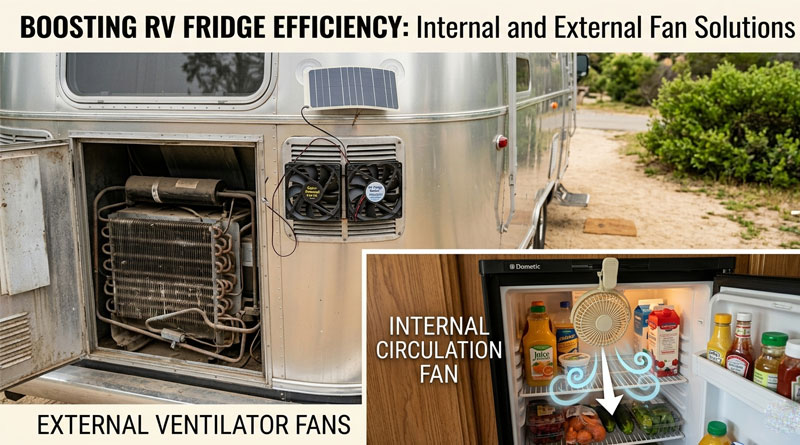
If your RV fridge struggles to keep food cold on hot days, a small fan can make a big difference. RV refrigerator fans help air circulate behind and inside the fridge, so it cools faster and stays at the right temperature. They are easy to install and use very little power. In this article, we’ll show you the best RV refrigerator fans to keep your food fresh and your trips worry‑free.
1. Wathai IP67 Waterproof 80mm 12V Cooling Fan 2-Pack

- Dimensions: 80mm x 80mm x 25mm
- Airflow: 44 CFM per fan
- Lifespan: 50,000 hours (Dual Ball)
- Protection: IP67 Waterproof rating
The Wathai 12V cooling fan kit is an exceptional DIY solution for RV owners looking to enhance their refrigerator’s exhaust ventilation. With a robust IP67 waterproof rating, these fans are specifically designed to withstand the humidity, dust, and occasional splashes common in exterior fridge compartments. The dual ball bearing system ensures a long operational life of up to 50,000 hours, providing reliable performance for years.
Each fan delivers a powerful 44 CFM airflow at 2800 RPM, effectively expelling hot air from the back of the unit. While they are high-speed coolers, the 31dBA noise level remains relatively unobtrusive. The inclusion of metal protective casings prevents debris from interfering with the blades, making them a durable choice for demanding outdoor environments or specialized ventilation projects within your camper.
- Pros:
- High-grade waterproof protection
- Durable dual ball bearings
- Powerful airflow for exhaust
- Cons:
- Requires DIY wiring
- Slightly louder at high speed
- No built-in power switch
2. Beech Lane 12V Refrigerator Evaporator Fin Fan

- Fan Count: Three 2.5-inch fans
- Mounting: Integrated alligator clips
- Power: Hardwired 12V connection
- Warranty: Lifetime manufacturer warranty
The Beech Lane Evaporator Fin Fan features a patent-pending design that utilizes three high-powered fans to maximize internal airflow. Unlike standard dual-fan models, this unit creates a consistent curtain of air over the cooling fins, which effectively prevents ice buildup and ensures the fridge stays at a safe temperature even in hot weather. It attaches easily using four secure alligator clips.
Installation is straightforward, as the unit can be wired directly into the refrigerator’s light or a 12V power supply. This hardwired approach provides constant power without the need to replace batteries. The low-profile, sleek construction ensures it doesn’t interfere with shelf space, while the integrated on/off switch allows you to manage power consumption easily when the refrigerator is not in use.
- Pros:
- Triple fan maximum airflow
- Lifetime warranty included
- Prevents fin ice buildup
- Cons:
- Requires basic electrical wiring
- May fit tight in small fridges
- Clips can slip if not seated
3. XMK 3,000 RPM High Power RV Fridge Fan

- Motor Speed: 3,000 RPM
- Control: Manual On/Off switch
- Design: Multi-vent aerodynamic casing
- Application: Internal fridge circulation
The XMK RV Fridge Fan is designed to balance internal temperatures by circulating cold air uniformly throughout the cabinet. Its high-speed 3,000 RPM motor is surprisingly quiet, ensuring that food on both the upper and lower shelves stays at a consistent temperature. The compact, beige housing blends well with standard RV interiors and occupies very little shelf space while providing significant cooling benefits.
Durability is a key focus for XMK, as the unit is constructed from sturdy materials capable of withstanding the cold and damp environment inside a refrigerator. The multiple side vents are engineered to move air in all directions, reducing the overall stress on your cooling system. An easy-access front switch allows for quick operation, helping you conserve battery life when the fan is not required.
- Pros:
- High-speed 3000 RPM motor
- Very compact space-saving design
- Effective temperature balancing
- Cons:
- Battery operated (not included)
- Beige color may not match all
- Airflow is primarily vertical
4. TITAN 12V DC RV Fridge Ventilation Cooling Fan
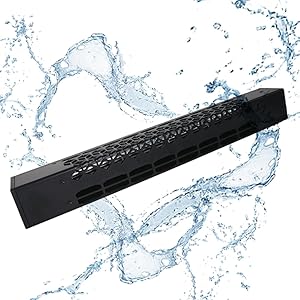
- Controller: 6-level manual/auto speed
- Protection: IP55 Water/Dustproof
- Compatibility: American RV side vents
- Technology: Smart temperature sensor
The TITAN ventilation fan is specifically engineered for the American RV market, featuring a long-shaped profile that aligns perfectly with standard exterior side vents. This design facilitates efficient heat dissipation from the refrigerator’s rear coils, which is vital for maintaining cold temperatures during summer travel. The unit comes with robust mounting brackets designed for quick and secure installation on vent slats.
A standout feature is the intelligent speed controller, which offers both a 6-level manual mode and an automatic mode that adjusts fan speed based on ambient temperature. With an IP55 rating, the fan is protected against outdoor moisture and dust, ensuring reliable operation in all weather conditions. This smart ventilation system significantly reduces the workload on your fridge’s compressor or heating element.
- Pros:
- Smart auto-temperature control
- Perfect fit for side vents
- Weather-resistant IP55 rating
- Cons:
- Requires more clearance space
- Higher price than basic fans
- Complex controller mounting
5. Camco Camper RV Fridge Deodorizer and Airator

- Feature: Activated charcoal odor filter
- Power: Two D batteries
- Color: Clean white finish
- Inclusions: Replaceable charcoal pack
Camco’s Fridge Airator serves a dual purpose by circulating cold air and absorbing unpleasant food odors simultaneously. It comes equipped with a replaceable activated charcoal pack, making it a highly effective tool for keeping your camper’s small refrigerator fresh and tidy. The high-volume air circulator is designed to help cool the interior cabinet evenly, preventing warm spots that can lead to food spoilage.
The unit is incredibly portable and requires no installation, as it operates on two D-sized batteries. This makes it a perfect choice for mini-fridges, coolers, or standard RV refrigerators where wiring isn’t an option. The integrated on/off switch is a practical addition for conserving energy, and its simple, clean white aesthetic ensures it fits unobtrusively on any shelf without taking up excessive storage space.
- Pros:
- Built-in charcoal odor absorber
- No wiring or tools needed
- Portable for any small fridge
- Cons:
- Requires frequent battery changes
- Lower RPM than 12V models
- Charcoal filters need replacing
6. Quick Products Clip-On RV Refrigerator Fan
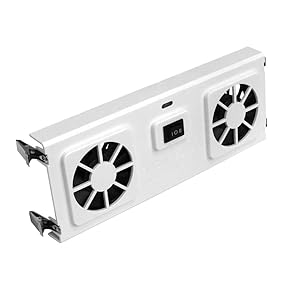
- Operation: Two-speed toggle switch
- Mounting: Built-in fin clips
- Power Source: 12 Volt direct wire
- Benefit: Frost buildup prevention
The Quick Products Clip-On fan is a dedicated solution for improving the efficiency of your refrigerator’s internal cooling fins. By attaching directly to the evaporator fins with built-in clips, it eliminates dormant air pockets that typically cause frost build-up. This active circulation ensures that the cooling surfaces remain clear, allowing the refrigerator to maintain lower temperatures with less energy consumption throughout the day.
Featuring a convenient two-speed operation controlled by a front toggle switch, you can adjust the airflow based on your specific needs. The unit is designed to be hardwired into the RV’s 12V system, providing a seamless and permanent power connection that eliminates battery worries. All necessary mounting hardware and instructions are included, making the installation process straightforward for most camper owners.
- Pros:
- Direct-to-fin clip mounting
- Dual speed settings available
- Stops frost accumulation
- Cons:
- Visible wires inside fridge
- Clip fit depends on fin size
- Manual switching required
7. Beech Lane High Power 3,000 RPM Fridge Fan

- Airflow Design: Spiderweb top opening
- Power: High-torque 3,000 RPM motor
- Protection: Lifetime manufacturer warranty
- Support: USA-based customer service
This patented Beech Lane Fridge Fan is built for maximum power, utilizing a 3,000 RPM motor that far exceeds the performance of standard 700 RPM alternatives. The proprietary “spiderweb” top opening is a result of re-engineering to ensure the highest possible volume of air is circulated. This prevents cold air from settling at the bottom of the fridge, ensuring your food stays fresh regardless of shelf placement.
Constructed with durable components designed to last, this fan is backed by an industry-leading lifetime warranty and USA-based support. The simple on/off switch provides easy control over the unit’s operation. As an essential accessory for any RV, this fan solves the notorious issue of poor circulation in absorption-style refrigerators, providing a reliable and powerful cooling boost for long-term travelers and weekend warriors alike.
- Pros:
- Patented high-airflow design
- Strong 3000 RPM performance
- Excellent lifetime warranty
- Cons:
- Takes up some shelf depth
- Natural color may show dirt
- Requires standard D batteries
How to Choose the Best RV Refrigerator Fans
RV refrigerators, particularly the absorption models common in most campers, operate differently than the compressor-based units in your home. They rely heavily on airflow to move heat away from the cooling components and circulate cold air inside the food cabinet. Without proper circulation, you might find that your milk spoils on the top shelf while your lettuce freezes on the bottom. Choosing the best RV refrigerator fans involves understanding whether you need an internal circulator, an external vent fan, or a specialized fin fan. This guide will break down everything you need to know to optimize your camper’s cooling system for maximum efficiency and food safety.
Types of RV Fridge Fans: Internal vs. External
The first step in choosing a fan is identifying where your cooling problem exists. Internal fans are placed inside the refrigerator cabinet. Their primary job is to move air around the food shelves to prevent “dead spots” and ensure uniform temperatures. External fans, on the other hand, are installed in the ventilation compartment behind the refrigerator. These fans help pull heat away from the condenser coils and expel it through the roof or side vents. If your fridge struggles specifically during hot summer days, an external vent fan is often the solution. If your fridge stays cool but cools unevenly, an internal fan is the way to go. Many RVers choose to install both for a comprehensive cooling upgrade.
The Importance of Evaporator Fin Fans
Specialized fin fans are a subset of internal fans that clip directly onto the metal cooling fins at the back of the fridge. These are arguably the most effective internal upgrades you can make. By blowing air directly across the fins, these fans prevent the humid air inside the fridge from condensing and freezing onto the metal. This “frost-free” operation ensures the fins can continue to absorb heat efficiently. When fins are covered in ice, they act as an insulator, making the fridge work much harder to stay cold. Look for fin fans with multiple small blowers to cover the widest possible area of the evaporator assembly.
Power Sources: Battery vs. 12V Hardwired
RV refrigerator fans generally come in two power configurations: battery-operated or hardwired to the RV’s 12V DC system. Battery-operated fans are incredibly easy to install—simply pop in some D-cell batteries and place the fan on a shelf. However, they require regular battery replacements and the airflow usually diminishes as the batteries weaken. 12V hardwired fans provide consistent, powerful airflow and never need a battery change. While they require a basic understanding of electrical wiring to tap into the fridge’s light or power block, the long-term performance and reliability make them the preferred choice for full-time travelers and those who frequently camp in high-heat areas.
Understanding RPM and CFM Ratings
When comparing fans, you will often see two technical specs: RPM (Revolutions Per Minute) and CFM (Cubic Feet per Minute). RPM tells you how fast the fan blades spin, while CFM measures the actual volume of air being moved. A high RPM (like 3,000) usually indicates a powerful motor that can push through resistance, which is great for internal circulation. However, for external ventilation, high CFM is the more important metric because you need to move a large volume of hot air out of the vent compartment. Be mindful that higher RPM often comes with increased noise levels, so look for a balance if you are sensitive to humming sounds while you sleep.
Noise Levels and Decibels (dBA)
Because an RV is a small living space, the noise generated by your refrigerator fan can be surprisingly noticeable, especially at night. Most quality RV fans are rated between 20dBA and 35dBA. For reference, a whisper is about 30dBA. If you are installing an internal fan, look for a “brushless” motor, as these tend to be much quieter and have a longer lifespan. External fans can afford to be a bit louder since they are muffled by the fridge cabinet and the exterior wall, but a vibrating fan can still resonate through the camper frame if not mounted with rubber grommets or secure brackets.
Weather Resistance and IP Ratings
If you are purchasing an external vent fan, weather resistance is non-negotiable. Look for an IP (Ingress Protection) rating, such as IP55 or IP67. An IP55 rating means the fan is protected against dust and low-pressure water jets, while IP67 means it is fully dust-tight and can survive temporary immersion. Since external vents are exposed to rain, wind-blown dust, and humidity, a non-rated fan will likely short-circuit or corrode within a single season. Internal fans don’t need high IP ratings, but they should be “moisture-resistant” to handle the condensation inherent in a cooling environment.
Smart Controllers and Temperature Sensors
The latest innovation in RV cooling is the smart fan controller. Some high-end fans, like those from TITAN, include a thermal sensor that automatically turns the fan on when the compartment reaches a certain temperature and shuts it off when it cools down. This “set it and forget it” functionality is excellent for boondockers who want to conserve battery power. If you don’t have an automatic controller, look for a fan with at least a 2-speed manual switch so you can run it on “High” during a heatwave and “Low” at night to save power and reduce noise.
Ease of Installation and Mounting
Before buying, consider your DIY skills. Some fans require you to remove the exterior vent cover and screw brackets into the RV wall, while others simply clip onto the interior fins. For external fans, check if the brackets are adjustable to fit your specific vent style (side vs. roof). For internal fans, check the dimensions to ensure they won’t block your favorite gallon of milk or egg carton. If you aren’t comfortable with wiring, look for “plug-and-play” kits that utilize the existing 12V light socket inside the refrigerator.
Durability and Bearings
The type of bearing in the fan motor determines how long it will last. Sleeve bearings are common in cheap fans but tend to fail quickly if mounted horizontally or exposed to heat. Ball-bearing fans (specifically dual ball-bearing) are the industry standard for durability. They can be mounted in any orientation and are much better at handling the vibrations of a moving RV. While they cost a few dollars more, they often last three to four times longer than sleeve-bearing models, saving you from having to pull your fridge out for a replacement later down the road.
Odor Control and Air Quality
Some internal fans, particularly those designed by brands like Camco, include space for an activated charcoal filter. This is a fantastic secondary feature for RVers. In a small fridge, odors from onions or leftovers can quickly permeate other foods. A fan that circulates air through a charcoal filter helps scrub the air, keeping your fridge smelling fresh without the need for an open box of baking soda that can spill during travel. If you opt for one of these, ensure that replacement filters are readily available and easy to swap out.
Conclusion: A Small Investment for Large Gains
Upgrading your RV refrigerator with a high-quality fan is one of the most cost-effective modifications you can make. By improving airflow, you not only keep your food safer and your drinks colder, but you also extend the life of your refrigerator by reducing the strain on its cooling components. Whether you choose a simple battery-powered airator or a smart-controlled external ventilation system, the result is a more reliable and efficient kitchen on wheels. Take the time to measure your space and assess your power options, and you’ll enjoy a much more comfortable and “frost-free” camping experience.