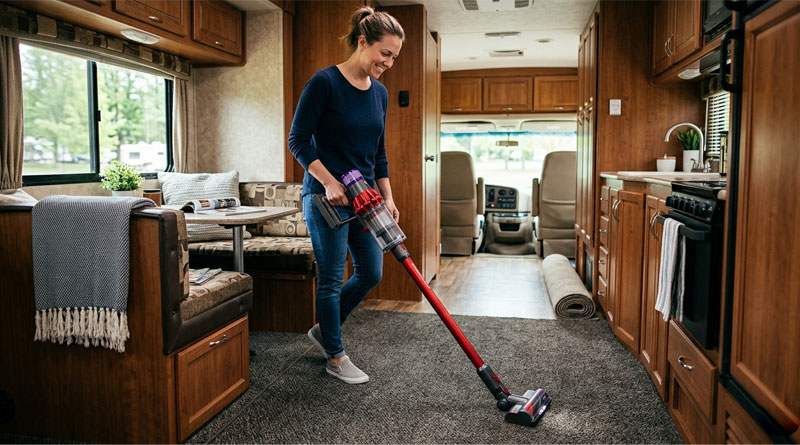
Life inside an RV means dirt follows you everywhere — from dusty campgrounds to sandy beaches to muddy hiking trails. Unlike a house, your floor plan is tiny but the mess-making potential is enormous. Standard home vacuums are simply too bulky, too heavy, and too dependent on wall outlets to be practical on the road. The right RV vacuum fits in a cabinet, runs off your rig’s power, and still pulls grit out of the tightest corners. Here are seven options worth considering for your rolling home.
1. AstroAI Handheld Cordless RV Vacuum

- Suction Power: 7500Pa high-performance motor
- Battery: 6000mAh dual power modes
- Weight: Lightweight 1.6 lbs design
- Illumination: Built-in ultra-wide LED light
RVers who travel with pets will find the AstroAI particularly welcome. Its upgraded 7500Pa motor has a genuine grip on embedded fur, ground-in sand, and the kind of food crumbs that work their way into upholstery seams over a week on the road. What sets it apart from comparable handhelds is the dual power supply system — run it on the included 6000mAh battery when you need to move freely, or plug it into a DC outlet when you’re parked up and want sustained power for a thorough interior detail.
At 1.6 lbs, it’s the kind of tool you can wave around overhead or squeeze under a dinette without your arm giving out halfway through. The wide-beam LED light is genuinely useful rather than a gimmick, revealing dust colonies lurking in dark storage bays or behind dashboard trim. The accessory kit — extended hose, specialized nozzles — means most of your motorhome’s awkward geometry is covered without improvisation.
- Pros:
- Strong 7500Pa suction capability
- Versatile dual power supply options
- Lightweight and ergonomic handling
- Cons:
- Filter requires very frequent cleaning
- Full charge takes several hours
- Motor sensitive to water exposure
2. THISWORX High Power Portable Car Vacuum

- Power Source: 12V auxiliary outlet corded
- Reach: 16-foot long power cable
- Weight: 2.4 lbs compact frame
- Filtration: HEPA filter with spare included
Some RVers simply don’t trust batteries — and for a deep-clean session, that skepticism is reasonable. The THISWORX sidesteps the whole conversation by drawing power straight from your rig’s 12V auxiliary outlet, delivering steady, uninterrupted suction from the first swipe to the last. The 16-foot cord is long enough to reach from the cab through the living area and into a rear bedroom without repositioning the power source once.
The three-attachment detailing kit is thoughtfully put together: a flathead nozzle for seat crevices, an extendable tube for deep-column reaches, and a soft brush that won’t scratch dashboard trim or delicate vent slats. The bonus of a spare HEPA filter — tucked into the included carrying bag — is the kind of practical detail that suggests the designers have actually cleaned a vehicle interior before. This is an unglamorous, no-surprises tool that simply does its job on every trip.
- Pros:
- Unlimited runtime via 12V plug
- Generous 16-foot cleaning reach
- Includes spare HEPA filter
- Cons:
- Cannot be used without a 12V port
- Lower suction than some cordless units
- Cord can get tangled during use
3. Armor All AA12V2 Compact Wet/Dry Vac

- Versatility: Wet and dry cleanup capability
- Suction: 5KPA with water lift motor
- Cable: 15-foot expandable spiral cord
- Accessories: 7-piece specialized tool kit
Spilled drinks and tracked-in mud are facts of life in an RV, not exceptions. The Armor All AA12V2 is built around that reality, offering wet and dry suction from a compact orange body that fits between tight seat rows without a struggle. The 12V-powered motor generates enough lift to pull liquid out of carpet fibers rather than just pushing it around — a genuine distinction from vacuums that claim wet capability but merely tolerate damp debris.
Seven attachments ship in the box, including a dedicated Pet Hair Rake that digs into upholstery weave more aggressively than a generic brush nozzle. The spiral cord expands as you move and retracts to keep the storage footprint small — a smart design choice for anyone who has wrestled a tangled cable while crouching under an RV bunk. The removable dust cup makes disposal relatively clean. If your travels reliably produce a mix of dry crumbs and wet catastrophes, this is the practical all-rounder that covers both.
- Pros:
- Handles both liquids and dry debris
- Excellent pet hair removal tool
- Expandable spiral cord saves space
- Cons:
- 5KPA suction is relatively modest
- 12V plug only for vehicle use
- Dust cup fills quickly with liquids
4. SYAYVO 8000PA Portable Corded Vacuum

- Performance: 100W/12V high-power motor
- Suction: Strong 8000Pa wet/dry power
- Cord Length: 16.4-foot extended power cable
- Noise: Quiet operation under 70dB
The SYAYVO occupies a useful middle ground: corded reliability paired with suction numbers that rival some cordless premium models. Running a 100W motor that tops out at 8000Pa, it handles both wet and dry messes without flinching. What makes it distinctive in the corded category is the noise floor — running under 70dB, it won’t rattle awake a napping travel partner or draw stares at a quiet campground. The 16.4-foot cable is among the longest on this list, cutting down on the awkward repositioning mid-clean.
Construction is solid ABS throughout, and the integrated LED throws enough light to expose the dust underneath bench seats that you’d otherwise miss entirely. A washable HEPA filter, brush nozzle, and extended hose round out the kit — and everything packs into a carrying bag that fits comfortably on a shelf or in a cabinet drawer. For RVers who want serious suction without the battery anxiety, the SYAYVO makes a compelling case.
- Pros:
- Impressive 8000Pa suction power
- Very long 16.4-foot power cord
- Wet/dry versatility with LED light
- Cons:
- Corded design limits use to vehicle
- HEPA filter requires drying after washing
- Dust bin latch can be stiff
5. Neiko Portable Wet Dry High Power Vacuum

- Output: High-power centrifugal motor
- Capability: Advanced wet and dry suction
- Reach: 14.8-foot 12V DC power cord
- Storage: 600D Oxford cloth carrying bag
The Neiko leans into a centrifugal force motor design that prioritizes raw pickup ability over whisper-quiet operation. It’s built for the messier end of RV life — beach sand ground into floor mats, pet hair woven into cushion fabric, or the aftermath of a campsite meal eaten indoors during a rainstorm. The wet/dry switching is handled mechanically rather than through settings, keeping operation straightforward when you’re tired and just want the mess gone.
What genuinely separates the Neiko from similarly priced competitors is the accessory bag — a 600D Oxford cloth construction that’s meaningfully more durable than the flimsy mesh pouches most brands ship. The long tube, slot pipette, and extended hose combination means those infuriating RV furniture gaps are reachable without contorting yourself. The 14.8-foot cord is slightly shorter than some rivals, but for most trailer layouts it covers the ground. A dependable, no-frills workhorse for the practically minded traveler.
- Pros:
- Rugged centrifugal motor design
- High-quality Oxford storage bag
- Effective for both sand and liquids
- Cons:
- Slightly shorter cord than competitors
- Centrifugal motor can be loud
- Manual filter cleaning is required
6. HyperVac 2-in-1 Handheld Vacuum & Blower

- Suction: Extreme 18.5kPa brushless motor
- Battery: 7500mAh with 45min runtime
- Function: 2-in-1 vacuum and air blower
- Charging: USB-C fast charge technology
The HyperVac is the overachiever of this list. At 18.5kPa, its brushless motor delivers suction numbers that dwarf most portable vacuums — and it does so without the overheating and noise that often accompany that kind of power. The dual-mode system lets you dial between maximum cleaning force and a quieter, battery-conserving mode depending on what you’re tackling. But the genuinely clever addition is the blower function: reverse the airflow and you can blast dust out of RV air vents, dash grilles, and keyboard-style control panels where suction is simply the wrong tool.
The 7500mAh battery runs for up to 45 minutes, and if it runs low mid-session, the pass-through DC function lets you continue via your 12V outlet without stopping. USB-C charging is a welcome modern touch — one fewer proprietary cable to carry. Twelve accessories, including pet brushes and flexible hoses, ship in the box. At just 1.5 lbs, it’s the lightest high-power option here. If budget isn’t the primary constraint, this is the most capable handheld on the market for serious RV cleaning.
- Pros:
- Incredible 18.5kPa suction power
- Handy blower function for air vents
- Long 45-minute battery life
- Cons:
- Highest suction mode drains battery fast
- More expensive than standard models
- Charging takes up to 5 hours
7. iwoly C150 Cordless Stick Vacuum

- Suction: 18kPa cyclone filtration power
- Design: 2-in-1 stick and handheld conversion
- Runtime: Up to 35 minutes (Eco mode)
- Filtration: 4-stage sealed HEPA system
RVers with larger floor plans — fifth wheels, Class A motorhomes, or big travel trailers — often find handhelds tedious when covering extended flooring. The iwoly C150 approaches the problem differently, delivering 18kPa through a motorized LED floor head that stands upright like a household stick vacuum while still fitting in a motorhome closet. It handles hard floors and small rugs with equal ease, and the motorized head digs into pile rather than just skimming the surface.
Detach the powerhead and the main unit converts to a handheld for upholstery, bunks, and cab interiors in seconds. The four-stage sealed cyclone system with HEPA filtration is worth highlighting for allergy sufferers — fine dust stays captured rather than cycling back into the cabin air. Three suction modes and three charging options (battery in or out) give you flexibility in how and when you top it up. It’s the closest thing to a full-sized home vacuum experience that will still reasonably live in an RV.
- Pros:
- Versatile stick-to-handheld conversion
- Motorized head with LED lights
- Great for hard floors and carpets
- Cons:
- Requires more storage space than minis
- High mode runtime only 20 minutes
- Not designed for large liquid spills
How to Choose the Right RV Vacuum Cleaner
Buying a vacuum for an RV is a genuinely different exercise from buying one for a house. The selection criteria that matter in a 2,000-square-foot home — carpet coverage, bagless vs. bagged, cord management — become almost irrelevant inside a 200-square-foot living space on wheels. In their place, a new set of priorities emerges: storage footprint, power source compatibility, suction-to-weight ratio, and the ability to handle the specific kinds of mess that travel produces. Working through each of these factors methodically will save you from buying a vacuum that looks good on paper but fails in practice somewhere on a highway between campgrounds.
Start with Your Living Space Layout
Before looking at any product specs, walk through your RV and take stock of what you’re actually dealing with. How much hard flooring do you have versus carpet or rugs? Are there tight corners behind furniture that’s bolted down and can’t be moved? Do you have a bunk bed area with limited vertical clearance? Is your cab separated from your living area, requiring a vacuum that can transition between the two? The answers determine whether a compact handheld is sufficient or whether you need something with more reach, like a stick vacuum or a model with a long hose attachment. Owners of smaller Class B vans and camper conversions will almost always find a handheld model sufficient. Those with larger Class A motorhomes or extended fifth wheels may genuinely benefit from a stick vacuum like the iwoly C150 that covers ground more efficiently.
Decide on Your Power Source Early
This is arguably the most important decision in the entire purchase process, and it’s one that many buyers overlook until after they’ve already committed to a model. RV vacuums split into two fundamental categories based on how they receive power, and each has real consequences for how and when you can use them.
12V DC Corded Vacuums
These models plug directly into your RV’s auxiliary outlet — the same style of socket your phone charger or portable fan might use. The appeal is straightforward: as long as your engine is running or your house battery has charge, you have unlimited cleaning time. There’s no battery management, no waiting for a charge cycle, and no risk of the vacuum dying halfway through a job. Corded 12V models are also typically lighter and less expensive because they carry no battery pack. The obvious tradeoff is the cord itself. A 14-foot cord sounds generous until you realize your Class A motorhome is 35 feet long, meaning you’ll need to reposition your power source at least once per session. Look for models offering 16 feet or more if coverage is a priority.
Cordless Rechargeable Vacuums
Cordless models run on lithium-ion battery packs, and the technology has improved significantly in recent years. Modern units offer 30 to 45 minutes of runtime on a full charge — enough for a thorough cleaning session in most RV interiors. The freedom of movement is real: you can carry the vacuum outside to clean doormats, reach overhead cabinets without cable management headaches, or hand it to a child for a quick sweep without untangling anything. The catch is recharge time. Most cordless RV vacuums require three to five hours to fully recharge, which means mid-trip deep cleaning requires planning. Some premium models like the HyperVac solve this with a pass-through DC function that lets you run off a 12V outlet when the battery runs low — effectively combining both power types in one device.
Understanding Suction Power Ratings
Vacuum marketing leans heavily on suction numbers, and it’s worth understanding what those figures actually mean before being swayed by large numbers on a box. Suction is measured in Pascals (Pa) or Kilopascals (kPa), where 1kPa equals 1,000Pa. For basic dust and crumb pickup on smooth flooring, 5,000Pa is sufficient. For pet hair, sand, or any surface with texture, you want to aim for at least 8,000Pa. The upper tier models on this list reach 18,000–18,500Pa, which is overkill for most situations but becomes genuinely valuable when you’re pulling sand out of looped carpet or dealing with embedded fur in tight upholstery seams.
Wattage, where listed, indicates the motor’s electrical draw rather than suction directly — but higher wattage generally correlates with more lifting force. Brushless motors are worth specifically seeking out: they generate more suction relative to their energy draw, run cooler, produce less noise, and last significantly longer than brushed motors under equivalent use conditions.
Wet/Dry Capability: More Useful Than It Sounds
At first glance, wet/dry suction seems like a feature you’d rarely use. In practice, RV owners find themselves reaching for it regularly. Condensation from windows can pool on sills and drip onto flooring. Coffee spills happen in moving vehicles. Children and pets introduce liquids in creative ways. A standard dry-only vacuum motor is not designed to ingest moisture, and doing so can permanently damage it. A wet/dry model uses moisture-resistant motor housing and a separate drainage system that allows liquid to be collected without reaching the motor. If you travel in cold climates where snow gets tracked inside and melts, or if you have a dishwasher or wet bath prone to minor overflow events, the wet/dry capability moves from a nice-to-have to a genuine protection against an expensive repair.
Filtration and Air Quality in a Small Space
The enclosed nature of an RV makes air quality significantly more important than in a house where a fresh air exchange happens naturally every few minutes. A vacuum that captures debris but exhausts fine particulates back into the cabin air is genuinely counterproductive for anyone with dust allergies or respiratory sensitivity. HEPA-rated filters — capturing 99.97% of particles down to 0.3 microns — are the reliable standard here. Look for sealed filtration systems specifically, not just HEPA-labeled components. In a sealed system, all air processed by the vacuum passes through the filter before being exhausted. In non-sealed designs, some air can bypass the filter entirely. The distinction matters when you’re sleeping six feet from where you just vacuumed.
Filter maintenance is equally important. Most RV vacuums use washable foam or mesh filters that need rinsing every few uses. After washing, the filter must be completely dry before reinsertion — a damp filter dramatically restricts airflow and can promote mold growth inside the vacuum body. Build the habit of rinsing filters the night before a planned cleaning day so they’re dry and ready by morning.
Weight, Ergonomics, and Daily Usability
A vacuum you find uncomfortable to use will spend more time in the cabinet than in your hand. RV cleaning regularly involves awkward body positions — crouching under a dinette, leaning into an overhead bunk, reaching around a bathroom door, kneeling on a cab floor. Any additional weight becomes amplified discomfort in these positions. For handheld models, the practical upper limit for extended comfortable use is around 2.5 to 3 lbs. Below 2 lbs is genuinely pleasant. Ergonomic handle shaping and trigger locks — which let you engage suction without holding a button continuously — make a more significant practical difference than most buyers anticipate until they’ve used a vacuum without them.
Attachments That Actually Matter for RV Use
Generic vacuum attachment kits are designed for generic cleaning situations. RV interiors have specific geometry that rewards specific tools. A crevice nozzle is non-negotiable — the gap between a bolted-down sofa and a wall is exactly the kind of debris trap that exists in every RV and that a standard floor head cannot reach. A soft brush attachment handles dashboard surfaces, air vents, and control panels without scratching. An extended hose that lets you set the vacuum body on the floor while reaching high storage areas prevents the arm fatigue that comes from holding the whole unit overhead. If you have any carpeting or area rugs, a motorized brush head that actively agitates the pile is meaningfully more effective than passive suction alone.
Storage Practicality After Purchase
Measure your intended storage space before buying. Many online shoppers discover after delivery that the vacuum and its accessories don’t fit where planned. The most elegant solution is a model that mounts directly to a cabinet wall using a clip or bracket, keeping it accessible without consuming shelf space. For models without wall-mount options, the included carrying bag quality varies considerably — the Neiko’s 600D Oxford cloth bag, for instance, is built to survive the jostling of travel in a way that thinner fabric pouches are not. Whichever model you choose, store it with the accessories contained and secured; loose attachments rattling inside a cabinet during highway travel will eventually crack.
Making the Final Decision
Match the vacuum to your actual travel pattern rather than an idealized version of it. If you’re primarily a campground traveler with hookups and a large trailer, the iwoly C150’s full-sized stick vacuum experience makes daily cleaning genuinely effortless. If you boondock frequently and can’t guarantee power access, a high-capacity cordless like the HyperVac gives you the best battery life and the backup option of a 12V connection when reserves run low. If budget is the primary constraint and you just need reliable suction without complexity, the THISWORX delivers consistent performance at a price that won’t disrupt your travel fund. The right vacuum isn’t the one with the most impressive spec sheet — it’s the one that gets used consistently because using it is easy.