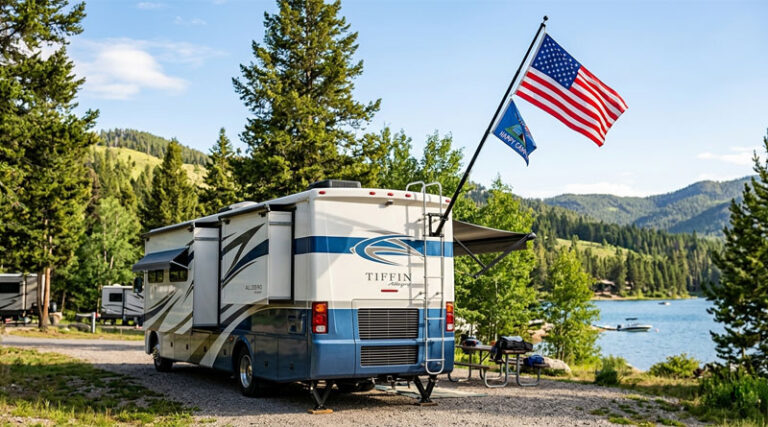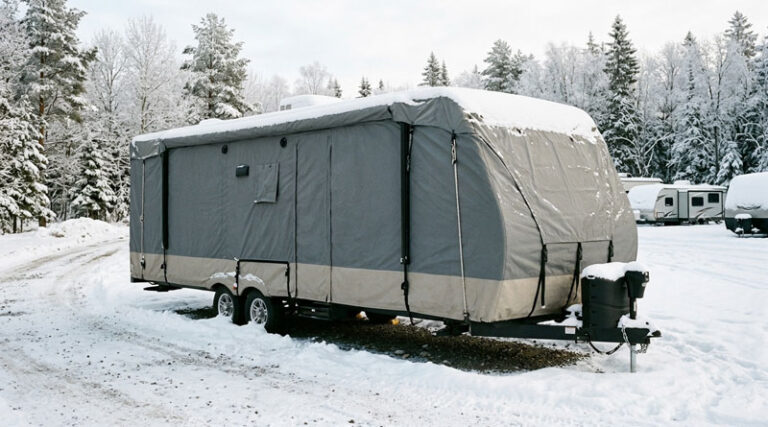
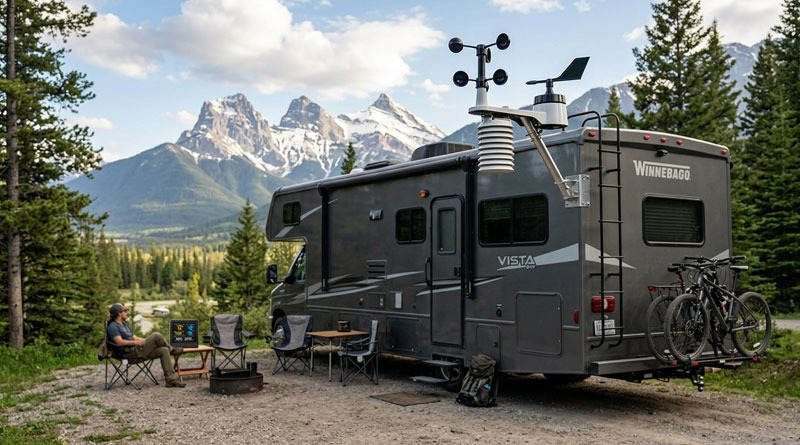
For any RV traveler, knowing the weather is more than just a forecast—it’s a safety plan. A dedicated weather station gives you real-time data on wind, rain, and temperature right at your campsite, unlike your phone’s generic app. This guide reviews the best, toughest, and easiest-to-use RV weather stations. Find the perfect gadget to keep your family safe and your trip comfortable, no matter what the sky brings.
1. VEVOR 7-in-1 Wi-Fi Solar Weather Station

- Display: 7.5-inch VA color screen
- Connectivity: 2.4GHz Wi-Fi and SmartLife App
- Power: Solar powered with NiMH charging
- Range: 492 ft (150 m) transmission
The VEVOR 7-in-1 Wi-Fi Weather Station is a powerhouse of data, offering comprehensive monitoring of wind speed, direction, rainfall, and UV radiation. Its high-definition 7.5-inch display is exceptionally clear, featuring four brightness levels that make it readable in various RV lighting conditions. The integration with the SmartLife App allows users to monitor their rig’s environment remotely without subscription fees.
Designed for durability, this station features a solar-powered outdoor sensor and upgraded waterproof components to resist harsh weather. It provides precise 12-hour forecasts and includes NiMH battery charging for consistent nighttime operation. The simplified installation process and aluminum alloy bracket make it a practical choice for RVers who need reliable, long-distance data transmission while parked at a campsite.
- Pros:
- No-fee app for remote monitoring
- Efficient solar-powered energy system
- Vivid, easy-to-read HD display
- Cons:
- Does not support 5GHz Wi-Fi networks
- Requires constant plug-in for Wi-Fi sync
2. Newentor Wireless Indoor Outdoor Thermometer

- Accuracy: +/-1 degree Celsius precision
- Sensors: Supports up to 3 remote channels
- Distance: 328 ft open area wireless range
- Functions: Min/Max tracking for 24/48 hours
Newentor offers a streamlined and highly accurate wireless thermometer that is perfect for RVers who prioritize temperature and humidity monitoring. This compact unit features a dedicated comfort indicator, which is vital for maintaining a healthy environment inside small living spaces where humidity can fluctuate rapidly. The high-precision sensors provide instantaneous updates to help travelers plan their outdoor activities.
This weather station is incredibly easy to set up, requiring only standard batteries for both the indoor display and the remote sensor. With the ability to connect up to three sensors, users can monitor the exterior temperature, the basement storage, and the interior cabin simultaneously. It is a lightweight, portable solution that fits perfectly on an RV dashboard or small nightstand.
- Pros:
- Highly accurate temperature and humidity readings
- Compact, space-saving design for RVs
- Supports multiple sensors for different zones
- Cons:
- Lacks wind and rain measurements
- Batteries are not included in the package
3. DreamSky Atomic Weather Station with Dimmer

- Clock: WWVB atomic time with auto DST
- Display: Large colorful LCD with 5-level dimmer
- Charging: Integrated USB port for mobile devices
- Forecast: 12-24 hour pressure-based prediction
The DreamSky Weather Station is a multifunctional tool that combines environmental monitoring with a precision atomic clock. Its large, colorful display provides easy-to-read numbers for temperature, humidity, and the calendar, even from across a long RV interior. The auto-adjusting DST feature ensures you never have to manually reset your clock as you travel across different time zones.
This unit is designed with the user’s comfort in mind, offering a 5-level adjustable backlight to prevent sleep disturbances at night. It runs primarily on electricity but includes a battery backup to maintain time and data during power cuts or while off-grid. The built-in USB port provides a convenient charging hub for your smartphone, making it a valuable addition to your RV’s technology suite.
- Pros:
- Precise atomic clock with automatic updates
- Convenient USB charging port for phones
- Adjustable brightness for night-time use
- Cons:
- Screen dims on battery power to save energy
- Atomic signal can be weak in remote areas
4. AcuRite 02077M Wireless Color Weather Station

- Technology: Hyperlocal 12-hour self-calibrating forecast
- Data Points: Monitors over 15 environmental metrics
- Moon Phase: Dynamic moon phase tracking included
- Display: Adjustable illuminated LCD color panel
The AcuRite 02077M provides a comprehensive weather monitoring system that goes beyond basic thermometers. It uses self-calibrating technology to provide a personalized 12-hour forecast based on pressure trends specifically for your exact location. The illuminated display features trend arrows and moon phase data, making it a great tool for boondockers who need to plan around the night sky.
Setup is remarkably simple, involving only a few batteries and a convenient integrated hanger for the outdoor sensor. The indoor display provides high/low records and signal strength indicators, ensuring you always know the status of your wireless connection. It is a reliable, budget-friendly option for travelers who want professional-grade forecasting without the complexity of high-end smart home systems.
- Pros:
- Hyperlocal forecasting based on exact pressure
- Includes moon phases for stargazing prep
- Very easy, tool-free outdoor sensor setup
- Cons:
- No wind speed or rainfall tracking
- LCD viewing angles are somewhat limited
5. OBET Color Display Weather Station with 3 Sensors
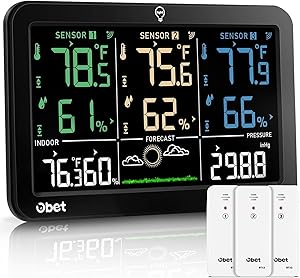
- Screensize: 7.68-inch large color LCD display
- Range: 500 ft (150 m) wireless sensor reach
- Alarms: Customizable temperature/humidity alerts
- Power: Dual USB and battery power modes
The OBET Weather Station stands out for its high-accuracy sensors and expansive 500-foot wireless range, making it ideal for monitoring multiple areas of a large RV setup. It includes three sensors, allowing you to track conditions in your living room, the exterior environment, and even your refrigerator or storage bay simultaneously. The instantaneous response to environmental changes ensures you receive the most current data.
This station features five dynamic forecast icons based on atmospheric pressure and provides specific frost warnings for temperatures near freezing. The backlight is fully adjustable when powered by USB, ensuring visibility during the day and comfort at night. With customizable alerts, this station serves as a proactive warning system, keeping you informed about critical temperature shifts that could affect your rig or belongings.
- Pros:
- Includes three sensors for multi-zone tracking
- Impressive 500-foot wireless signal range
- Customizable alerts for critical thresholds
- Cons:
- USB plug is not included in the box
- Forecast data takes 12 hours to calibrate
6. AcuRite 01121M Vertical Weather Forecaster

- Clock: Atomic self-setting with auto-DST
- Mounting: Kickstand for tables or wall keyhole
- Alerts: Programmable temperature and humidity alarms
- Data: Over 20 data points including pressure
The AcuRite 01121M Vertical Forecaster is a stylish and versatile weather center designed for tight RV spaces. It offers a unique vertical layout that displays over 20 data points, including barometric pressure and high/low measurements. The auto-dimming LCD ensures that the information is clear without being overpowering at night, while the atomic clock provides split-second precision for travelers on the move.
One of its most useful features for RVers is the programmable alarm system, which can be set to notify you when temperature or humidity thresholds are reached. This is especially helpful for protecting sensitive equipment or pets. With multiple placement options, including a built-in kickstand, it is a flexible gadget that functions effectively as both a stationary home center and a portable weather monitor.
- Pros:
- Vertical design takes up minimal wall space
- Programmable custom weather threshold alarms
- Precision atomic clock for time-zone travel
- Cons:
- Small display text can be hard to read
- Does not offer remote app connectivity
7. WeatherFlow Tempest Smart Weather Station

- Sensor Type: Ultrasonic wind meter (no moving parts)
- Range: 1,000+ feet wireless transmission
- Smart Home: Works with Alexa, IFTTT, and Rachio
- Reporting: Updates real-time data every 3 seconds
The WeatherFlow Tempest is the gold standard for tech-savvy RVers, featuring ultrasonic sensors that measure wind and rain without any moving parts. This design ensures near-zero maintenance and incredible reliability in extreme environments. It delivers real-time updates every three seconds to a powerful mobile app, providing users with hyper-local forecasts backed by proprietary machine learning technology.
Installation is incredibly fast, and the station integrates seamlessly with smart home platforms like Amazon Alexa. With a wireless range of over 1,000 feet, you can mount the solar-powered sensor almost anywhere. Whether you are tracking lightning strikes or monitoring solar radiation, the Tempest offers an unparalleled level of detail and automation, making it a favorite among weather enthusiasts and professional travelers.
- Pros:
- Zero moving parts for maximum durability
- Incredibly fast 3-second data updates
- Seamless smart home and Alexa integration
- Cons:
- Most expensive option in the category
- Requires consistent Wi-Fi for full features
How to Choose RV Weather Stations
For many RVers, weather isn’t just a conversation starter; it’s a critical factor that dictates everything from travel routes to daily safety. While smartphone apps provide general information for broad geographic areas, they often fail to capture the specific conditions at your exact campsite, which may be tucked into a valley or perched on a windy ridge. Choosing the best RV weather station involves finding a balance between comprehensive data collection, ease of installation, and the unique constraints of mobile living. This guide will help you understand the technical features that matter most for life on the road.
Why Hyperlocal Data Matters for RVing
In an RV, you are much more vulnerable to environmental changes than you are in a traditional home. High winds can damage awnings or destabilize your rig, while sudden temperature drops can lead to frozen pipes. A hyperlocal weather station provides real-time data from your exact location, allowing you to react hours before a national weather service might update an app. This is particularly important for those who enjoy “boondocking” in remote areas where cell service and standard weather reporting are unreliable.
Types of RV Weather Stations
RV weather stations generally fall into two categories: basic thermal monitors and comprehensive 7-in-1 stations.
Basic Temperature and Humidity Monitors
These are compact and focus on the essentials: indoor/outdoor temperature and humidity. They are ideal for casual travelers who just want to know how to dress for the day or if they need to turn on the AC. They are inexpensive and consume very little power.
All-in-One Multi-Sensors
These units, like the VEVOR or Tempest models, measure a full suite of metrics including wind speed, wind direction, rainfall, UV index, and solar radiation. These are preferred by full-time RVers and those who frequent areas with volatile weather, as they provide a complete picture of environmental threats.
Connectivity and Data Access
How you access your data is just as important as the data itself. Modern weather stations offer several ways to view your information.
Standard LCD Consoles
Most stations come with a dedicated indoor display console. When choosing one, look for an adjustable backlight and a high-contrast screen. Since RV space is limited, vertical designs or units with wall-mounting options are often the most practical.
Wi-Fi and App Integration
Smart weather stations connect to your RV’s Wi-Fi (if available) and beam data to an app on your phone. This allows you to check on your rig’s temperature and wind exposure even when you are away on a hike or at dinner. Some advanced models, like the Tempest, even integrate with smart home devices to automate tasks like turning on heaters or closing vents.
Installation and Mounting Considerations
Unlike a house, an RV moves. This means your weather station sensor must be either easily removable or securely mounted to withstand 70 mph highway winds. Many RVers choose to mount their sensors on a collapsible pole or use high-strength suction mounts. When choosing a station, look for lightweight sensors with simple mounting brackets. If you prefer a permanent mount, ensure the material is UV-resistant and won’t become brittle under constant sun exposure.
Power Source: Battery vs. Solar
Outdoor sensors are typically powered by batteries, solar panels, or a combination of both. Solar-powered sensors are ideal for RVers because they reduce the need for maintenance. However, since the sensor may sometimes be shaded by trees or your own rig, look for a model with a battery backup. Indoors, most consoles require a plug-in adapter for constant backlight use, but having a battery backup is essential to prevent data loss when you unplug your RV to move to the next site.
Durability and Maintenance
The RV environment is harsh. Your outdoor sensor will deal with road vibration, heavy rain, and extreme temperature shifts. High-quality stations use 304 stainless steel or high-grade ABS plastic. One significant advancement to look for is “solid-state” sensors. Devices like the WeatherFlow Tempest have no moving parts (like spinning anemometers), which makes them much more durable for mobile use because there are no bearings to wear out or mechanical parts to snap off during transit.
Additional Metrics for Boondockers
If you enjoy dry camping, certain metrics become even more valuable:
- Moon Phases: Useful for planning night photography or navigating around your site after dark.
- Barometric Pressure Trends: A falling barometer is a reliable predictor of approaching storms.
- Freezing Alerts: Essential for knowing when to disconnect your city water hose to prevent ice damage.
- Lightning Detection: Some high-end stations can detect lightning strikes up to 25 miles away, giving you plenty of time to seek shelter.
Conclusion: Planning Your Next Move
The best RV weather station is an investment in both comfort and safety. Whether you choose a simple thermometer to keep your cabin cozy or a smart, solar-powered array to monitor wind and rain, the ability to see what’s coming over the horizon is invaluable. By selecting a unit that fits your rig’s layout and your technical preferences, you ensure that every mile you drive and every night you park is informed by the most accurate, hyperlocal data available.