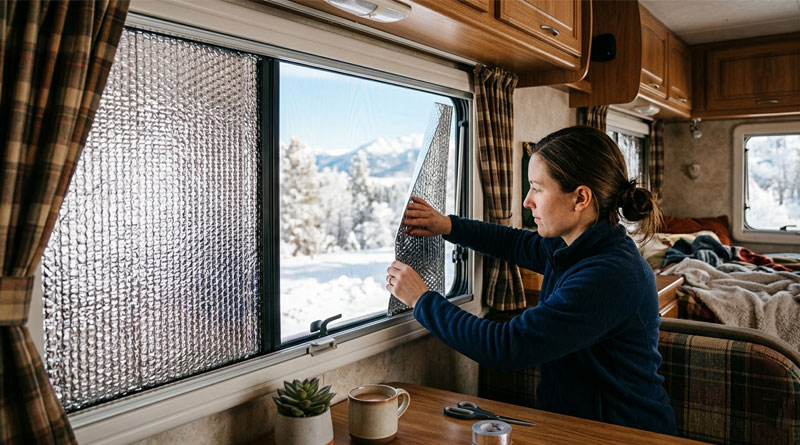
Maintaining a comfortable interior temperature in your RV requires window insulations to battle extreme heat and freezing winters. Standard glass offers little thermal resistance, but high-quality reflective barriers can block up to 95% of radiant heat. This guide highlights the top-rated insulation rolls to keep your living space cozy while significantly reducing your energy costs.
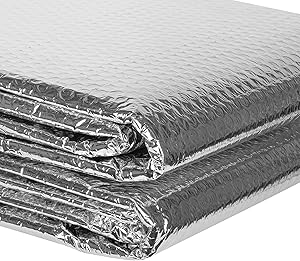
1. ToLanbbt Reflective Insulation Roll
- Thickness: 3mm premium double bubble
- Dimensions: 47 inches x 10 feet
- Reflectivity: Blocks 95% of radiant heat
- Installation: Includes 60 adhesive tapes
The ToLanbbt Reflective Insulation Roll stands out with its 3mm thickness, providing a sturdier barrier than many generic 2mm alternatives. Constructed from dual layers of aluminum foil and a PE bubble core, it excels at reflecting summer heat and retaining interior warmth during winter. It is also tear-resistant and aging-resistant, ensuring it won’t degrade under constant sun exposure.
This roll is exceptionally easy to customize for specific RV window sizes or skylights. The package includes 60 adhesive tapes, which provide a strong enough grip to prevent the material from sagging over time. Beyond temperature control, the opaque nature of the foil offers total privacy and a noticeable reduction in exterior noise, making it a multifunctional upgrade.
- Pros:
- Superior 3mm thickness for better insulation
- Highly effective 95% heat reflection
- Includes plenty of adhesive mounting tapes
- Cons:
- Arrives folded with temporary creases
- Large width requires careful cutting
2. Supkiir RV Window Shade Reflective Roll

- Length: 20 feet for multiple windows
- Material: Waterproof aluminum foil and bubble
- Mounting: Hook and loop tape system
- Extras: Includes scissors for DIY cutting
The Supkiir RV Window Shade is a high-performance heat blocker designed specifically for the rigors of travel. Its double-sided aluminum foil construction with a central air cushion provides a reliable thermal barrier. It is particularly effective at preventing moisture build-up and condensation on glass surfaces, which is a common issue for RVers staying in humid or extremely cold climates.
This kit is incredibly user-friendly, coming with its own pair of scissors and a hook-and-loop fastening system for easy removal. The 20-foot length offers enough material to cover several side windows or a large windshield. Because it is lightweight and flexible, it can be rolled up and stored in tight cabinets when you want to enjoy the view during the day.
- Pros:
- Moisture-proof design prevents condensation
- Hook and loop tape for easy removal
- Generous 20-foot length for large projects
- Cons:
- 15.6 inch width may be narrow for some windows
- Material is slightly thinner than foam cores
3. MYFAMIREA Double Reflective Insulation Roll

- Core: Polyethylene bubble middle layer
- Width: 23.6 inches ideal for side windows
- Durability: Fire and age resistant material
- Inclusions: 60 adhesive tapes for mounting
The MYFAMIREA insulation roll is a practical choice for RVers looking to improve energy efficiency. Its 3mm thickness provides a significant barrier against heat loss in winter and solar gain in summer. The material is odorless and fire-resistant, which is a crucial safety consideration for use inside small mobile living spaces. It is also highly flexible, making it suitable for wrapping around pipes or unusual window shapes.
Installation is a breeze with the included tapes, although it is recommended to let the roll flatten for 15 minutes after opening to eliminate shipping creases. Beyond temperature control, this radiant barrier acts as a sound dampener, reducing the drone of highway traffic or nearby campsite noise. It’s a versatile material that works well for both interior window covers and exterior pipe protection.
- Pros:
- Practical width for standard RV windows
- Safe fire-resistant and odorless material
- Effective at reducing sound and vibration
- Cons:
- Adhesive tapes can leave residue on glass
- Temporary creases upon unpacking
4. SmartSHIELD 3mm Foam Core Radiant Barrier
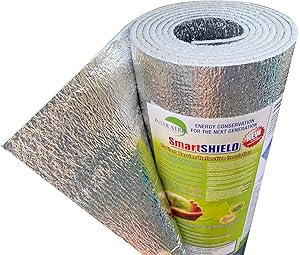
- Structure: Closed-cell polyethylene foam core
- Thermal: Reflects 95% of radiant energy
- Safety: Non-toxic, non-allergic, skin-safe
- Barrier: Integrated vapor and sound barrier
SmartSHIELD takes a different approach by using a 3mm closed-cell foam core instead of air bubbles. This foam core provides superior structural integrity and better thermal resistance than standard bubble wrap. It acts as an extremely effective vapor barrier, meaning it is completely unaffected by humidity or moisture, which helps prevent mold and window rot in your motorhome.
This insulation is exceptionally high quality and doesn’t irritate the skin or eyes during installation. It is very easy to cut into precise shapes for odd-sized RV vents or windshields. Because it is a foam core, it provides better soundproofing than bubble-based alternatives, significantly quieting the interior of your trailer during rainy nights or at loud RV parks.
- Pros:
- Durable foam core outlasts bubble wrap
- Excellent vapor barrier prevents mold
- Safe to handle without gloves or masks
- Cons:
- Does not include adhesive accessories
- Slightly stiffer and harder to roll tightly
5. Art3d 3MM Reflective Foam Core Insulation

- Design: Aluminum foil with polyethylene foam
- Area: 40 square feet of total coverage
- Adhesion: 70 adhesive pads included
- Maintenance: Easy-to-clean wipeable surface
Art3d offers a premium foam core insulation roll that provides professional-grade thermal protection for your vehicle. The polyethylene foam center is sandwiched between two layers of reflective aluminum, ensuring heat is pushed back toward its source in both summer and winter. It is designed to fit easily into tight spaces, making it ideal for insulating sliding windows and small skylights without being bulky.
The kit is remarkably complete, providing 70 adhesive pads to ensure you can finish your project without a trip to the hardware store. The surface is easy to maintain; a quick wipe with a damp cloth keeps it looking new and performing at peak efficiency. It is highly versatile and can even be used to insulate storage compartments or under-bed areas in your RV.
- Pros:
- Professional foam core for high durability
- Includes 70 adhesive pads for convenience
- Large 40 sq ft roll covers most needs
- Cons:
- Higher price point than bubble rolls
- Requires careful measuring for best fit
6. winemana Window Insulation Reflective Film
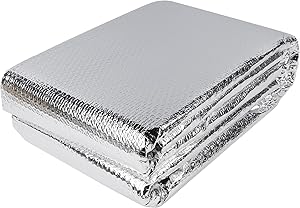
- Length: Extra-long 15-foot roll
- Protection: Blocks up to 90% solar radiation
- Material: High-density, tear-resistant foil
- Storage: Lightweight and highly foldable
The winemana Window Insulation Roll is perfect for large-scale projects, offering a 15-foot length that covers significantly more area than standard rolls. It uses high-density aluminum film designed to resist tearing, even when exposed to high outdoor temperatures or frequent handling. It effectively reflects 90% of solar radiation, which is essential for keeping your RV cool in desert environments.
Installation is flexible; while it can be taped, it is light enough to be secured with suction cups or clamps for a temporary setup. Its foldability is a standout feature, as it doesn’t take up much room in a toolbox or storage bin. This makes it an ideal choice for weekend warriors who only want to put up their window insulation during extreme weather days.
- Pros:
- 15-foot length provides great coverage value
- Extremely tear-resistant and long-lasting
- Foldable design makes storage effortless
- Cons:
- Does not include its own adhesive tapes
- Slightly lower heat reflection (90%)
7. YoleShy Double Reflective Window Insulation

- Material: Vacuum-sealed polyethylene bubbles
- Mounting: 132 pairs of self-adhesive pads
- Utility: Dual-season thermal protection
- Coverage: 40 square feet of insulation
YoleShy offers a comprehensive insulation solution that includes a massive 132 pairs of self-adhesive pads, ensuring you have enough to secure the film across every window in your trailer. The vacuum-sealed bubble core is highly effective at slowing down heat transfer, providing consistent temperature protection year-round. It is robust enough to handle direct sunlight without peeling or losing its reflectivity.
The double-sided foil surface makes it versatile for any mounting orientation. While it arrives folded, the creases generally smooth out once the material is applied to the window and begins to normalize. It’s an ideal product for those who want a complete kit that solves the problem of how to keep the insulation from falling off during bouncy road trips.
- Pros:
- Highest amount of adhesive pads included
- Strong vacuum-sealed bubble insulation
- Excellent value for full-vehicle coverage
- Cons:
- Folded shipping causes temporary creases
- Bubbles can be popped if handled roughly
How to Choose RV Window Insulations
For RV owners, windows are both a blessing and a curse. They provide beautiful views of the road and natural light, but they are also the primary source of thermal loss and gain. In the summer, windows act like greenhouses, trapping solar radiation and making your AC work overtime. In the winter, they become cold sinks that drain every bit of heat from your living space. Choosing the right RV window insulation is the single most effective way to improve your rig’s comfort and energy efficiency.
Understanding Insulation Types: Bubble vs. Foam Core
Most reflective insulation rolls on the market fall into two main categories: bubble wrap cores and foam cores. Understanding the difference is key to matching the insulation to your climate.
Bubble Wrap Core
Bubble wrap insulation uses small, air-filled polyethylene bubbles sandwiched between layers of aluminum foil. The air inside the bubbles acts as a thermal break, slowing down the conduction of heat. These are generally thinner, more flexible, and more affordable. They are perfect for temporary window covers that you want to roll up and store easily.
Foam Core
Foam core insulation replaces air bubbles with a solid, closed-cell polyethylene foam. These cores are generally more durable and provide a slightly higher R-value (the measure of thermal resistance). Foam cores also provide better soundproofing and are highly effective vapor barriers, which helps prevent condensation—a major enemy of RV interior walls.
The Science of Radiant Barriers
Unlike fiberglass insulation used in houses, which works by trapping air, RV window insulation works primarily as a radiant barrier. Most high-quality rolls reflect about 95% of radiant heat. In the summer, you want the reflective side facing out to bounce sun rays away. In the winter, having a reflective side facing in helps bounce the heat from your furnace back into the room. This dual-action performance is why “double-sided” aluminum foil is a must-have feature for all-season travelers.
Measuring R-Value and Thermal Performance
While radiant barriers are mostly about reflection, the thickness of the core (usually 3mm) does contribute to the overall thermal resistance. Look for products that specify their ability to block solar radiation. A product that blocks 90-95% of radiant energy will make a noticeable difference, often lowering the surface temperature of the interior glass by 20 degrees or more on a hot day.
Durability and Material Safety
RV windows are subject to intense UV rays and temperature fluctuations. Low-quality plastic can become brittle or begin to off-gas odors when heated. Ensure the insulation you choose is:
- UV Resistant: To prevent the outer foil layer from peeling or cracking.
- Tear-Resistant: So it doesn’t fall apart when you repeatedly move it or cut it to shape.
- Non-Toxic: Look for materials that are odorless and skin-safe, especially since they will be used in small, enclosed spaces.
Installation and Mounting Options
A great piece of insulation is useless if it won’t stay on the window. There are several ways to secure these rolls once you’ve cut them to size:
Adhesive Pads and Tapes
Many kits come with double-sided adhesive pads. These provide a very clean look but can sometimes leave a sticky residue on the glass when removed. They are best for semi-permanent installation.
Hook and Loop (Velcro)
This is the favorite for many full-time RVers. You can stick small Velcro dots to the window frame and the insulation. This allows you to “rip” the insulation off during the day and stick it back on at night without any hassle.
Suction Cups
If you don’t want to stick anything to your window frames, you can punch small holes in the insulation and use suction cups to attach it directly to the glass. This is the least invasive method but can sometimes fail if the glass gets too hot or cold.
Condensation Management
When you insulate a window, you create a temperature differential that can lead to condensation trapped between the glass and the foil. This moisture can lead to mold. To prevent this, look for “vapor barrier” rated insulation like closed-cell foam. Occasionally removing the covers to let the glass “breathe” on dry days is also a good maintenance habit.
Size and Coverage Needs
Before buying, measure your largest windows—usually the windshield and the rear window. Standard rolls come in widths of 16, 24, or 48 inches. Choosing a width that matches your largest window reduces the amount of seaming or taping you’ll need to do, resulting in a cleaner look and better thermal seal.
Multi-Purpose Versatility
One of the best things about buying a large roll of reflective insulation is that it’s not just for windows. You can use leftovers to:
- Insulate the back of your refrigerator compartment to improve cooling.
- Line the inside of your skylights or roof vents.
- Wrap your water hoses to prevent freezing in light frosts.
- Line the bottom of storage cabinets to protect items from floor heat.
Conclusion
Choosing the right window insulation for your motorhome is an investment in your comfort. For those prioritizing soundproofing and longevity, a foam-core barrier like SmartSHIELD is the gold standard. For those looking for a lightweight, easy-to-store summer heat blocker, a bubble-core roll like ToLanbbt or winemana offers incredible value. By focusing on reflectivity, mounting ease, and core material, you can turn your RV into a four-season sanctuary regardless of the weather outside.