
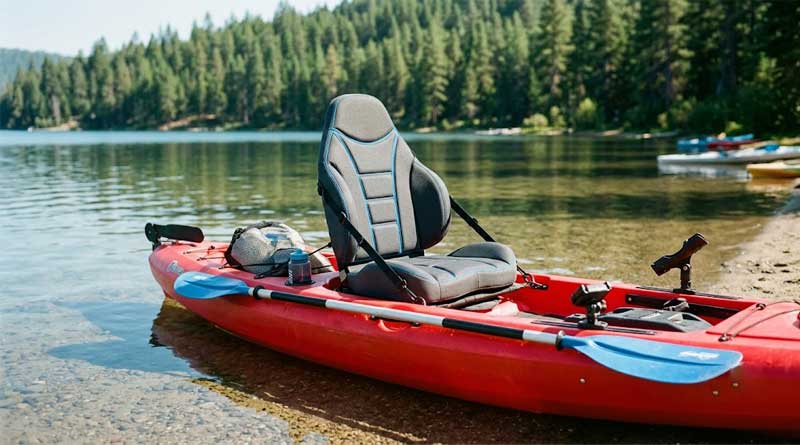
Spending hours out on the water is a fantastic way to unwind, but a rigid or unpadded kayak surface can quickly lead to lower back strain and numbness. A premium sit-on-top kayak seat is the most effective upgrade to transform your paddling experience. The right replacement seat provides critical lumbar support, heavy cushioning, and an ergonomic structure that mitigates fatigue. By improving your posture and absorbing shocks from choppy waves, these specialized seats ensure you stay comfortable, dry, and focused on your journey ahead.
1. Trymaker Kayak Seat with Back Support

- Cushion Thickness: 1.97 inches (5cm) three-layer structure
- Backrest Material: 3mm high hardness PE board
- Hardware: Zinc alloy metal buckles tested up to 264 lbs
- Storage: Large waterproof PVC detachable bag
The Trymaker replacement seat stands out immediately due to its exceptionally thick cloud-comfort padding. Paddlers who frequently struggle with hip pain will find the five-centimeter three-layer cushion to be an absolute game-changer, keeping you elevated and isolated from cold, hard plastic hulls. The integrated hook and loop tape system underneath ensures that once you position the seat, it stays anchored firmly in place without sliding around while you paddle.
Beyond pure cushioning, the structural rigidity of the backrest provides genuine relief for long fishing trips. By incorporating a solid three-millimeter PE board within the high-back support, this model prevents the slouching that typically causes lower lumbar pressure. The heavy-duty zinc alloy buckles resist rust extremely well, making it a reliable companion for both fresh and saltwater environments alike.
Pros:
- Ultra-thick padding provides outstanding tailbone relief
- Rigid internal PE board prevents backrest collapsing
- High-load zinc buckles offer superior durability
Cons:
- Thicker cushion slightly alters your center of gravity
- Hook and loop tape requires a clean deck to adhere fully
2. SereneLife Detachable SUP Seat

- Interior Padding: High-density molded EVA foam
- Exterior Shell: Heavy-duty weather-resistant polyester
- Hook Material: Corrosion-resistant copper metal hooks
- Adjustment System: 4-point front and rear strap configuration
Designed with versatile water sports in mind, the SereneLife Detachable seat transitions effortlessly between traditional sit-on-top kayaks and stand-up paddleboards. Its form-fitting design utilizes contours that adapt smoothly to various body silhouettes, offering distributed pressure relief across your hips. The dense EVA foam interior provides firm, resilient support rather than plush sinking, which actively promotes better rowing form over extended sessions.
Durability is at the forefront of this design, showcasing a tough polyester exterior that withstands abrasion against gear and sun exposure. The marine-grade copper hooks offer peace of mind when venturing out into coastal salt flats, resisting the rapid degradation common in cheaper components. A four-strap system lets you fine-tune the tension quickly, letting you switch from a relaxed recline to a strict upright posture.
Pros:
- Form-fitting contours adapt comfortably to all body sizes
- Copper hardware resists harsh saltwater corrosion
- Firm foam padding retains its shape over years of use
Cons:
- Seat cushion is firmer than plush style options
- Lacks an integrated rear storage bag for small gear
3. Montekin Thickened Kayak Seat

- Cushion Design: Deep molded drainage channels
- Backrest Core: High-density EVA foam lumbar insert
- Strap Set: 4 adjustable webbing straps with marine hooks
- Storage Type: Water-resistant zipper detachable bag
The Montekin Thickened Kayak Seat targets the specific frustrations faced by kayak anglers who deal with standing water in the cockpit. Featuring unique, deep drainage channels molded directly into the seat pad, it channels moisture away from your body so you remain dry throughout the morning. The streamlined aesthetic hides a punchy, high-density EVA core that works to continuously stabilize the lumbar region during long-distance tracking.
Anglers will appreciate the expansive, detachable rear bag featuring water-resistant zippers, creating a perfect safe haven for tackle boxes, keys, or soft plastics. The seat is fully compatible with standard D-ring setups, permitting fast swaps between hardshells, inflatables, and multi-mode SUP platforms. Its robust strap system secures tightly to eliminate twisting or slipping while navigating choppy currents or fighting large fish.
Pros:
- Molded drainage channels keep your seating area dry
- Generous storage space inside the water-resistant rear bag
- Universal compatibility works smoothly with D-ring SUPs
Cons:
- Rear bag can sag slightly if overloaded with heavy gear
- Adjustment straps may require occasional re-tightening during use
4. Lewtemi 2 Pack Kayak Seats

- Package Quantity: 2 complete seats with installation hardware
- Cushion Dimensions: 14.96 x 12.2 inches
- Backrest Dimensions: 17.72 x 20.47 inches
- Included Hardware: 8 D-rings, 8 screws, and 8 nuts
- Material Blend: EVA foam, polyester, and neoprene
If you own a tandem vessel or look after multiple watercraft, the Lewtemi 2-Pack delivers an incredibly practical and comprehensive bundle. What makes this option highly notable is the inclusion of full mounting hardware, providing eight D-rings alongside matching screws and nuts. This completely removes the headache of sourcing separate attachment points if your current kayak lacks the necessary hardware to clip a premium seat into position.
The seats themselves utilize a specialized combination of neoprene, polyester, and EVA foam to yield a flexible yet robust seating environment. An anti-slip texture across the bottom fabric layer keeps the pad fixed to the kayak deck, minimizing forward sliding while digging in with heavy paddle strokes. The tall backrest dimensions ensure excellent thoracic and mid-back support for paddlers of average to tall statures.
Pros:
- Outstanding value with two complete seats included
- Comes with full anchor hardware for bare kayaks
- Anti-slip base fabric prevents forward seat sliding
Cons:
- Installation requires drilling if your kayak lacks factory holes
- Padding is slightly thinner than standalone premium models
5. Solomone Cavalli Deluxe Padded Kayak Seat

- Base Cushioning: Skid-resistant thick EVA foam interior
- Exterior Fabric: Premium grade abrasion-resistant polyester
- Strap Design: 4-way adjustable reinforced webbing
- Storage Assets: Two detachable zipper storage bags
The Solomone Cavalli Deluxe seat blends comfort and modular storage utility for the recreational paddler. Built with a focus on human ergonomics, the backrest arcs intentionally to align with the natural curvature of the spine, helping to alleviate muscle fatigue during long touring journeys. The bottom foam features a textured, skid-resistant pattern that anchors the user even when the kayak cockpit becomes slick with spray.
Storage flexibility sets this model apart from others on the market, as it includes two independent, detachable zipper bags that clip to the rear. This lets you organize your gear efficiently, keeping wet items separated from dry personal belongings or lunch packs. The simple connecting snaps fit standard eyelets, ensuring you can pull the seat off in seconds at the boat ramp for easy cleanup.
Pros:
- Ergonomic curvature provides great mid-back support
- Dual rear bags offer excellent gear organization options
- Quick-snap hooks make installation and breakdown effortless
Cons:
- Webbing straps are long and require securing to avoid dangling
- The backrest offers moderate rigidity compared to hard PE inserts
How to Choose Sit-On-Top Kayak Seat
Selecting the ideal sit-on-top kayak seat is the single most important decision you can make to protect your back and maximize your enjoyment on the water. Sit-on-top kayaks are notoriously prone to getting wet, and their stock plastic molds offer zero ergonomic support. Without an upgraded seat, a short excursion can easily end in muscle cramps, numbness, and fatigue. To make an informed purchase, you must evaluate several structural elements, materials, and hardware configurations to see how they match your specific paddling style.
Understanding Seating Ergonomics and Back Support
The primary reason paddlers upgrade their seats is to eliminate lower back pain. When sitting in a kayak, your core muscles are constantly engaged to maintain balance, while your lower back bears the brunt of the kinetic force generated by each paddle stroke. A high-back seat transfers this load away from your lumbar spine, distributing pressure evenly across your torso.
Backrest Height and Internal Rigidity
Low-profile seats that stop at the lower back are fine for short, casual paddles, but long-distance touring and fishing demand a high-back design. Look for backrests that measure at least 17 to 20 inches in height. This enables full coverage for your upper back and thoracic spine. Furthermore, pure foam backrests can sometimes sag under your weight over time. Premium models solve this issue by inserting rigid structural components, such as a 3mm PE (polyethylene) board, inside the foam fabric layer to ensure the seat maintains its upright shape under heavy loads.
Evaluating Padding Cushioning and Comfort Materials
The bottom cushion bears your full body weight for hours at a time, making padding material choice critical. Low-grade open-cell foam acts like a kitchen sponge, soaking up water and compressing completely flat under minimal weight. Instead, look for seats that leverage advanced material compositions designed for marine environments.
| Material Type | Primary Benefit | Durability Level | Best Suited For |
|---|---|---|---|
| High-Density EVA Foam | Retains shape, excellent shock absorption | High | Long fishing trips and rough water |
| Multi-Layer Comfort Foam | Plush, immediate pressure point relief | Medium-High | Recreational paddling and casual touring |
| Neoprene Blends | Flexible, quick-drying, smooth texture | Medium | Warm weather and frequent water contact |
Cushion Thickness and Drainage Features
While a thick cushion (such as 1.97 inches) offers maximum plushness, it also raises your center of gravity slightly, which can affect the stability of narrow kayaks. If you choose a thick pad, make sure it features built-in drainage channels. These deep channels pull pooling water away from your clothes, preventing skin chafing and cold discomfort while out on open bays.
Attachment Hardware and Strap Security Systems
A kayak seat is only as dependable as the straps and clips holding it to your vessel. If a strap slips or a buckle snaps while you are navigating strong currents, your seating posture will collapse, compromising your control over the kayak.
Strap Configurations
Always opt for a 4-way adjustable strap system consisting of two front straps and two rear straps. This configuration lets you dial in the exact angle of recline you prefer. The front straps pull the backrest forward to keep it flush against your spine, while the rear straps anchor the bottom cushion and provide counter-tension. Look for reinforced stitching along the strap attachment seams, as these points face significant stress when you lean into a stroke.
Hardware Materials Matter
Cheap plastic clips degrade rapidly under UV exposure and break easily under sudden impacts. High-quality seats feature heavy-duty metal hardware engineered to withstand salt and moisture without failing.
- Zinc Alloy: High tensile strength, can hold loads exceeding 250 lbs without warping. Highly resistant to fresh and saltwater rust.
- Solid Copper/Brass: The gold standard for marine environments. They develop a dark patina over time but will never rust or corrode, even with continuous saltwater immersion.
- Stainless Steel: Offers incredible longevity and strength, though it requires occasional rinsing to prevent surface spotting.
Storage and Auxiliary Utility Features
Sit-on-top kayaks often have limited easily accessible dry storage space. Modern aftermarket replacement seats take advantage of the empty space behind your backrest by integrating clever storage solutions.
Detachable Storage Bags
Many top-tier seats come equipped with large, removable storage pouches mounted directly onto the rear of the backrest. These bags are perfect for holding small tackle trays, sunscreen, first-aid packs, and snacks. Look for options with water-resistant or waterproof zippers to protect your gear from breaking waves and heavy paddle splash. Models that offer dual detachable bags provide even better organization, letting you keep wet tools completely isolated from dry electronics.
Compatibility, Installation, and Mounting Needs
Before making a final choice, verify that the seat is fully compatible with your specific boat design. Most modern seats utilize universal snap hooks meant to clip onto pre-installed pad eyes or metal D-rings on the deck of your kayak.
Checking Your Vessel for Attachment Points
Examine your kayak’s cockpit before ordering. If your watercraft is completely bare plastic and lacks any factory-installed tie-down points, you will need a seat kit that includes auxiliary mounting hardware. Bundles that contain extra D-rings, marine-grade screws, and nuts allow you to drill and create secure anchor points exactly where you need them. If you plan to use the seat on a Stand-Up Paddleboard (SUP), ensure your board has the proper four-corner D-ring layout necessary to keep a seat flat and centered.
Final Verdict: Matching the Seat to Your Activity
To narrow down your options, match the seat’s design features with your typical itinerary on the water. If you are an avid kayak angler who spends eight hours waiting for a bite, prioritize thick EVA foam, deep drainage channels, and built-in rear tackle storage. If your primary goal is long-distance fitness touring, look for a high-back design with a rigid internal PE board that forces proper posture and maximizes paddling efficiency. For casual weekend paddlers or families with multiple recreational boats, a budget-friendly multi-pack that includes all the installation hardware provides the easiest path to a comfortable summer season.