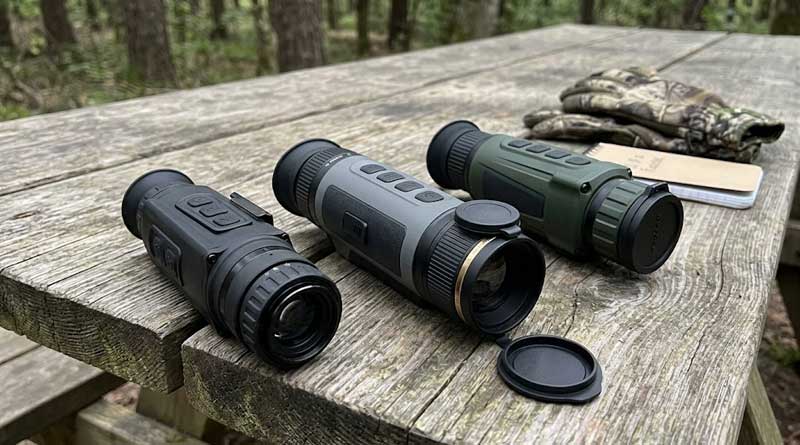
Thermal monoculars have revolutionized outdoor observation, hunting, farm patrol, and wildlife tracking across the UK. By detecting infrared heat radiation rather than visible light, these sophisticated electro-optical devices allow users to spot wildlife, livestock, and heat signatures through thick fog, dense woodland, and absolute darkness. Whether you are managing land, tracking game, or conducting search-and-rescue operations, choosing the right thermal optical device requires balancing sensor resolution, thermal sensitivity, detection range, and battery efficiency for reliable outdoor performance.
1. TOPDON TS004 Thermal Imaging Camera
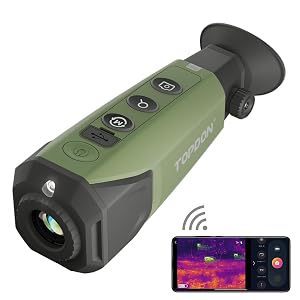
- Sensor Resolution: 256×192 IR (up to 320×240 via TISR)
- Refresh Rate: 50Hz continuous thermal processing
- Detection Range: 410 metres with 13mm lens
- Battery Life: Up to 11 hours (5000mAh)
The TOPDON TS004 delivers outstanding clarity for outdoor enthusiasts and farm managers seeking reliable thermal performance. Powered by proprietary TISR image enhancement technology, the device boosts resolution up to 320×240 while maintaining a smooth 50Hz refresh rate. The optical setup includes a 13mm objective lens with up to 8x digital magnification, making it easier to identify distant heat signatures in pitch-black conditions.
Constructed with a drop-resistant silicone body and an IP67 waterproof rating, this monocular is built for harsh UK weather conditions. Integrated Wi-Fi hotspot connectivity allows real-time viewing on smartphones, while the 32GB onboard storage holds hours of recorded thermal video footage and high-resolution snapshots taken during wilderness expeditions.
Pros:
- Long-lasting 11-hour battery life
- TISR technology boosts effective visual clarity
- Rugged IP67 waterproof housing
Cons:
- Slightly heavier than minimalist pocket optics
- Optimal viewing distance limited to 91 metres for target identification
2. MiLESEEY TNV10 PRO Thermal Monocular
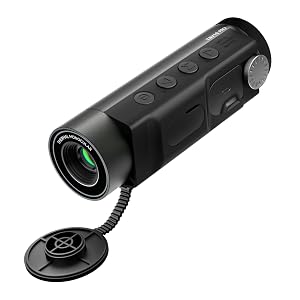
- Sensor Resolution: Native 320×240 12μm thermal sensor
- Display Type: 800×600 high-resolution OLED
- Visual Palettes: White Hot, Black Hot, Red Hot, Iron, Jungle
- Battery Life: 12 hours with auto-off power management
Engineered for high-contrast field observation, the MiLESEEY TNV10 PRO features a native 320×240 infrared detector using an advanced 12-micron pixel pitch. Paired with a sharp 800×600 OLED display, this optical system provides crisp imagery with zero software upscaling distortion, allowing rapid identification of subtle temperature differences across open landscapes or wooded areas.
The unit features a specialized UHD mode that enhances surface texture definition by up to 50 percent, aiding in distinguishing targets hiding behind foliage or grass. Hotspot tracking automatically locks onto the warmest heat signature in the frame, while the built-in 4500mAh battery delivers up to 12 hours of field operation.
Pros:
- Native sensor resolution without artificial upscaling
- UHD image mode enhances foliage separation
- Clear 800×600 OLED internal display
Cons:
- IP65 rating is less waterproof than IP67 alternatives
- Video recording resolution restricted to 400×300 pixels
3. Nightfox Arctic Night Vision Monocular

- Field of View: Ultra-wide 24-degree viewing angle
- Sensor Sensitivity: 256×192 resolution, 30mK NETD
- Mounting Support: Includes head strap and dovetail adapter
- Detection Range: 180 metres short-to-mid range tracking
The Nightfox Arctic thermal monocular focuses on hands-free situational awareness, making it an ideal tool for close-quarters navigation, search and rescue, and tactical security operations. Equipped with a dovetail adapter and head strap, users can easily mount the device onto helmet setups or head rigs to maintain full mobility during night activities.
Unlike traditional handheld optics with narrow fields of view, the Arctic provides a wide 24-degree viewing angle that closely matches natural peripheral vision. The 50fps AMOLED display delivers smooth, low-latency imagery, permitting seamless movement across uneven terrain while tracking animals or monitoring property boundaries in complete darkness.
Pros:
- Hands-free head and helmet mounting capabilities
- Wide 24-degree field of view for rapid scanning
- High 50Hz frame rate eliminates motion lag
Cons:
- Shorter 180-metre maximum detection distance
- Fixed focus lens lacks long-range optical zoom
4. GOYOJO Thermal Imaging Monocular

- Detector Pitch: 256×192 IR sensor with 12μm pixels
- Lens System: 10mm optical objective lens
- Digital Zoom: 4x digital magnification
- Protection Level: Heavy-duty IP66 weatherproofing
Designed for compact versatility, the GOYOJO thermal monocular delivers solid core thermal performance wrapped in a weather-resistant housing. Combining a 256×192 thermal core with 12-micron technology, this lightweight unit helps users quickly spot wildlife, livestock, or intruders in extreme weather conditions including heavy rain and fog.
Six distinct color palettes, including White-Hot, Iron-Red, and Glimmer, enable fast adaptation to different terrain types and ambient environmental temperatures. The device incorporates wireless app integration for real-time video streaming, alongside replaceable batteries that ensure continuous operation beyond standard rechargeable limits during long trips.
Pros:
- Replaceable battery setup for extended field runtime
- Rugged IP66 waterproof and dustproof construction
- Six customizable thermal color viewing palettes
Cons:
- 25Hz refresh rate is slower than 50Hz competitors
- Internal storage limited to 16GB
5. TOPDON TS004 TISR Thermal Imager

- Enhanced Core: 320×240 effective TISR thermal processing
- Lens Magnification: 13mm objective with 410m detection range
- Frame Speed: 50Hz high-speed thermal tracking
- Drop Protection: Silicone armor, 2-metre drop tested
This upgraded iteration of the TOPDON TS004 emphasizes field durability and visual processing power. Utilizing advanced software algorithm processing, the system converts raw sensor data into enhanced 320×240 visual feeds. The 13mm objective lens delivers optimal observation performance at distances up to 91 metres, with heat signature detection reaching 410 metres.
The unit features a high-capacity 5000mAh battery providing up to 11 hours of runtime. Encased in shock-absorbing silicone armor with IP67 sealing, it resists accidental drops, river splashes, and mud. USB-C fast charging ensures quick power recovery between field deployments for livestock monitoring or night tracking.
Pros:
- Smooth 50Hz image capture for moving targets
- High-capacity internal battery with fast USB-C charging
- Shockproof silicone casing with IP67 waterproofing
Cons:
- Fixed focal length requires digital zoom for distant targets
- Slightly larger physical profile than micro-monoculars
6. Hikmicro Lynx 3.0 LH15 Monocular

- Thermal Sensitivity: Sub-18mK NETD thermal sensor
- Detection Range: 750 metres long-range tracking
- Base Optical Zoom: 2.2x optical magnification
- Image Processing: Image Pro 3.0 with HSIS shutterless tech
The Hikmicro Lynx 3.0 LH15 sets a high benchmark for thermal sensitivity and clarity in medium to long-range observation. Featuring an industry-leading NETD rating of less than 18mK, this monocular detects minute temperature variations even during poor weather conditions such as cold rain, heavy fog, or high humidity when atmospheric contrast is minimal.
Equipped with Hikmicro’s proprietary Shutterless Image System (HSIS), the optic eliminates screen freezing caused by traditional calibration cycles. A 750-metre detection range paired with 2.2x base optical magnification makes the Lynx 3.0 LH15 a powerful tool for woodland observation, game tracking, and professional wildlife surveying across expansive rural terrain.
Pros:
- Exceptional thermal sensitivity under 18mK NETD
- Impressive 750-metre thermal detection distance
- Shutterless technology prevents screen freeze during scanning
Cons:
- Higher price tag compared to entry-level optics
- Narrower field of view due to higher base magnification
7. AGM Global Vision Taipan TM15-256
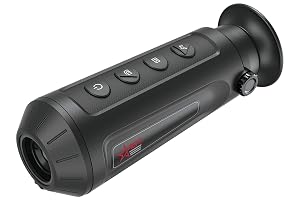
- Sensor Architecture: 256×192, 12μm high-sensitivity detector
- Refresh Rate: 50Hz fluid image display
- Telemetry: Integrated stadiametric distance measurement
- Tracking Feature: Automatic highest temperature hot-spot marker
Designed to military-inspired operational standards, the AGM Global Vision Taipan TM15-256 combines rugged physical reliability with versatile tactical functions. Built around a 12-micron, 256×192 thermal core, it features automatic hotspot tracking that instantly highlights the hottest object within your viewing field to prevent missed sightings.
The device includes a built-in stadiametric rangefinder that calculates distances based on target height inputs. With integrated video recording, snapshot capture, multi-palette switching, and durable construction, the Taipan TM15-256 performs reliably across varied night and day environments for security and outdoor exploration.
Pros:
- Automatic hotspot tracking locks onto targets fast
- Built-in stadiametric distance measurement system
- Tactical design with dependable build quality
Cons:
- Interface buttons require a learning curve for quick night operation
- Base resolution is lower than top-tier professional devices
8. Pixfra N21 Thermal Imaging Monocular

- Weight: Ultralightweight design weighing just 266g
- Field of View: Wide 24.8-degree scanning angle
- Processing Engine: PIPS 2.0 image optimization system
- Storage Capacity: 16GB built-in flash memory
The Pixfra N21 prioritizes extreme portability without sacrificing essential scanning capabilities. Tipping the scales at just 266 grams, this pocket-sized thermal monocular can be carried effortlessly during long evening walks, farm patrols, or wildlife watching sessions. Its short 7mm lens system delivers a broad 24.8-degree field of view for covering large open areas quickly.
Powered by the PIPS 2.0 image processing engine, the N21 detects wild boars up to 254 metres away and smaller animals like rabbits or birds up to 50 metres in pitch darkness. Featuring a 12-hour battery life, IP67 waterproofing, and Wi-Fi streaming to smartphones, it serves as an excellent handheld tool for everyday outdoor duties.
Pros:
- Ultralightweight design fits easily in coat pockets
- Broad field of view ideal for fast perimeter scanning
- Up to 12 hours of continuous battery operation
Cons:
- 7mm focal length limits long-distance identification
- Digital zoom loses image sharpness at higher levels
How to Choose the Best Thermal Monocular in the UK
Selecting the ideal thermal monocular requires understanding the core technical specifications that dictate thermal image quality, detection distances, optical performance, and field durability. Thermal imaging devices operate under vastly different principles than traditional optical binoculars or light-amplifying night vision units. Rather than reflecting visible light, thermal optics detect infrared energy emitted by all objects above absolute zero, converting heat differentials into detailed visual representations on an internal display screen.
When buying a thermal monocular in the UK, variable weather conditions like humidity, rain, fog, and seasonal ambient temperature shifts play a major role in device performance. Below is a comprehensive guide to help you select the ideal thermal monocular for your specific field requirements.
Understanding Thermal Sensors and Core Specifications
The sensor core, also known as the microbolometer, is the heart of any thermal imaging device. The technical parameters of this sensor determine image detail, target detection distance, and performance in harsh environmental conditions.
Sensor Resolution
Thermal sensor resolution refers to the total number of physical pixels on the infrared detector matrix. Higher pixel counts produce clearer, more detailed thermal images, allowing users to identify specific body structures of animals or targets at greater distances.
- 256×192 Resolution: Entry-level standard providing adequate heat detection for short to mid-range scanning (up to 200–400 metres). Excellent for general farm security, spotting larger wildlife, and light outdoor tasks.
- 320×240 / 384×288 Resolution: Mid-tier sweet spot delivering significantly sharper thermal contours, clearer target separation, and superior performance when zooming in digitally on distant targets.
- 640×512 Resolution: High-end professional standard offering maximum visual clarity, fine detail, and long-range target identification in dense foliage or wide-open terrain.
Pixel Pitch (Microns)
Pixel pitch measures the physical distance between individual sensor pixels, expressed in micrometres (μm). Modern thermal optics generally feature either 17μm or 12μm pixel pitch architectures.
- 12μm Technology: Smaller pixel spacing allows higher optical magnification without increasing objective lens size. It produces sharper image detail and enables longer detection ranges within compact device bodies.
- 17μm Technology: Older architecture that requires larger optical lenses to achieve high magnification, but remains effective for short-range scanning.
Thermal Sensitivity (NETD)
Noise Equivalent Temperature Difference (NETD) quantifies how sensitive the sensor is to minute temperature differences, expressed in millikelvins (mK). Lower NETD values indicate superior sensitivity, which is vital when operating in UK weather conditions such as cold rain, heavy fog, or frost where atmospheric contrast is low.
| High SensitivityPoor weather, high humidity, thick fog, fine detail recognition
| NETD Rating | Sensitivity Level | Best Application |
|---|---|---|
| Sub-18mK to 25mK | ||
| 30mK to 35mK | Standard Sensitivity | Clear nights, general wildlife watching, medium contrast environments |
| Above 40mK | Basic Sensitivity | High-contrast dry environments, basic heat detection |
Optical Performance and Viewing Characteristics
While the thermal sensor handles infrared detection, the physical optical assembly determines how much light and field coverage reach your eye.
Lens Focal Length and Detection Range
The physical size of the objective lens (e.g., 7mm, 10mm, 13mm, 15mm, 25mm, or 35mm) directly impacts optical magnification and maximum detection range. Smaller lenses yield wider fields of view for sweeping close-range areas, whereas larger lenses narrow the viewing angle to provide maximum reach across open fields.
- 7mm to 10mm Lenses: Ultra-wide field of view (20° to 25°). Designed for short-range scanning (up to 150–250 metres), woodland navigation, and close-quarters property monitoring.
- 13mm to 15mm Lenses: Balanced optical configuration for mid-range viewing (up to 400–750 metres). Provides a good mix of broad scanning area and target identification.
- 25mm to 35mm+ Lenses: High base optical magnification designed for long-range observation (800+ metres) in open fields, mountainous areas, and agricultural estates.
Refresh Rate (Hz)
Refresh rate determines how many times per second the thermal image updates on the internal screen. Standard options include 25Hz and 50Hz.
- 50Hz Refresh Rate: Provides fluid real-time video playback without lag or motion blur. Essential for tracking fast-moving animals, running dogs, or scanning rapidly from moving vehicles.
- 25Hz Refresh Rate: Acceptable for stationary observation or slow walking, but can produce slight visual motion stutter when sweeping quickly across landscapes.
Internal Display Technology and Color Palettes
The thermal sensor converts heat signals into digital data, but the internal micro-display presents that data to your eye. The quality and resolution of the internal screen play a significant role in reducing eye fatigue during long night shifts.
OLED vs. LCOS Displays
Modern thermal optics use either LCOS (Liquid Crystal on Silicon) or OLED (Organic Light Emitting Diode) screens.
- OLED Displays: Offer deep blacks, rich contrast, vibrant colors, and fast response times. OLED screens operate reliably in sub-zero winter temperatures without lagging.
- LCOS Displays: Cost-effective alternative that provides good brightness, but can suffer from reduced contrast and slower pixel response in freezing weather.
Color Palettes
Multiple palette settings allow users to adapt screen output to changing background temperatures and visual tasks:
- White Hot: The industry default for quick target acquisition. Heat signatures appear bright white against dark cool backgrounds.
- Black Hot: Heat signatures display as dark black against light backgrounds, making it easier to spot subtle body details on game animals.
- Red Hot / Hotspot Tracking: Automatically highlights the highest temperature zones in bright red for instant target identification in dense brush.
- Fusion / Ironbow / Rainbow: Uses vivid color gradients (purple, orange, yellow) to display detailed temperature differentials across complex structures or land contours.
Field Functionality and Construction Quality
A thermal monocular must withstand demanding outdoor conditions, including heavy UK rain, accidental drops, low temperatures, and long night hours away from power outlets.
Weatherproofing and Housing Durability
Look for official Ingress Protection (IP) ratings when evaluating weather resistance:
- IP65 Rating: Protects against dust ingress and low-pressure water sprays. Suitable for light rain showers.
- IP66 Rating: Resists heavy rain squalls and strong water jets from any direction.
- IP67 Rating: Complete dust-tight sealing with full immersion protection in water up to 1 metre deep for 30 minutes. Essential for extreme weather conditions and wet terrain.
Battery Life and Charging Solutions
Continuous runtime is critical during long nocturnal excursions. Integrated rechargeable lithium-ion batteries often provide 8 to 12 hours of continuous use. Features like auto-sleep, customizable screen brightness, and USB-C fast charging allow users to extend operation using portable power banks in the field. Models with swappable batteries offer unlimited runtime for multi-day expeditions.
Storage, Streaming, and App Connectivity
Modern thermal monoculars serve as digital recording devices. Units with integrated Wi-Fi modules let users connect to iOS or Android smartphones to stream live thermal video feeds, adjust settings remotely, or share recorded footage. Look for units offering at least 16GB to 32GB of internal flash storage to hold thousands of photos and hours of video clips without needing external memory cards.
Summary Checklist for UK Buyers
Before purchasing your thermal monocular, balance these core factors against your primary outdoor tasks:
- For Close-Range & Farm Patrol: Prioritize a wide field of view (7mm to 10mm lens), lightweight build (under 300g), and high waterproofing (IP67).
- For General Wildlife Watching: Choose a balanced 13mm–15mm lens, a 50Hz frame rate for smooth panning, and an internal battery offering at least 10 hours of runtime.
- For Long-Range Scanning: Invest in lower NETD ratings (sub-25mK), higher native sensor resolution (320×240 or better), and a larger objective lens with higher optical base magnification.