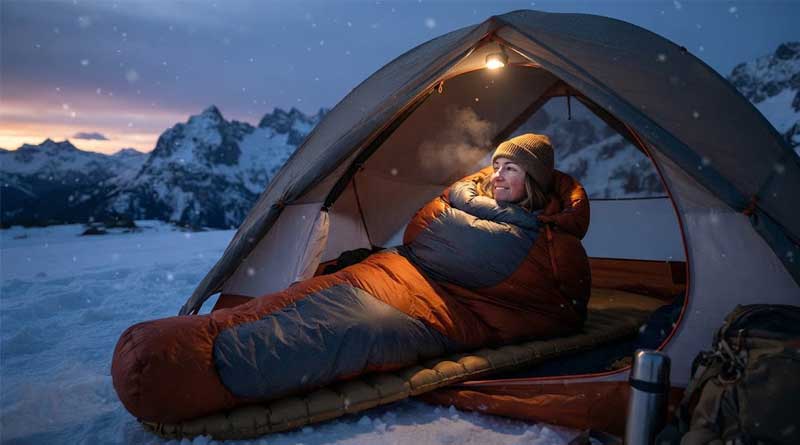
When the temperature drops, a good night’s sleep outdoors starts with the right gear. Winter camping is amazing, but without a proper sleeping bag, it can quickly become miserable and even dangerous. The best winter bags are designed to trap your body heat and block the cold air, keeping you cozy all night long. This guide breaks down the top options for cold weather, so you can stay warm, safe, and comfortable on your next snowy adventure.
1. NEMO Sonic 0

- Best Use: Mountaineering
- Weight (Regular): 3 lbs. 4 oz.
- Fill: 800-fill-power down (water-resistant)
- Compressed Volume (Regular): 9.6 L
The NEMO Sonic 0 is a mountaineer’s dream, balancing exceptional warmth with eco‑conscious materials. The recycled nylon shell and recycled polyester lining reduce environmental impact, while the 800‑fill down keeps you toasty at 0°F. Its mummy shape hugs your body efficiently, and the left‑zip design is intuitive. With ISO tested comfort at 14°F, this bag performs well below freezing, making it a reliable companion for high‑altitude expeditions or winter backcountry trips.
Versatility is the Sonic’s strong suit; it offers tunable warmth and packs down impressively for a 0° bag. The small, regular and long sizes accommodate various heights, and the stuff sack volume is generous enough for quick stowing. While the weight is competitive, the bag’s focus on warmth means it’s not ultralight—but for serious cold‑weather adventurers, the trade‑off is well worth it. The water‑resistant down adds a layer of security in damp conditions.
- Pros: Excellent warmth‑to‑weight ratio; eco‑friendly materials; water‑resistant down; multiple size options.
- Cons: Premium price; not the most spacious for side sleepers.
See the NEMO Sonic 0 See the NEMO Sonic -20
2. Kelty Cosmic Synthetic 0

- Best Use: Backpacking / Camping
- Total Weight (Regular): 4 lbs. 6 oz.
- Fill: Cirroloft synthetic insulation
- Stuff Size: 17 x 11 inches (non‑compressed)
The Kelty Cosmic Synthetic 0 brings reliable warmth in a budget‑friendly package. Its Cirroloft synthetic fill maintains loft even in damp conditions, preventing cold spots and ensuring consistent insulation. The regular size fits sleepers up to 6 feet, and the integrated compression stuff sack helps reduce pack size for minimalist backpackers. The spacious footbox adds welcome wiggle room, and the exterior stash pocket keeps essentials close at hand during the night.
While the Cosmic Synthetic is heavier than down counterparts, its performance in wet weather is a major advantage. Kelty’s craftsmanship is evident in the durable construction and thoughtful details like the no‑snag zipper. It’s an excellent choice for campers and backpackers who prioritize durability and moisture resistance over ultralight weight. The range of temperature ratings (0° to 40°) also makes it a versatile addition to any gear closet.
- Pros: Reliable in damp conditions; affordable; generous footbox; built‑in compression sack.
- Cons: Heavier than down bags; bulkier when packed.
See the Kelty Cosmic Synthetic 0
3. Coleman North Rim 0
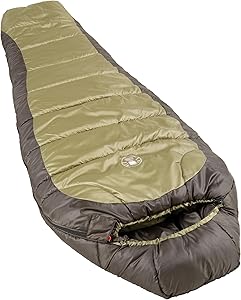
- Best Use: Camping
- Dimensions: 82 x 32 inches
- Insulation: Coletherm hollow polyester
- Features: Thermolock draft tube, adjustable hood
The Coleman North Rim 0 is a big and tall sleeping bag designed for campers up to 6’2”. Its Coletherm hollow polyester insulation offers excellent heat retention without excess weight, keeping you warm in temperatures as low as 0°F. The Thermolock draft tube prevents heat from escaping through the zipper, and the adjustable hood lets you fine‑tune ventilation. The no‑snag zipper ensures hassle‑free entry and exit, making it a user‑friendly option for family or scout camping.
With its spacious 82×32‑inch dimensions, this bag provides plenty of room to move, yet it remains machine washable for easy care. While it’s not the most compact or lightweight option for backpacking, it excels at car camping and base camp use. The polyester shell and lining are durable and easy to clean, and the overall build quality reflects Coleman’s reputation for reliable outdoor gear. For casual winter campers, the North Rim offers outstanding value.
- Pros: Roomy big‑and‑tall fit; excellent heat retention; machine washable; affordable.
- Cons: Bulky and heavy; limited to car camping.
4. Teton Celsius 0
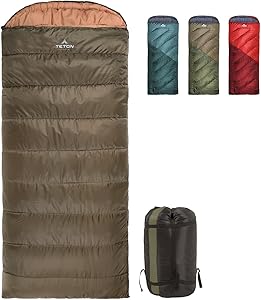
- Best Use: Camping / Backpacking
- Lining: Soft poly‑flannel
- Construction: Double‑layer with draft tubes
- Stuff Sack: Durable compression sack included
The Teton Celsius 0 is all about comfort and warmth, featuring a soft poly‑flannel lining that feels like home even on the coldest nights. The half‑circle mummy‑style hood keeps your head warm and your pillow clean, while the innovative fiber fill and double‑layer construction work together to eliminate cold spots. Draft tubes along the zipper further seal in heat, ensuring a restful sleep in sub‑zero conditions. The included compression stuff sack makes packing quick and easy—just stuff and cinch.
This bag is thoughtfully designed with tips for staying warm, like using an insulated pad and wearing a hat. Teton’s customer support is known for being responsive, giving buyers peace of mind. Although the flannel lining adds a bit of weight and bulk, the trade‑off is superb comfort. It’s a great choice for campers who want a warm, cozy bag without breaking the bank, and the durable construction means it will last for many seasons.
- Pros: Exceptionally soft lining; warm double‑layer design; easy compression stuff sack; great value.
- Cons: Heavier than premium down bags; not ultralight.
5. Sea to Summit Trek 0

- Best Use: Backpacking
- Weight (Regular): 4 lbs. 2.8 oz.
- Fill: 650+ fill‑power duck down (water‑resistant)
- Compressed Volume (Regular): 14.2 L
The Sea to Summit Trek 0 redefines versatility with its Free‑Flow Zip System, allowing you to use it as a quilt or even wear it around camp. Its semi‑rectangular shape provides generous room for side sleepers, while the 650+ fill duck down offers reliable warmth down to 0°F. The recycled polyester shell and lining are eco‑friendly, and the water‑resistant down treatment adds security in damp environments. With a comfort rating of 12°F, it’s a solid performer for cold‑weather backpacking.
Weighing just over 4 pounds, this bag strikes a good balance between warmth and packability. The 26‑liter stuff sack is ample, and the compressed volume is reasonable for a 0° bag. The left/right zipper options add flexibility for pairing bags. While it’s not the lightest on the market, the Trek’s innovative features and roomy fit make it a standout choice for adventurers who value adaptability. The duck down fill provides excellent loft and durability over time.
- Pros: Innovative quilt/wearable design; roomy semi‑rectangular cut; water‑resistant down; eco‑friendly materials.
- Cons: Heavier than some mummy bags; higher price point.
6. Mountain Hardwear Bishop Pass 0

- Best Use: Backpacking
- Weight (Regular): 3 lbs. 2.1 oz.
- Fill: 650‑fill fluorine‑free down
- Compressed Volume (Regular): 11.3 L
The Mountain Hardwear Bishop Pass 0 is a lightweight, packable mummy bag designed for cold‑weather backpacking. Its 20‑denier ripstop nylon shell and 30‑denier nylon lining are durable yet breathable, while the 650‑fill fluorine‑free down delivers excellent warmth with a lower environmental impact. The ISO comfort rating of 13°F ensures a good night’s sleep even when temperatures dip, and the left‑zip configuration suits most right‑handed users. The bag packs down to a compact 11.3 liters, making it easy to stow in a backpack.
With a shoulder girth of 62 inches and hip girth of 53 inches, the regular size offers a snug, efficient fit that maximizes thermal efficiency. The mummy shape minimizes dead space, reducing the amount of air your body needs to heat. This bag is ideal for minimalist backpackers who prioritize weight savings without sacrificing warmth. The quality construction and attention to detail reflect Mountain Hardwear’s commitment to high‑performance gear, making it a reliable choice for serious outdoor enthusiasts.
- Pros: Lightweight and packable; fluorine‑free down; durable fabrics; efficient mummy fit.
- Cons: Narrow hip girth may feel restrictive for some; left zip only.
See the Bishop Pass 0 See the Women’s Bishop Pass 0
7. Big Agnes Torchlight EXP 0

- Best Use: Backpacking
- Weight (Regular): 3 lbs. 10 oz.
- Fill: 650‑fill Downtek PFC‑free down
- Compressed Volume (Regular): 9.3 L
The Big Agnes Torchlight EXP 0 is all about customization, featuring an adjustable mummy shape that adapts to your sleep style. The recycled polyester shell and lining are treated with a PFAS‑free water‑repellent finish, and the 650‑fill Downtek down is PFC‑free for a greener footprint. With an ISO comfort rating of 18°F, it’s slightly cooler than some 0° bags, but the lower limit of 6°F ensures it handles extreme cold. The 10×21‑inch stuff sack and 9.3‑liter compressed volume make it surprisingly compact for a down bag.
The Torchlight’s shoulder and hip girths are adjustable (60‑70 inches and 55‑65 inches, respectively), allowing you to fine‑tune the fit for maximum comfort and thermal efficiency. This is a fantastic option for backpackers who want a bag that grows with their needs or accommodates varying layers. While it’s not the lightest, the blend of adjustability, eco‑friendly materials, and solid warmth makes it a top contender for three‑season and winter trips alike.
- Pros: Adjustable girth for personalized fit; eco‑friendly materials; good packability; versatile for various conditions.
- Cons: Slightly lower comfort rating than some 0° bags; heavier than ultralight alternatives.
See the Big Agnes Torchlight EXP 0
8. Mountain Hardwear Lamina -20

- Best Use: Backpacking / Winter Expeditions
- Weight (Regular): 5 lbs. 1.13 oz.
- Fill: Temperlite™ synthetic insulation
- Compressed Volume (Regular): 16.2 L
The Mountain Hardwear Lamina -20 is a serious cold‑weather bag with a -20°F rating, making it ideal for deep winter expeditions. Its seamless Lamina construction eliminates cold spots, while the Temperlite synthetic insulation retains warmth even if damp. The mummy shape and 64‑inch shoulder girth provide an efficient, snug fit, and the 20‑denier polyester ripstop shell is tough enough for harsh conditions. Weighing just over 5 pounds, it’s a heavyweight but offers exceptional protection against extreme cold.
With a comfort rating well below zero, this bag is built for mountaineers and polar adventurers. The synthetic fill excels in wet environments where down would fail, and the 12×22‑inch stuff sack compresses to 16.2 liters—manageable for a bag of this warmth. The left‑zip design is standard, and the durable construction ensures years of reliable use. While it’s bulky and heavy, the Lamina -20 is a specialist tool for those who need uncompromising warmth in the harshest conditions.
- Pros: Extreme cold‑weather protection; synthetic insulation excels in wet conditions; durable shell; no cold spots.
- Cons: Heavy and bulky; overkill for mild winter camping.
See the Mountain Hardwear Lamina -20
9. Western Mountaineering Kodiak 0

- Best Use: Backpacking
- Weight (6 FT): 2 lbs. 12 oz.
- Fill: 850+ fill‑power goose down
- Compressed Volume (6 FT): 13.4 L
The Western Mountaineering Kodiak 0 is a premium mummy bag designed for larger frames, offering a generous 66‑inch shoulder girth and 57‑inch hip girth. The 850+ fill goose down provides exceptional warmth with minimal weight—just 2 lbs. 12 oz. for the 6‑foot version. The nylon ripstop shell and taffeta lining are durable and breathable, while the ISO lower limit of -1°F and comfort rating of 13°F ensure reliable performance in cold conditions. It packs down to 13.4 liters, making it impressively compact for its warmth.
This bag is a favorite among thru‑hikers and winter backpackers who demand high‑end performance. The spacious fit accommodates broader shoulders and allows for layering, yet the mummy shape retains thermal efficiency. The left‑zip design is standard, and the 9×18‑inch stuff sack is sturdy. Although the price is steep, the craftsmanship, warmth‑to‑weight ratio, and oversized dimensions make it a worthwhile investment for serious adventurers who refuse to compromise on comfort.
- Pros: Excellent warmth‑to‑weight ratio; spacious fit for larger users; premium 850+ down; compact packed size.
- Cons: Very expensive; limited availability of right‑zip options.
See the Western Mountaineering Kodiak 0
10. Big Agnes Lost Ranger 3N1 0

- Best Use: Backpacking / Versatile
- Weight (Regular): 3 lbs. 12 oz.
- Fill: 650‑fill Downtek PFC‑free down
- Configuration: Inner + outer bag (3‑in‑1 system)
The Big Agnes Lost Ranger 3N1 0 is a highly versatile system that combines an inner and outer bag for three distinct warmth configurations. The 0°F rating is achieved when both layers are used, but you can also use just the inner or outer bag for milder conditions. The recycled polyester shell and lining feature a PFAS‑free water‑repellent finish, and the 650‑fill Downtek down is PFC‑free. The regular size weighs 3 lbs. 12 oz. and packs into a 9×20‑inch stuff sack with a 21‑liter volume.
This system is a game‑changer for backpackers who encounter fluctuating temperatures. The rectangular shape offers plenty of room, and the left/right zipper options add pairing flexibility. The inner bag’s shoulder girth is 62 inches, while the outer bag expands to 69 inches, accommodating various layering needs. Though it’s heavier than a single‑purpose bag, the versatility and quality construction make it a superb choice for multi‑season trips where conditions are unpredictable.
- Pros: 3‑in‑1 versatility; eco‑friendly materials; roomy rectangular cut; suitable for diverse conditions.
- Cons: Heavier than dedicated 0° bags; complex design may take getting used to.
See the Big Agnes Lost Ranger 3N1 0
How to Choose Winter Sleeping Bags: A Guide for Cold-Weather Campers
Choosing a winter sleeping bag is one of the most important decisions you will make as a cold-weather camper. Unlike summer bags, which are mostly about comfort, a winter bag is about safety. Pick the wrong one, and you risk hypothermia, sleepless nights, and a ruined trip. Pick the right one, and you will wake up refreshed, even when there is snow outside your tent. This guide will walk you through every feature you need to consider, using simple language and clear steps. By the end, you will know exactly what to look for and how to match a bag to your specific winter adventures.
Understanding Temperature Ratings: The Most Important Number
Every sleeping bag comes with a temperature rating, but these numbers can be misleading if you do not read them correctly. In Europe, bags use the EN (European Norm) or ISO (International Organization for Standardization) testing system. This gives you three key numbers:
- Comfort Rating: The temperature at which a standard woman can sleep comfortably in a relaxed position. This is usually the highest number.
- Lower Limit Rating: The temperature at which a standard man can sleep curled up without waking from cold. This is the number most brands advertise.
- Extreme Rating: The temperature at which you can survive for six hours without dying from hypothermia. This is not a comfort rating. You should never rely on this number for a good night’s sleep.
For true winter camping, you should choose a bag with a lower limit rating at least 10°F (5-6°C) below the coldest temperature you expect to face. For example, if you expect 20°F (-6°C) nights, buy a bag rated to 10°F (-12°C) or lower. This gives you a safety buffer for unexpected weather drops or if you sleep cold naturally. Remember, ratings assume you are wearing thermal underwear and using a good sleeping pad. Without those, the bag will feel much colder.
Fill Types: Down vs. Synthetic
The material inside your bag determines how warm, heavy, and expensive it will be. There are two main choices, and each has clear pros and cons for winter use.
Down Fill (Goose or Duck Feathers)
- Pros: Lighter weight, compresses very small for packing, lasts for many years if cared for, and offers the best warmth-to-weight ratio.
- Cons: Expensive, loses almost all insulating power when wet, and takes a long time to dry.
- Best for: Backpacking, ski touring, and any trip where weight and pack size matter most. Also ideal for dry, very cold climates (like the Rocky Mountains).
Synthetic Fill (Polyester Fibers)
- Pros: Cheaper than down, continues to insulate even when damp or wet, dries quickly, and is easier to wash at home.
- Cons: Heavier, bulkier when packed, and loses loft (warmth) faster over time with repeated compression.
- Best for: Wet winter conditions (like the Pacific Northwest), car camping, and beginner campers on a budget.
If you can afford down and will keep it dry, it is the superior choice for winter. If you expect rain, sleet, or high humidity, synthetic is the safer bet. Some modern bags use water-resistant down, which bridges the gap, but it still does not perform as well as synthetic when fully soaked.
Shape and Fit: Mummy vs. Rectangular vs. Barrel
The shape of your bag is not just about comfort; it is about heat efficiency. Your body has to heat up all the empty space inside the bag. More space means more cold air to warm up.
- Mummy Bags: These are narrow at the shoulders and feet, with a hood that cinches around your head. They are the most heat-efficient shape and the lightest. They are the top choice for serious winter backpacking. The downside is that you cannot move your legs much inside.
- Barrel (or Semi-Rectangular) Bags: These give you a bit more shoulder and hip room while still having a hood. They are a good compromise between warmth and comfort. Good for winter campers who feel claustrophobic in a mummy bag.
- Rectangular Bags: These are roomy and can unzip fully to become a blanket. However, they are very inefficient for winter because of all the dead air space. They are best only for car camping in mild winter conditions, not for extreme cold.
When trying a bag, make sure it is snug but not tight. If it is too loose, you waste heat. If it is too tight, you compress the insulation, which also makes you cold. Always check the bag’s shoulder girth, hip girth, and foot girth in the size chart before buying.
Key Features to Look For in a Winter Bag
Beyond the basics, winter bags come with special design features that make a huge difference in sub-zero conditions. Pay attention to these details:
Draft Collars and Tubes
A draft collar is a thick, insulated tube that sits around your neck or shoulders inside the bag. It prevents warm air from escaping out the top and cold air from rushing in when you move. A draft tube is a similar insulated strip that runs along the inside of the zipper. Both are essential for winter bags. Without them, the zipper and the hood opening become major heat leaks.
Hood Design
Your head loses a huge amount of body heat. A good winter hood should be adjustable with drawstrings, so you can leave only a small hole for your mouth and nose. It should also be contoured to fit your head shape. Some hoods even have extra insulation around the face area. Make sure the hood is large enough to fit over a warm hat or balaclava.
Zipper System
Look for a two-way zipper that allows you to open the bottom for ventilation if you get too warm. The zipper should be anti-snag to prevent fabric from getting caught. Also, check that the zipper has a draft tube as mentioned above. For extreme cold, some bags use a center zipper instead of a side zipper, which can be easier to operate while inside the bag.
Sleeping Pad Integration
Remember, a sleeping bag does not insulate you from the ground; it just traps heat. The ground will suck heat right out of you if you do not have a pad. Many winter bags have pad loops or sleeves on the bottom. These hold your sleeping pad in place, so you do not roll off during the night. Some brands even make bags with a built-in sleeve that fully encloses the pad. This is a great feature for restless sleepers.
Down Fill Power and Weight (For Down Bags)
If you choose down, you will see two numbers: fill power and fill weight. They mean different things.
- Fill Power (FP): This measures the quality and loft of the down. It ranges from about 550 FP to 900 FP. Higher FP means the down traps more air per ounce, so it is warmer and lighter. For winter, aim for 700 FP or higher. It costs more, but it packs smaller and lasts longer.
- Fill Weight: This is the actual weight in ounces or grams of the down inside the bag. A bag with 800 FP and 20 ounces of down will be much warmer than a bag with 800 FP and 12 ounces of down. Fill weight tells you how much insulation is actually there. Always compare fill weight between bags of similar fill power.
Brands often do not list fill weight, but you can find it in the product specifications. Use it to compare bags side-by-side.
Shell and Lining Fabrics
The outer shell of a winter bag should be water-resistant and breathable. Look for fabrics like Pertex or DWR-coated nylon. These repel light snow or condensation from your breath, while allowing moisture from your body to escape. If the shell is not breathable, you will sweat inside the bag, and that sweat will freeze, making you cold.
The inner lining should feel soft against your skin. Common choices are nylon taffeta (smooth and slippery) or cotton-blend (warmer to the touch but heavier). For winter, a slightly textured lining can help reduce drafts by keeping the fabric from sliding around your body.
Weight and Packed Size: The Backpacker’s Dilemma
Winter bags are never ultralight. They simply have too much insulation. However, if you are backpacking, weight and packed size are critical. A typical winter bag for 0°F (-18°C) weighs between 3.5 and 5.5 pounds (1.6 to 2.5 kg). Synthetic bags are usually a pound heavier than down for the same warmth.
Packed size is measured in liters. A winter down bag might compress to 8-12 liters, while a synthetic of the same rating could be 15-20 liters. If your backpack is 50 liters or less, you will need a down bag to have room for other gear. For car camping, weight and size do not matter at all, so synthetic is a great value choice.
Comparing Winter Bags at a Glance
Here is a quick comparison table to help you see the trade-offs at different price and performance levels. Remember, these are general examples for a 0°F (-18°C) rated bag.
| Feature | Budget Synthetic | Mid-Range Down | Premium Down |
|---|---|---|---|
| Fill Type | Synthetic (Polyester) | 650-700 FP Down | 800-900 FP Down |
| Weight (approx.) | 5.5 lbs (2.5 kg) | 4.0 lbs (1.8 kg) | 3.2 lbs (1.45 kg) |
| Packed Size | Very large (18 L) | Medium (12 L) | Small (8 L) |
| Wet Performance | Excellent | Poor (unless treated) | Poor (unless treated) |
| Price Range | $150 – $250 | $350 – $550 | $600 – $1000+ |
| Best Use | Car camping, wet climates | Backpacking, dry cold | Serious expeditions, ultralight |
Do Not Forget the Sleeping Pad
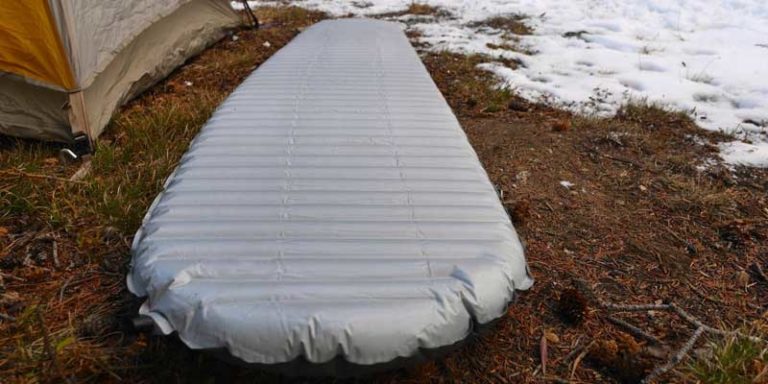
We mentioned this briefly, but it deserves its own section. No matter how good your sleeping bag is, you will freeze from the ground up without a proper winter sleeping pad. Look for a pad with an R-value of at least 4.0 for winter use. R-value measures thermal resistance. Higher is better. Combine a closed-cell foam pad with an inflatable pad for maximum warmth. Most winter bags are rated assuming you are using a pad with an R-value of about 4–5. If your pad is less than that, your bag will feel 10–15°F colder than its rating.
Sizing: Length and Width
Most brands offer regular and long lengths. If you are over 6 feet (183 cm) tall, get a long bag. Your feet should not press against the footbox, because that compresses the insulation and creates a cold spot. For width, consider your body type. If you are broad-shouldered, look for a bag with a wider shoulder girth (typically 62+ inches for men). Some brands also offer “expedition” cuts for extra room to wear thick layers inside.
Waterproof or Water-Resistant Treatment
Many premium down bags now use a hydrophobic treatment on the feathers (like Nikwax or DownTek). This makes the down resist moisture for longer. It is not a substitute for a waterproof shell, but it gives you extra protection against condensation and light snow. If you choose down, it is highly recommended to pay a little extra for a treated down bag. For synthetic bags, this is not an issue, as they are naturally water-resistant.
Storage and Maintenance
Once you buy your winter bag, how you store it matters. Never leave it compressed in its stuff sack for months. This damages the loft permanently. Store it loosely in a large cotton storage sack or hang it in a closet. Air it out after every trip to remove body moisture. Wash it only when needed, using a special down wash or mild soap for synthetics. Follow the manufacturer’s instructions carefully.
Final Checklist Before You Buy
To make your decision easier, here is a simple checklist to run through when comparing any winter bag:
- Is the temperature rating at least 10°F lower than my expected lowest temperature?
- Do I need down (light, compact) or synthetic (wet-safe, cheaper)?
- Does it have a draft collar and a draft tube along the zipper?
- Is the hood adjustable and well-insulated?
- Does the bag have loops or sleeves to attach my sleeping pad?
- Is the shell fabric water-resistant and breathable?
- Will my sleeping pad fit the bag’s pad system? (Check R-value separately)
- Is the length and width right for my body size and sleeping style?
- Do I have a proper storage sack to protect the bag when not in use?
Choosing a winter sleeping bag is an investment in your comfort and safety. Do not rush the decision. Read reviews, check the specs carefully, and if possible, visit a store to feel the bag’s loft and fit. A bag that is too warm is always better than one that is too cold, because you can always unzip to cool down. With the right bag, winter camping becomes a magical experience instead of a battle against the cold. Stay warm and enjoy the snow!