If you have wide feet, finding a hiking shoe that doesn’t pinch or squeeze can be a real challenge. Many standard boots are too narrow, leading to blisters, pain, and tired feet. The good news is you don’t have to suffer. This guide highlights the best hiking shoes designed specifically for wider feet, offering roomy toe boxes and solid support so you can hit the trails comfortably and without hassle.
1. Oboz Sawtooth X Low

- Waterproofing: B-DRY single-layer membrane
- Upper Material: Oiled nubuck leather and CORDURA fabric mesh
- Outsole: True Tread rubber
- Weight (Pair): 2 lbs. 1.8 oz.
The Oboz Sawtooth X Low Waterproof hiking shoes build beautifully upon their predecessor by retaining the classic, beloved fit while injecting major upgrades. They excel on wet, unpredictable trails, offering outdoor enthusiasts a highly reliable option for day treks or extended weekend excursions. This version provides a noticeable step up in overall comfort and rugged trail durability.
The proprietary adaptive foam midsole actively cushions your stride, while the sturdy nylon shank delivers crucial underfoot stability across rocky terrain. Coupled with a high-traction True Tread rubber outsole, these low-profile ankle shoes ensure you stay firmly planted. They are a dependable choice for hikers prioritizing support and wet-weather defense.
Pros: Improved traction, excellent waterproofing, and high durability.
Cons: Slightly heavy for a low-cut shoe.
See the Oboz Sawtooth X Low See the Women’s Sawtooth X Low
2. Columbia Crestwood

- Upper Material: Suede leather, mesh, and webbing
- Midsole: TechLite superior cushioning foam
- Outsole: Omni-Grip non-marking traction rubber
- Closure: Traditional lace-up system
The Columbia Crestwood stands out as a highly versatile, all-purpose hiker designed to deliver years of reliable service. Striking a fine balance between lightweight agility and solid outdoor functionality, it caters perfectly to casual walkers and avid trail explorers alike. The durable stitching and expert craftsmanship ensure this pair remains a wardrobe staple for many seasons.
Its specialized midsole tech provides long-lasting comfort and high energy return, minimizing foot fatigue during extended tracking. On the outside, the indoor-friendly non-marking rubber compound ensures sure-footed traction in the wild without scuffing floors at home. This nimble lace-up successfully blends everyday usability with rugged, outdoor-ready performance materials.
Pros: Multi-surface traction, affordable value, and lightweight build.
Cons: Lacks a dedicated waterproof membrane.
See the Columbia Crestwood See the Women’s Crestwood
3. KEEN Targhee IV

- Waterproofing: KEEN.DRY waterproof/breathable membrane
- Upper Material: Premium environmentally preferred nubuck leather
- Midsole: Air-injected Luftcell polyurethane
- Weight (Pair): 2 lbs. 6.4 oz.
The KEEN Targhee IV is engineered for hikers who want to get out and explore without worrying about foot fatigue. Featuring the brand signature wide toe box, these shoes offer exceptional out-of-the-box comfort that lets your toes splay naturally. They feel incredibly robust, making them ideal for handling demanding terrain and messy trail conditions.
Protection is a core focus, driven by a proprietary breathable membrane that keeps external moisture at bay while letting sweat escape. Underneath, the direct-attach Luftcell midsole absorbs heavy trail impacts, while a supportive stability shank reinforces your stride. The higher-traction TPU outsole keeps you firmly anchored on steep inclines.
Pros: Roomy toe box, eco-friendly leather, and very supportive.
Cons: Heavy compared to competitors.
See the KEEN Targhee IV See the Women’s Targhee IV
4. Merrell Moab 3

- Upper Material: Pigskin leather and breathable mesh
- Midsole: Super Rebound Compound
- Outsole: Vibram TC5+ rubber
- Weight (Pair): 2 lbs. 1 oz.
The Merrell Moab 3 continues a legendary legacy, widely recognized by outdoor enthusiasts for its supreme comfort, out-of-the-box fit, and trail versatility. This latest iteration raises the bar by introducing an even softer, more cushioned ride without sacrificing the structural integrity the line is famous for. It remains an absolute go-to choice for day hikes.
Built with a supple pigskin leather and mesh upper, it breathes remarkably well while defending against trail debris. The updated compound in the midsole provides plush impact absorption, working in tandem with a molded nylon arch shank for support. A premium Vibram outsole ensures confident traction across varying surfaces.
Pros: Extremely comfortable, softer midsole, and legendary reliability.
Cons: Non-waterproof build limits wet-weather use.
See the Merrell Moab 3 See the Women’s Moab 3
See the Merrell Moab 3 WP See the Women’s Moab 3 WP
5. Danner Trail 2650

- Upper Material: Durable suede leather and textile
- Support: External heel counter and TPU shank
- Outsole: Vibram 460 rubber with Megagrip technology
- Weight (Pair): 1 lb. 8 oz.
Inspired by the incredibly demanding terrain of the Pacific Crest Trail, the Danner Trail 2650 is built to keep you moving fast and light. These shoes successfully merge the lightweight agility of a trail runner with the rugged protection of a traditional hiking boot. They are perfect for fast-packing or hot summer treks.
The breathable mesh lining keeps your feet cool, while the suede and textile upper withstands abrasive rocks and roots. An external heel counter locks your foot firmly in place, minimizing blisters over high mileage. Combined with a premium Megagrip outsole, these shoes offer exceptional traction on slick or loose granite.
Pros: Lightweight construction, superb ventilation, and top-tier grip.
Cons: Upper fabric lacks built-in waterproofing.
See the Danner Trail 2650 See the Women’s Trail 2650
6. Altra Lone Peak 9

- Waterproofing: Full bootie construction
- Upper Material: Recycled polyester mesh
- Midsole: Altra EGO responsive foam
- Weight (Pair): 1 lb. 11.7 oz.
The Altra Lone Peak 9 Waterproof Low is an exceptional choice for thru-hiking purists and day trekkers looking to shave ounces off their gear. Balancing a lightweight design with heavy-duty weather defense, this shoe keeps your feet dry without feeling clunky. It brings trail-runner agility directly into a highly capable hiking package.
The specialized foam midsole delivers a responsive yet cushioned feel, keeping feet fresh over brutal miles. Its waterproof bootie construction seals out puddles and mud, while the recycled polyester upper helps promote sustainable manufacturing. Underneath, a sticky MaxTrac outsole claws into loose dirt, mud, and slick rock surfaces easily.
Pros: Lightweight design, eco-friendly materials, and complete waterproofing.
Cons: Zero-drop platform requires an adaptation period.
See the Altra Lone Peak 9 See the Women’s Lone Peak 9
7. Merrell Moab Speed 2 GTX

- Waterproofing: GORE-TEX breathable membrane
- Upper Material: Nylon ripstop and TPU
- Midsole: FloatPro foam cushion
- Weight (Pair): 1 lb. 9.7 oz.
Comfort is king on the trail, and the Merrell Moab Speed 2 GORE-TEX absolutely delivers on that promise. This technical iteration takes the traditional Moab DNA and injects a fast, modern aesthetic designed for moving quickly through nature. It is a fantastic hybrid for hikers wanting speed and premium padding.
Boasting thirty percent more foam underfoot, the plush FloatPro midsole drastically reduces joint strain during long downhills. The nylon ripstop upper is bolstered by TPU overlays for durability, while the GORE-TEX membrane keeps internal climates dry. A Vibram TC5+ outsole rounds things out, delivering secure traction on muddy trails.
Pros: Thick cushioning, premium GORE-TEX, and lightweight ripstop upper.
Cons: Max-cushion design reduces precision trail feel.
See the Merrell Moab Speed 2 See the Women’s Moab Speed 2
8. Salomon X Ultra 5 GTX

- Closure: Single-pull Quicklace system
- Waterproofing: GORE-TEX membrane
- Midsole: EnergyCell high-rebound foam
- Outsole: All Terrain Contagrip rubber
The Salomon X Ultra 5 GORE-TEX Low expertly balances a lightweight feel with the high-level stability required for technical mountain trails. It feels incredibly agile underfoot, making it just as capable at charging up steep ascents as it is at tackling loose descents. It targets hikers seeking precision and speed.
The synthetic upper keeps the chassis lightweight and fast-drying, while a single-pull lacing system ensures a secure, hassle-free fit in seconds. An EnergyCell midsole provides great rebound, cushioning each step across rugged paths. Complete with a Contagrip outsole, this shoe bites hard into mixed terrain for total confidence.
Pros: Quick-pull lacing, excellent downhill stability, and premium grip.
Cons: Narrower fit may not suit wide feet.
See the Salomon X Ultra 5 See the Women’s X Ultra 5
How to Choose Hiking Shoes for Wide Feet
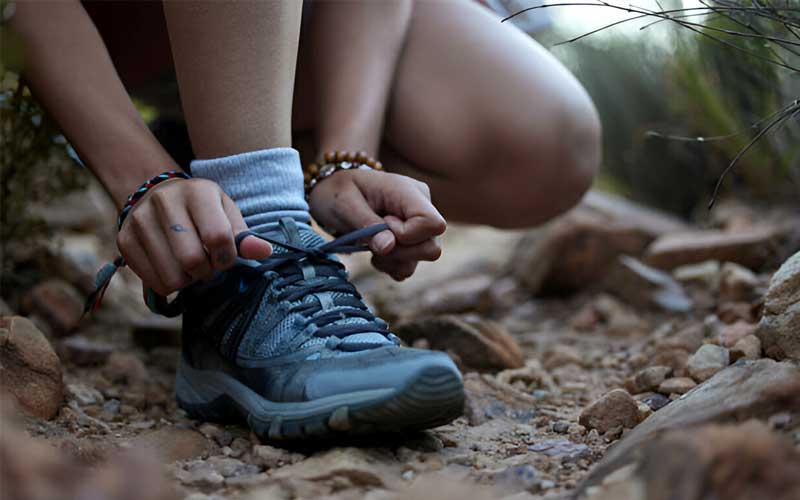
Finding the perfect pair of hiking shoes is a ritual for outdoor enthusiasts, but for those with wide feet, the quest can feel like an endless trek through uncomfortable terrain. Standard footwear often pinches the forefoot, squishes the toes, and leads to painful blisters, hot spots, or even long-term foot issues like bunions and neuromas. When your feet are cramped, your stability suffers, your endurance plummets, and a beautiful day in the backcountry quickly turns into a grueling test of pain tolerance.
The good news is that the outdoor footwear industry has evolved. Today, hikers with wide feet no longer have to suffer through ill-fitting shoes or upsize to the point where their heels slip. By understanding your specific foot shape, knowing what technical features to look for, and recognizing which brands cater to broader feet, you can find a pair of hiking shoes that offer out-of-the-box comfort and lasting trail support.
Understanding Your Foot: Wide vs. Volume
Before diving into product specs, it is crucial to understand what makes a foot “wide.” Foot width is measured across the ball of the foot—the widest part just behind your toes. However, many hikers confuse a wide foot with a high-volume foot.
Width vs. Total Volume
Width refers strictly to the horizontal distance across the base of your toes. Volume, on the other hand, refers to the total space your foot occupies inside a shoe, including the height of your instep and the thickness of your midfoot. You can have a wide, flat foot (low volume) or a narrow foot with a very high instep (high volume). If a shoe pinches the sides of your toes, you need a wider shoe. If the top of your foot feels compressed or you cannot comfortably lace the shoe, you need a higher-volume shoe. Knowing this distinction helps you pinpoint why certain models fail to fit your feet comfortably.
Key Features to Look for in Wide Hiking Shoes
When assessing hiking shoes online or at a retail store, specific design elements will dictate how well they accommodate a broader foot. Keep these critical technical features in mind during your search.
1. A Anatomically Shaped Toe Box
Traditional athletic shoes often taper to a point near the toes, mimicking a symmetrical fashion shoe. For wide feet, this is a recipe for disaster. Look for hiking shoes designed with an anatomical or foot-shaped toe box. This design mimics the natural shape of a human foot, allowing the big toe to sit straight and giving the other toes ample room to splay naturally as you weight your foot. Toe splay is vital for balance, stability, and shock absorption, especially when navigating loose gravel or steep declines.
2. Upper Material Flexibility
The materials used in the shoe construction play a significant role in how well the upper adapts to a wide foot. Synthetics like nylon mesh and knit fabrics offer excellent out-of-the-box flexibility and will stretch slightly to accommodate pressure points. Heavy-duty full-grain leather provides incredible durability and protection, but it requires a rigorous break-in period and has very little initial give. Suede and split-grain leathers sit comfortably in the middle, offering a balance of protection and pliability.
3. Secure Heel Cup and Midfoot Lockdown
A common mistake when shopping for wide feet is buying a shoe that is simply too large overall just to get extra width in the front. This results in a loose heel cup, causing your foot to slide forward on downhills and your heel to lift on uphills, leading to severe friction blisters. The ideal wide hiking shoe secures your heel firmly in place and hugs your midfoot, while opening up dramatically in the forefoot to give your toes breathing room.
4. Adaptive Lacing Systems
Look for shoes with lacing configurations that extend far down toward the toes, often referred to as “to-the-toe lacing” (commonly found on approach shoes). This allows you to customize the internal volume of the shoe. If your feet swell over long distances—a natural occurrence on hot trail days—you can loosen the lower laces to relieve pressure while keeping the upper ankle secure.
How to Properly Size and Try On Shoes
Sizing hiking shoes requires a different approach than buying everyday casual footwear. Because your feet undergo unique stresses on the trail, you must be methodical when testing out potential pairs.
Shop in the Afternoon or Evening
Your feet naturally swell throughout the day, especially after walking around. This mimics the swelling that will occur several miles into a challenging hike. Trying on shoes first thing in the morning can result in buying a pair that feels claustrophobic on the trail.
Bring Your Hiking Socks and Insoles
Never try on hiking shoes with thin everyday cotton socks. Bring the exact merino wool or synthetic hiking socks you plan to wear outdoors. If you use custom orthotics or aftermarket insoles, swap out the factory liners before testing the fit, as these inserts can significantly alter the internal volume of the shoe.
The Insole Test
A quick way to check if a shoe is wide enough is to pull the factory insole out of the shoe and step directly onto it on the floor. If the edges of your foot or your toes spill over the sides of the foam insole, that shoe model is structurally too narrow for your foot, and the upper material will constantly rub against your skin.
Test on an Incline
Most outdoor gear shops have a small wooden ramp or stairs. Walk up and down the incline. When going downhill, your toes should not slam into the front of the shoe. If they do, the shoe is either too short or the midfoot lockdown is insufficient to hold your foot back.
Top Brands Known for Wide Footwear
While many mainstream brands offer specific “Wide” (EE) designations for their popular models, a few manufacturers inherently build their standard shoes around a wider, more natural foot shape.
- Altra: Renowned for their “FootShape” toe boxes and zero-drop platforms, Altra shoes allow maximum toe splay and are a favorite among thru-hikers with wide feet.
- Keen: Traditionally built with a notoriously generous, boxy forefoot, Keen shoes naturally accommodate wide-width feet even in their standard sizes.
- Oboz: Based in Montana, Oboz offers highly supportive, sturdy trail shoes with molded insoles and excellent dedicated wide options that lock down the heel while honoring forefoot width.
- Merrell: The famous Moab line is available in dedicated wide sizes, offering a plush, soft, and reliably spacious fit for broad-footed adventurers.
Conclusion
Do not let wide feet compromise your love for the outdoors. Finding the right hiking shoe requires moving past aesthetic appeal and focusing entirely on anatomical fit, smart material choices, and generous toe boxes. By paying close attention to how your foot sits on the shoe insole, accommodating afternoon swelling, and targeting brands that respect natural foot symmetry, you will secure a pair of shoes that keeps your feet happy, blister-free, and ready to conquer any trail ahead.