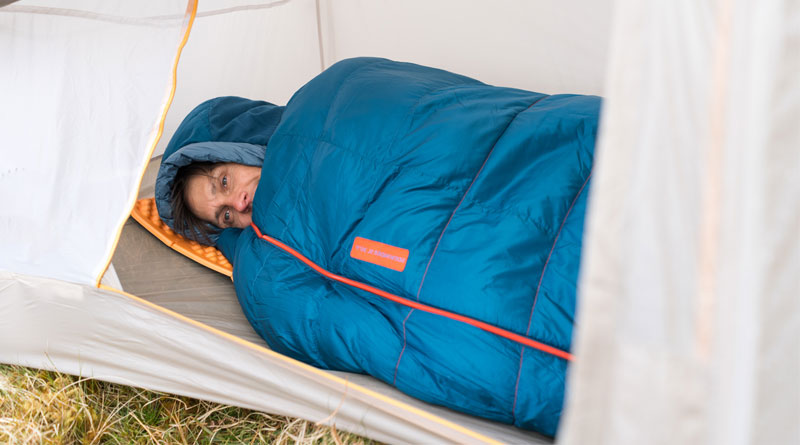
Finding the right sleeping bag is important. Many bags feel tight or uncomfortable when you shift positions at night. A good sleeping bag should give enough space for your knees and shoulders. It should also keep you warm without feeling restrictive. In this guide, we review the best sleeping bags for side sleepers. We focus on comfort, warmth, weight, and design. Whether camping or backpacking, you’ll find a great option here.
1. NEMO Disco 15 Endless Promise

- Temperature Rating: 15°F (-9°C)
- Insulation: 650-fill-power hydrophobic duck down
- Weight: 2 lbs. 11 oz. (Regular)
- Shape: Semirectangular Classic Spoon cut
The NEMO Disco 15 is a standout choice for side sleepers who find traditional mummy bags too restrictive. Its unique spoon shape provides extra room at the elbows and knees, allowing for a more natural range of motion throughout the night. As part of the Endless Promise collection, this bag is designed to be fully recyclable, appealing to eco-conscious backpackers who do not want to sacrifice comfort for sustainability.
In addition to its spacious interior, the bag features integrated Blanket Fold draft collars and Thermo Gills for temperature regulation. These Gills allow you to vent body heat without letting cold drafts in, making it versatile for fluctuating mountain temperatures. The 650-fill-power down is treated to resist moisture, ensuring the insulation remains effective even in damp conditions. It strikes an excellent balance between weight, packability, and legitimate three-season warmth.
Pros: Excellent for side sleepers; sustainable recyclable design; effective ventilation gills.
Cons: Slightly bulkier than ultra-tapered mummy bags; 650-fill down is heavier than premium 800+ options.
See the NEMO Disco 15 See the Women’s Disco 15
2. REI Co-op Trailmade 25

- Temperature Rating: 25°F (-4°C)
- Insulation: 100% recycled polyester synthetic fill
- Weight: 2 lbs. 15.14 oz. (Medium)
- Shape: Mummy
The REI Co-op Trailmade 25 serves as a versatile entry-level sleeping bag that works just as well for weekend backpacking as it does for car camping. Utilizing a synthetic fill made from recycled polyester, it offers reliable performance even if the bag gets damp. The mummy shape is designed to maximize thermal efficiency by reducing empty air space, yet it provides enough girth to remain comfortable for most body types.
Durability is a key focus here, featuring a 30-denier recycled ripstop shell treated with a PFAS-free water repellent. This makes it a rugged choice for hikers who might be hard on their gear or those camping in humid environments where down might fail. While it is heavier and less compressible than down alternatives, the price point and reliability make it a staple for those starting their outdoor journey or seeking a dependable backup bag.
Pros: Affordable price point; performs well in damp conditions; eco-friendly recycled materials.
Cons: Heavier than down bags; larger compressed volume takes up more pack space.
See the REI Co-op Trailmade 25
3. Kelty Cosmic 20

- Temperature Rating: 20°F (-7°C)
- Insulation: 550-fill-power down
- Weight: 2 lbs. 7 oz. (Regular)
- Shape: Mummy
The Kelty Cosmic 20 has long been a favorite for budget-minded backpackers who want the benefits of down insulation without the premium price tag. The trapezoidal baffle construction is a smart technical addition, as it helps keep the down in place and prevents cold spots from forming during the night. Rated for 20 degrees, it functions as a true three-season superstar, providing sufficient warmth for chilly autumn nights in the backcountry.
This bag uses a 50-denier polyester taffeta shell, which feels substantial and durable against the wear and tear of camp life. Inside, the 20-denier nylon taffeta lining is soft against the skin, enhancing sleep quality after a long day on the trail. While the 550-fill down isn’t the lightest available, the bag still compresses reasonably well into its stuff sack. It remains one of the best value-for-money down bags on the market for casual hikers.
Pros: Excellent value for down insulation; durable shell fabric; efficient baffle design.
Cons: Lower fill power makes it heavier than high-end bags; zipper can occasionally snag.
4. SYWSKW Down Sleeping Bag

- Insulation: 680FP duck down
- Weight: 2.38 lbs to 2.99 lbs (varies by fill)
- Shoulder Width: 33.5 inches
- Features: Integrated detachable pillow
The SYWSKW sleeping bag is engineered for those who prioritize a complete sleep system in a single package. Its most notable feature is the widened shoulder design, measuring over 33 inches, which offers a significantly more spacious feel than standard mummy bags. The inclusion of an integrated 80g detachable pillow adds a level of convenience for backpackers who want to avoid carrying extra gear while maintaining neck support during their trip.
Constructed with 680-fill-power duck down and a baffle box design, the bag ensures even heat distribution across 3-4 seasons. The YKK zippers provide reliable operation, and the ability to zip two bags of different colors together makes it a versatile choice for couples. It compresses down into a compact size, making it a viable space-saving option for hiking expeditions where pack volume is at a premium and comfort is non-negotiable.
Pros: Spacious shoulder area; includes a detachable pillow; zip-together compatibility for couples.
Cons: Requires time to loft after decompression; exterior branding is less known than major trail brands.
See the SYWSKW Down Sleeping Bag
5. REI Co-op HunkerDown 20

- Temperature Rating: 20°F (-6.6°C)
- Insulation: 600-fill-power water-resistant down
- Weight: 3 lbs. 6.3 oz. (Medium)
- Shape: Rectangular
The REI Co-op HunkerDown 20 is designed for campers who prioritize luxury and “wiggle room” over the weight savings of a tapered bag. Its classic rectangular shape provides a massive interior volume, allowing you to sprawl out just as you would in your bed at home. This is particularly beneficial for car campers or basecamp situations where you aren’t carrying the bag for miles but still want the warmth and loft of down insulation.
Despite its roomy cut, the bag maintains thermal efficiency through an oversize hood and a dedicated draft collar to trap heat. The 600-fill-power down is RDS certified and treated for water resistance, which is a great safety feature against tent condensation. It also includes thoughtful details like a face muffler and a draft tube along the zipper. It is an ideal choice for someone who finds mummy bags claustrophobic but wants high-quality insulation.
Pros: Very spacious rectangular cut; water-resistant down; cozy oversized hood.
Cons: Too heavy and bulky for long-distance backpacking; rectangular shape is less thermally efficient than mummy bags.
See the REI Co-op HunkerDown 20
6. Kelty Cosmic 20 Synthetic

- Temperature Rating: 20°F
- Insulation: Cirroloft synthetic
- Weight: 2 lbs. 13 oz. (Regular)
- Shell Material: 380T nylon taffeta
The Kelty Cosmic 20 Synthetic brings the reliable design of the Cosmic line to those who prefer man-made insulation. Utilizing Cirroloft synthetic fill, this bag is specifically built to maintain its loft and warmth even in cold and damp environments where down might lose its effectiveness. This makes it an excellent choice for rainy climates or for campers who don’t want to worry about meticulously protecting their gear from moisture.
The bag features a natural fit spacious footbox, giving your toes more room to move, and includes a handy exterior stash pocket for essentials like a headlamp or phone. While synthetic bags are traditionally difficult to pack, this model includes an integrated compression stuff sack to help meet minimalist backpacking standards. It offers a great balance of “Kelty craftsmanship” and rugged utility for hikers who need a workhorse bag that can be put through the ringer.
Pros: Performs excellently in wet conditions; includes compression sack; comfortable footbox.
Cons: Heavier than the down version of the Cosmic; synthetic loft breaks down faster over years of use.
See the Kelty Cosmic 20 Synthetic
7. REI Co-op Siesta Hooded 20

- Temperature Rating: 20°F (-6.6°C)
- Insulation: 98% recycled polyester synthetic
- Weight: 5 lbs. 7.3 oz. (Medium)
- Shape: Rectangular with Hood
The REI Co-op Siesta Hooded 20 is the ultimate car-camping companion for those who value comfort above all else. Unlike many rectangular bags that leave the head exposed, this model features an integrated hood to keep your head and neck warm on chilly nights. The massive girth of the bag—69 inches at the shoulder and hip—provides more than enough room for even the most active sleepers to toss and turn without restriction.
Because it uses a heavy synthetic fill, this bag is quite weighty, tipping the scales at over five pounds. This makes it unsuitable for backpacking, but the trade-off is a very durable, easy-to-clean, and affordable sleep system. The shell and insulation are primarily made from recycled materials, aligning with modern sustainability standards. If you are looking for a “bed-like” feel in the back of a truck or at a developed campsite, the Siesta is a top-tier option.
Pros: Extremely roomy rectangular shape; integrated hood for extra warmth; very durable construction.
Cons: Much too heavy for backpacking; large storage size requires significant trunk space.
See the REI Co-op Siesta Hooded 20
8. Naturehike Ultralight Sleeping Bag

- Comfort Temperature: 40.4℉ (4.7℃)
- Insulation: 650-fill-power RDS duck down
- Weight: 2 lbs. (910g)
- Material: 400T 20D ripstop nylon
Naturehike has produced a clever hybrid sleeping bag that combines a mummy-style upper body for heat retention with a rectangular lower body for foot freedom. This “Warmer Design” allows you to keep your head snugly insulated while still being able to move your legs or even expose your feet to regulate temperature. Filled with 650-fill-power RDS-certified duck down, it is safe, healthy, and surprisingly warm for its light two-pound weight.
The shell is made of high-quality 400T 20D ripstop nylon, which is both comfortable and water-resistant. It utilizes reliable YKK zippers and comes with both a storage bag and a compression sack, making it highly portable for backpacking or mountaineering. While it is rated primarily for 3-season use with a comfort limit around 40 degrees, its compact pack size makes it an excellent choice for hikers who need to save every bit of space.
Pros: Hybrid shape offers head warmth and foot room; very lightweight and portable; high-quality YKK zippers.
Cons: Not suitable for true winter temperatures; hybrid shape might feel awkward for some users.
See the Naturehike Ultralight Sleeping Bag
9. QEZER Down Sleeping Bag

- Lower Limit: 18°F
- Insulation: 1.7 lbs 600 FP duck down
- Weight: 3.24 lbs
- Material: 400T high-density nylon
The QEZER Down Sleeping Bag is a semi-rectangular option that strikes a balance between thermal efficiency and interior space. With a generous width of 30.7 inches, it feels much more spacious than a standard mummy bag, making it a good middle ground for those who dislike being constricted. It is filled with 1.7 pounds of 600-fill-power duck down, providing a comfort range that dips into the high 20s, suitable for cold weather camping.
The construction features 400T high-density nylon that is both tear-resistant and moisture-proof. One of its standout features is the double zipper design, which includes a dedicated foot zipper for ventilation on warmer nights. This bag can also be combined with another unit to form a double sleeping bag. While it is slightly heavier than high-end ultralight bags, its durability and spaciousness make it a reliable choice for rugged outdoor activities and long-distance travel.
Pros: Spacious semi-rectangular cut; independent foot ventilation zipper; durable tear-resistant fabric.
Cons: Heavier than many 600FP down competitors; bulkier pack size when compared to premium down bags.
See the QEZER Down Sleeping Bag
10. HLITMOUT Sleeping Bag

- Insulation: 680FP traceable white duck down
- Weight: 2.16 lbs to 2.98 lbs (total weight)
- Shell Material: 400T 40D ripstop nylon
- Compressed Size: 11.8 x 6.29 inches
The HLITMOUT sleeping bag is a high-performance option for those who need a compact solution for cold-weather adventures. It utilizes 680-fill-power white duck down and features a compartmentalized baffle design to effectively prevent the down from shifting and creating cold spots. Depending on the fill version selected, it can handle temperatures as low as 5°F, making it one of the more capable winter-ready bags in its weight class.
Comfort is prioritized through the use of a breathable Pongee inner lining that feels smooth against the skin, and a chest collar that helps lock in body heat. The bag also includes a removable integrated pillow and an internal security pocket for valuables. Its ability to zip together with another bag adds versatility for couples. With a very compact compressed size, it is designed to fit easily into smaller backpacking packs without sacrificing warmth.
Pros: High warmth-to-weight ratio; removable integrated pillow; very soft inner lining.
Cons: Pongee lining is less durable than nylon; down may require significant shaking to restore loft.
11. BUERTS Backpacking Sleeping Bag
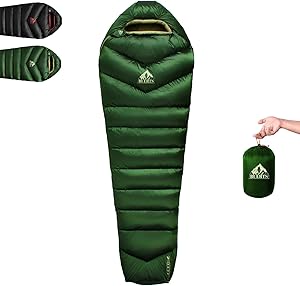
- Weight: 1.72 lbs
- Insulation: 14.1 oz RDS-certified 620FP down
- Dimensions: 86.6 x 31.5 inches
- Material: 400T 20D water-repellent nylon
The BUERTS sleeping bag is an ultralight contender designed specifically for hikers who want to “ditch the bulk.” Weighing in at just 1.72 pounds, it is one of the lightest options available, yet it maintains a generous length of 86.6 inches. This makes it a fantastic choice for taller backpackers who often struggle to find lightweight bags that fit. The 620-fill-power down is RDS certified, ensuring ethical sourcing while providing efficient heat retention for multi-season use.
Despite its minimalist weight, the bag does not skimp on features, offering an internal pocket for electronics and high-quality zippers that allow for connection to a second bag. The 400T 20D nylon fabric is windproof and water-repellent, providing a necessary layer of protection against the elements. It is best suited for 3-season adventures where temperatures stay above freezing, as its primary goal is portability and ergonomic comfort during long nights on the trail.
Pros: Extremely lightweight and compact; great length for tall sleepers; ethical RDS down.
Cons: Limited warmth for true freezing conditions; very thin fabric requires careful handling.
See the BUERTS Backpacking Sleeping Bag
12. ATEPA Down Sleeping Bag
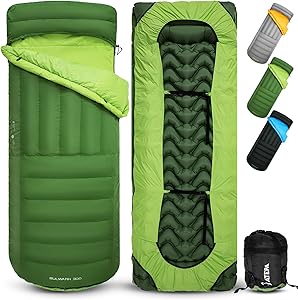
- Insulation: 300g COLDMASTER Down
- Weight: 2.5 lbs
- Compressed Size: 12 x 7 inches
- Design: 3-in-1 Sleeping System
The ATEPA Down Sleeping Bag stands out for its extreme versatility, functioning as a 3-in-1 sleeping system. It can be used as a standard rectangular bag, unzipped into a flat camping blanket, or even worn over the shoulders for warmth around camp. Its unique vertical and horizontal baffle stitching is designed to keep the COLDMASTER down perfectly distributed, preventing the cold spots that often plague budget-friendly rectangular bags.
For added stability, the bag features reinforced corners and straps that allow it to be tied directly to an air pad, eliminating the common problem of sliding off your mattress during the night. The use of 20D 400T high-density recycled nylon for both the shell and lining makes it both eco-friendly and durable against stains and moisture. While it is rated for a comfort level of 50℉, its ability to compress down to the size of a football makes it a great choice for bike-packing or summer hiking.
Pros: Highly versatile 3-in-1 design; secure pad attachment system; compact compression.
Cons: Lower warmth rating limited to summer/warm 3-season use; slightly heavy for its temperature limit.
See the ATEPA Down Sleeping Bag
How to Choose Sleeping Bags for Side Sleepers?
Choosing the right sleeping bag is important for a comfortable night’s sleep. Side sleepers often struggle with traditional sleeping bags. These bags may feel too tight, restrict movement, or cause discomfort. The right sleeping bag should allow freedom of movement, provide insulation, and offer good support.
Understanding the Needs of Side Sleepers
Side sleepers need more space in a sleeping bag. A mummy-style sleeping bag can feel restrictive because it is narrow. A side sleeper may find it hard to turn or shift positions. A sleeping bag with a wider shape or flexible design is better.
Side sleepers also need good padding. Their hips and shoulders press against the ground more than back sleepers. A well-insulated sleeping bag with a comfortable sleeping pad can help.
Choosing the Right Shape
The shape of a sleeping bag affects comfort. Side sleepers should avoid tight-fitting bags. Mummy bags are designed to trap heat but can be too restrictive. Semi-rectangular or spoon-shaped bags are better for side sleepers. These designs offer extra room at the hips and shoulders.
Quilt-style sleeping bags are another option. They allow more movement and work well with sleeping pads. Quilts can be great for those who turn frequently at night.
Insulation Type
Insulation affects warmth and weight. There are two main types: down and synthetic. Down insulation is lightweight and warm. It packs down small and lasts a long time. However, it loses warmth when wet and can be expensive.
Synthetic insulation is bulkier but stays warm when wet. It dries faster and is usually cheaper. Side sleepers should choose insulation based on the climate and personal preference.
Temperature Ratings
Sleeping bags come with temperature ratings. These ratings help determine how warm a bag will be in different conditions. Side sleepers may feel cold spots more because their body presses into the ground. Choosing a bag with a lower temperature rating can help.
It is also important to check the comfort rating. The lower limit rating is for survival, but the comfort rating is for restful sleep. You should pick a bag with a comfort rating that suits their usual camping temperatures.
Sleeping Bag Length and Width
A sleeping bag should match the sleeper’s height and width needs. A bag that is too short will feel cramped. A bag that is too long will have extra space, making it harder to stay warm.
Side sleepers should look for a bag with extra width in the shoulders and hips. Some brands make specific models for side sleepers with extra room where it is needed.
Zipper Placement and Ventilation
Zipper placement can affect ease of movement and ventilation. Side zippers make it easier to get in and out. A two-way zipper allows for adjusting ventilation. This can help prevent overheating.
Some sleeping bags have footbox ventilation. This is useful for someone who like to stick their feet out. Extra ventilation options make it easier to regulate temperature during the night.
Hood and Neck Support
A well-designed hood is important in colder weather. Side sleepers move around more, so the hood should not feel restrictive. Some sleeping bags have adjustable hoods that move with the sleeper.
A good neck baffle helps trap heat. It should be comfortable and not feel too tight. This feature is especially important for cold-weather camping.
Fabric and Lining Material
The inner lining of a sleeping bag affects comfort. Soft, breathable fabric is best. Materials like nylon or polyester are common. Some bags have a brushed lining for extra softness.
You may benefit from a bag with stretch fabric. This allows for easier movement during sleep. The outer fabric should be durable and water-resistant.
Weight and Packability
For backpackers, weight and pack size matter. Down sleeping bags pack smaller and weigh less. Synthetic bags take up more space and weigh more. You should balance comfort with packability.
Some lightweight sleeping bags still offer plenty of room. Checking the packed size before buying is a good idea. A compression sack can help reduce the size for travel.
Sleeping Pad Compatibility
A sleeping bag alone may not be enough for comfort. Side sleepers put more pressure on their hips and shoulders. A well-padded sleeping pad can improve sleep quality.
Sleeping pads come in different thicknesses and materials. An insulated sleeping pad helps in cold weather. Some sleeping bags attach to a sleeping pad for better stability. This can prevent slipping during the night.
Special Features for Side Sleepers
Some sleeping bags have extra features designed for side sleepers. Stretch panels allow more movement. Extra padding in key areas can improve comfort.
Some models have an expanded footbox, making it easier to move feet around. These small details can make a big difference in sleep quality.
Choosing the Right Brand
Many brands make sleeping bags suited for side sleepers. Nemo, Big Agnes, and Sea to Summit offer good options. These brands focus on comfort and flexibility.
It is a good idea to read reviews and check product details before buying. Trying out a sleeping bag in a store can also help find the best fit.
Conclusion
Finding the right sleeping bag is essential for side sleepers. A good sleeping bag should allow movement, provide warmth, and offer comfort. The right shape, insulation, and size make a big difference. Extra features like ventilation, hood design, and sleeping pad compatibility improve sleep quality.
You should take time to choose a sleeping bag that meets their needs. Investing in a good sleeping bag can make outdoor trips much more enjoyable. A well-chosen sleeping bag ensures restful sleep and better adventures.