If you’re planning a long day on your feet, the right shoes make all the difference. Bad footwear can lead to blisters, sore arches, or even knee pain. But good walking shoes keep you comfortable mile after mile. This guide breaks down the best shoes for long-distance walking—focusing on cushioning, fit, and durability. Whether you’re training for a marathon walk or just exploring a new city, we’ve got you covered.
1. Salomon X Ultra 5 GTX

- Waterproofing: GORE-TEX membrane
- Outsole: All Terrain Contagrip rubber
- Midsole: EnergyCell cushioning
- Weight: 1 lb. 10.8 oz. per pair
The Salomon X Ultra 5 GTX is a standout low-cut hiking shoe built for hikers who want speed without sacrificing stability. Its single-pull lace system makes quick adjustments effortless on the trail, while the synthetic and textile upper keeps things breathable and lightweight. The EnergyCell midsole delivers responsive cushioning that feels lively whether you’re tackling steep ascents or technical descents.
GORE-TEX waterproofing keeps your feet dry on wet trails without adding noticeable bulk, and the All Terrain Contagrip outsole bites confidently into loose dirt, rock, and slippery surfaces. It’s an excellent all-rounder for day hikers and fastpackers who want a capable, agile shoe.
- Pros: Lightweight, reliable waterproofing, excellent traction, easy lacing system
- Cons: Narrower fit may not suit wide feet, premium price point
See the Salomon X Ultra 5 See the Women’s X Ultra 5
2. Columbia Crestwood

- Upper: Suede leather, mesh, and webbing combination
- Midsole: TechLite cushioning for energy return
- Outsole: Omni-Grip non-marking rubber
- Closure: Traditional lace-up system
The Columbia Crestwood is a reliable entry-level hiking shoe that punches above its weight in comfort and durability. The combination upper — blending suede leather, mesh, and webbing — strikes a solid balance between breathability and ruggedness. Columbia’s TechLite midsole provides all-day cushioning and energy return, making long trail days feel far less punishing on the feet.
The Omni-Grip outsole offers confident traction across varied terrain while remaining non-marking and trail-friendly. It’s an ideal choice for casual hikers and beginners who want a dependable, well-constructed shoe at an accessible price point without compromising on essential performance features.
- Pros: Affordable, durable construction, comfortable all-day wear, versatile traction
- Cons: Not waterproof, less technical performance than premium options
See the Columbia Crestwood See the Women’s Crestwood
3. Oboz Sawtooth X Low

- Waterproofing: B-DRY single-layer membrane
- Upper: Oiled nubuck leather and CORDURA fabric mesh
- Outsole: True Tread rubber
- Weight: 2 lbs. 1.8 oz. per pair
The Oboz Sawtooth X Low builds on a beloved legacy with meaningful upgrades in comfort, traction, and longevity. The oiled nubuck leather and CORDURA mesh upper provides a durable, weather-resistant shell that holds up across rugged terrain. B-DRY waterproofing keeps moisture out effectively while the rubber-blended adaptive foam midsole with a heel puck delivers a cushioned yet stable ride.
True Tread rubber on the outsole grips reliably on wet roots, rocks, and muddy trails. The nylon shank adds torsional rigidity underfoot for confident footing on uneven ground. This shoe is well-suited for hikers who prioritize durability and waterproof protection over ultralight performance.
- Pros: Tough build quality, effective waterproofing, excellent grip, supportive shank
- Cons: Heavier than competitors, may require a break-in period
See the Oboz Sawtooth X Low See the Women’s Sawtooth X Low
4. KEEN Targhee IV

- Waterproofing: KEEN.DRY waterproof/breathable membrane
- Upper: Premium environmentally preferred nubuck leather
- Midsole: Air-injected Luftcell polyurethane
- Weight: 2 lbs. 6.4 oz. per pair
The KEEN Targhee IV is a trusted trail companion renowned for its roomy toe box and out-of-the-box comfort. Premium nubuck leather wraps the foot in a durable, breathable upper, while KEEN.DRY waterproofing ensures dry feet across soggy terrain. The air-injected Luftcell polyurethane midsole delivers superior cushioning that remains comfortable even on extended hikes.
A stability shank provides meaningful arch support and underfoot rigidity, while the higher-traction TPU outsole grips varied surfaces with confidence. The Targhee IV is especially popular among hikers with wider feet who demand waterproof protection and all-day comfort without sacrificing durability on demanding trails.
- Pros: Wide toe box, excellent waterproofing, great cushioning, durable leather upper
- Cons: Heaviest in its class, bulkier profile
See the KEEN Targhee IV See the Women’s Targhee IV
5. Merrell Moab 3

- Upper: Pigskin leather and mesh
- Midsole: Super Rebound Compound foam
- Outsole: Vibram TC5+ rubber
- Support: Molded nylon arch shank
The Merrell Moab 3 continues the legacy of one of hiking’s most celebrated footwear lines. The refined pigskin leather and mesh upper is softer and more breathable than ever, while the Super Rebound Compound midsole offers noticeably improved cushioning over its predecessor. A molded nylon arch shank delivers the underfoot support needed for long days on uneven terrain.
The Vibram TC5+ outsole is the real highlight here — grippy, durable, and trusted by serious hikers worldwide. Lightweight at just over two pounds per pair, the Moab 3 balances comfort, versatility, and performance in a package that suits everything from light day hikes to multi-day trips on established trails.
- Pros: Vibram outsole, plush cushioning, versatile, trusted brand reliability
- Cons: Not waterproof in base version, leather needs conditioning over time
See the Merrell Moab 3 See the Women’s Moab 3
See the Merrell Moab 3 WP See the Women’s Moab 3 WP
6. Danner Trail 2650

- Upper: Suede leather and textile
- Midsole: EVA foam
- Outsole: Vibram 460 with Megagrip technology
- Weight: 1 lb. 8 oz. per pair — lightest on this list
Inspired by the punishing 2,650-mile Pacific Crest Trail, the Danner Trail 2650 is an ultralight hiking shoe built for hikers who want maximum speed and agility on the trail. At just 1 lb. 8 oz. per pair, it’s the lightest shoe on this list, yet still features a tough suede leather and textile upper reinforced with an external heel counter and TPU shank for structural support.
The Vibram 460 Megagrip outsole is exceptional — sticky, durable, and supremely confident on wet rock and technical terrain. The EVA midsole keeps the ride cushioned without adding weight. An excellent choice for trail runners, fastpackers, and minimalist hikers who demand performance over plush comfort.
- Pros: Ultralight, outstanding Megagrip traction, breathable construction, trail-tested design
- Cons: Not waterproof, less cushioning than heavier alternatives
See the Danner Trail 2650 See the Women’s Trail 2650
7. Altra Lone Peak 9

- Waterproofing: Waterproof bootie construction
- Upper: Recycled polyester mesh
- Midsole: Altra EGO foam
- Outsole: MaxTrac rubber
The Altra Lone Peak 9 is a favorite among thru-hikers and long-distance trekkers who prioritize natural foot movement and zero-drop geometry. The foot-shaped toe box offers ample room for toes to splay naturally, reducing hotspots and fatigue on extended hikes. A waterproof bootie construction seals out moisture effectively while the recycled polyester mesh upper keeps things eco-conscious and breathable.
Altra EGO foam provides a cushioned, energy-returning ride, and the MaxTrac outsole delivers reliable multi-terrain grip. At 1 lb. 11.7 oz., it’s lightweight enough for fast travel yet durable enough for rugged routes. A top pick for thru-hikers committed to a natural running style on the trail.
- Pros: Zero-drop comfort, roomy toe box, waterproof, sustainable materials
- Cons: Zero-drop takes adjustment, not ideal for technical scrambling
See the Altra Lone Peak 9 See the Women’s Lone Peak 9
8. Merrell Moab Speed 2 GTX

- Waterproofing: GORE-TEX waterproof/breathable membrane
- Midsole: FloatPro foam — 30% more underfoot cushioning
- Outsole: Vibram TC5+ rubber
- Weight: 1 lb. 9.7 oz. per pair
The Merrell Moab Speed 2 GTX brings the best of trail running into a hiking shoe package, combining GORE-TEX waterproofing with a noticeably upgraded FloatPro foam midsole that offers 30% more cushioning than its predecessor. The nylon ripstop and TPU upper is lightweight yet resilient, and the recycled mesh lining improves breathability in humid conditions.
Vibram TC5+ rubber on the outsole ensures confident grip on all trail surfaces, while the streamlined silhouette feels fast and athletic underfoot. Weighing under 1 lb. 10 oz., the Moab Speed 2 GTX is an excellent choice for hikers who want the comfort of a trail runner with the waterproofing reliability of a dedicated hiking shoe.
- Pros: Excellent cushioning, GORE-TEX waterproofing, lightweight, Vibram grip
- Cons: Less structured than traditional hikers, may feel too flexible for heavy loads
See the Merrell Moab Speed 2 See the Women’s Moab Speed 2
9. On Cloudrock

- Waterproofing: Cosmo waterproof membrane
- Upper: 100% recycled polyester
- Midsole: Helion superfoam with X-shaped Speedboard
- Outsole: Missiongrip rubber compound
The On Cloudrock Low Waterproof is engineered for hikers who move fast and pack light through mountainous terrain. On’s Helion superfoam midsole delivers a cushioned, springy ride, while the X-shaped Speedboard adds propulsive rigidity that rewards an active, forward-leaning stride. The 100% recycled polyester upper reflects On’s commitment to sustainability without compromising durability.
Cosmo waterproofing keeps moisture at bay across stream crossings and wet trails, and the Missiongrip outsole grips reliably on both dry and slick surfaces. At just under two pounds, the Cloudrock balances speed-focused agility with meaningful trail protection — a compelling option for athletic hikers and mountain runners who demand responsive performance footwear.
- Pros: Responsive cushioning, lightweight, waterproof, sustainable upper material
- Cons: Premium price, less traditional hiking feel, narrower fit
See the On Cloudrock See the Women’s Cloudrock
10. KEEN Hightrail

- Waterproofing: KEEN.DRY waterproof/breathable membrane
- Upper: Waterproof leather and performance mesh
- Midsole: High-rebound foam
- Outsole: KEEN.ALL-TERRAIN rubber
The KEEN Hightrail bridges the gap between rugged hiking performance and athletic agility. Despite its sturdy waterproof leather and performance mesh upper, it weighs just 1 lb. 11.8 oz. — impressively light for a KEEN shoe. KEEN.DRY waterproofing keeps feet dry without sacrificing breathability, and the high-rebound foam midsole delivers responsive cushioning suited to faster-paced trail movement.
The KEEN.ALL-TERRAIN rubber outsole provides multi-directional lugs for reliable grip across loose dirt, gravel, and wet rock. The Hightrail is an ideal choice for hikers who want the confidence of a waterproof, well-supported shoe with the lively feel of a trail runner — a true crossover that performs well in both categories.
- Pros: Lightweight for its category, waterproof, athletic feel, versatile traction
- Cons: Less cushioning than KEEN Targhee, narrower toe box than other KEEN models
See the KEEN Hightrail See the Women’s Hightrail
How to Choose Shoes for Long-Distance Walking: A Comprehensive Guide
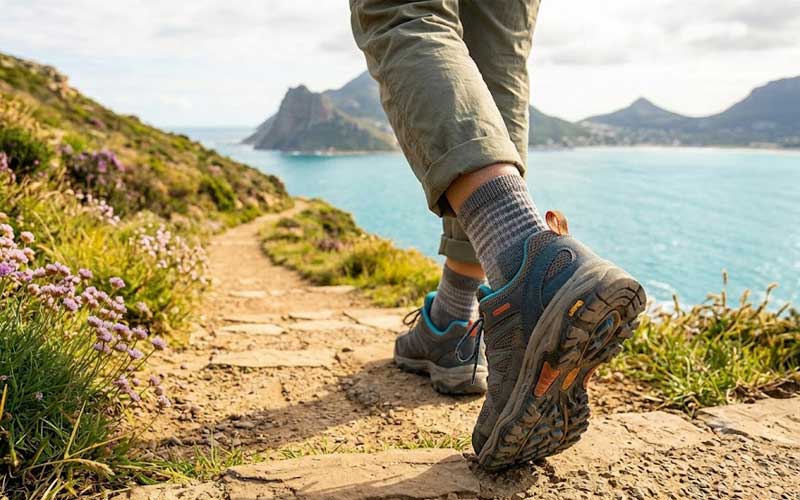
Walking is one of the most accessible, sustainable, and physically rewarding activities available. Whether you are training for a multi-day thru-hike, participating in a charity walking marathon, or consistently logging high daily step counts for health, your footwear is the absolute foundation of your experience. Choosing the wrong shoe can quickly lead to blisters, plantar fasciitis, joint pain, and structural injuries that can sideline your goals. Conversely, the correct pair acts as an extension of your biomechanics, absorbing shock, protecting soft tissues, and propelling you forward efficiently. This guide breaks down the essential factors required to select the ultimate shoe for high-mileage walking.
Understanding Walking Biomechanics vs. Running
Before diving into shoe features, it is critical to understand that walking and running place different physical demands on your feet. Runners land with a high-impact strike, often on the midfoot or forefoot, experiencing forces up to three times their body weight. Walking, however, is a low-impact, repetitive sport with a distinct heel-to-toe rolling motion. Walkers always maintain contact with the ground, landing on the heel, rolling through the arch, and pushing off with the toes. Consequently, shoes designed specifically for walking or adapted running shoes need to facilitate this smooth transition while managing a lower, but far more prolonged, cumulative impact profile.
Key Structural Anatomy of a Long-Distance Shoe
When evaluating footwear for long distances, you must analyze individual components of the shoe to ensure they align with your anatomical needs.
The Midsole and Cushioning
The midsole is the core engine of shock absorption. For long-distance walking, finding the sweet spot between plushness and responsiveness is critical. Excessive, overly soft cushioning might feel comfortable for the first mile, but over long distances, it can cause muscle fatigue because your foot constantly works to stabilize itself on an unstable surface. Look for advanced foam technologies like engineered Ethylene-Vinyl Acetate (EVA) or Polyurethane (PU) blends that offer adaptive dampening—firm enough to provide structural support over hours of movement, yet forgiving enough to protect your joints from repetitive hard surfaces.
The Outsole and Traction
The bottom of the shoe dictates your grip and the natural flexibility of your stride. A good long-distance walking outsole features a gently decoupled or articulated design with flex grooves. These grooves should match the natural bending points of your forefoot. For pavement, a durable, blown-rubber outsole with shallow lugs offers the best lifespan and grip. If your long-distance routes include gravel paths or light dirt trails, look for a hybrid trail-walking outsole featuring deeper, multi-directional lugs to prevent slipping on loose terrain.
The Upper Material and Breathability
Over miles of continuous walking, internal friction and metabolic heat raise the temperature inside your shoe. This creates a hot, humid microclimate—the perfect breeding ground for blisters. The shoe upper should be constructed from engineered mesh or synthetic knits that optimize breathability while providing zonal support. Avoid heavy leather or waterproof membranes unless you are walking in consistently wet, freezing conditions; waterproof layers trap sweat inside the shoe, causing the skin to macerate and blister easily.
Fit and Sizing: Accommodating Foot Swelling
The single most common mistake high-mileage walkers make is buying shoes that match their everyday casual shoe size. During a long-distance walk, gravity, increased blood flow, and continuous impact cause your feet to expand. Your feet will widen, flatten, and elongate over the course of the day, sometimes increasing by a half or full shoe size.
The Thumb’s Width Rule
When trying on walking shoes, always do so in the late afternoon or after a preparatory walk when your feet are already slightly swollen. Wear the exact technical socks you plan to use on your long journeys. Stand up and ensure there is a full thumb’s width of space (roughly half an inch) between your longest toe and the absolute front tip of the shoe. This prevent your toes from repeatedly smashing into the front casing during downhills or during the late-stage push-off phase.
The Importance of a Wide Toe Box
Your toes need room to splay naturally as you push off. A narrow toe box pinches the metatarsals together, leading to neuromas, bunions, and painful blisters between the toes. Look for shoes designed with an anatomical or foot-shaped toe box. Your toes should be able to wiggle freely without pressing against the lateral side or top mesh of the shoe.
Matching Shoe Types to Your Biomechanics and Arch
Everyone’s stride is unique, and understanding your gait type prevents long-term overuse injuries.
Neutral Stride and Medium Arches
If your feet wear down evenly across the center-back of the heel and the front ball of the foot, you likely have a neutral gait. Neutral walkers do well in standard cushioning shoes that offer natural flexibility without heavy mechanical correction. These shoes allow the foot’s natural pronation cycle to act as its own shock absorber.
Overpronation and Flat Feet
If your feet roll excessively inward, collapsing your arches and placing stress on your knees and hips, you overpronate. For long distances, overpronators require structured stability shoes. These models feature firmer foam structural elements along the medial (inside) edge of the midsole, preventing the foot from rolling too far inward and maintaining a safe, neutral alignment over long miles.
Underpronation and High Arches
Underpronation, or supination, occurs when the foot is rigid and does not roll inward enough, causing the outer edge of the foot to absorb the bulk of the impact. Walkers with high, rigid arches need highly cushioned, flexible shoes. Because their feet cannot naturally absorb shock, the midsole foam must do all the heavy lifting to protect the skeletal structure from stress fractures.
Testing, Breaking In, and Maintenance
Never take a brand-new pair of shoes directly out of the box onto a double-digit mileage walk. Even the most technologically advanced shoe requires a break-in period to allow the materials to soften and conform to your specific foot contours. Start by wearing them around the house, then transition to short, two-mile walks. Pay attention to any dynamic “hot spots”—areas where friction feels uncomfortable. If a hot spot develops early on a short walk, that shoe will likely cause an open wound on a long journey.
Finally, track the mileage of your shoes. Most high-quality walking and running shoes lose their protective structural integrity and cushioning capabilities between 300 to 500 miles. Even if the outer rubber looks pristine, the internal foam midsoles compress and break down over time, drastically reducing shock absorption. Replacing your shoes proactively ensures your joints and muscles stay protected, letting you comfortably enjoy the long open road for thousands of miles to come.