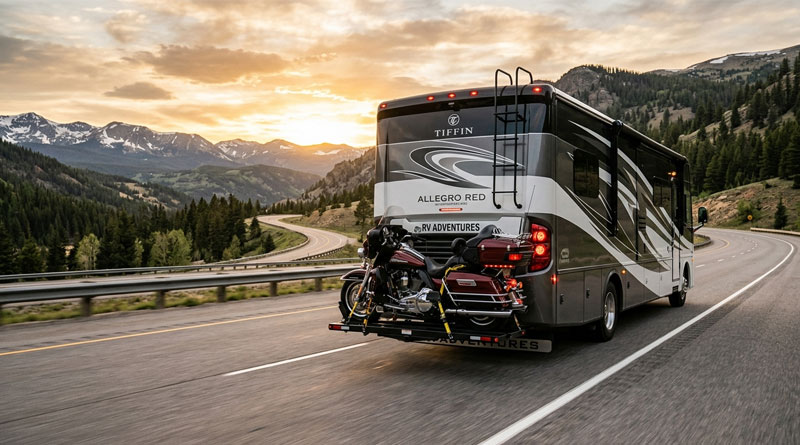
Planning to bring a motorcycle along on your RV trips? A good motorcycle carrier makes it easy and safe. Instead of towing a heavy trailer, these carriers mount right on the back of your RV. They save space, fuel, and hassle. You just load your bike, secure it, and go. In this article, we’ve rounded up the best motorcycle carriers for RVs. Whether you have a dirt bike or a street cruiser, find the right carrier for your next adventure.
1. Nilight Heavy Duty 600LBS Motorcycle Hitch Carrier

- Material: Alloy Steel
- Weight: 45 Pounds
- Load Capacity: 600 Pounds
- Mounting Type: U-Bolt
The Nilight Motorcycle Hitch Carrier stands out for its impressive 600-pound capacity and its exceptionally long 55-inch ramp. Most standard carriers include shorter ramps that create steep, dangerous inclines, but this extended version makes loading much safer for taller RV hitches. The heavy-duty steel construction is treated with a corrosion-resistant powder coating, providing excellent reliability for long-haul adventures in various weather conditions.
This kit is remarkably complete, arriving with a hitch stabilizer, ratchet straps, and all necessary mounting hardware. The 76-inch track provides ample room for most dirt bikes and scooters, while the included bolt clamps ensure the tires remain perfectly stable during transit. It is a robust, professional-grade hauling solution that eliminates the need for a trailer, fitting seamlessly into any standard 2-inch receiver.
- Pros:
- Longer ramp reduces loading effort
- High 600lb capacity for heavy bikes
- Includes stabilizer and quality straps
- Cons:
- Steel frame is heavy to install
- Paint may chip at high-friction joints
- Maximum 5-inch tire width limit
2. Goplus 600LBS Motorcycle Carrier with Wide Tire Fit
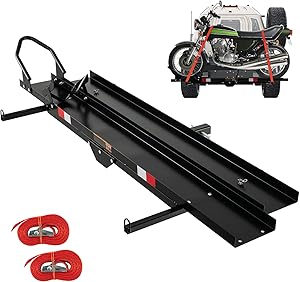
- Tire Width: Fits extra-wide tires up to 7.5″
- Weight Limit: Supports up to 600 lbs
- Construction: High-strength impermeable steel
- Track Length: 79-inch long stabilized rail
The Goplus Motorcycle Hitch Carrier is the go-to choice for riders with fat-tire bikes or wider scooters, thanks to its generous 7.5-inch track width. This extra space ensures that diverse bike types sit securely within the rail without teetering. The high-strength steel construction provides the toughness needed for 600-pound loads, making it suitable for everything from lightweight trail bikes to heavier commuter scooters.
Equipped with two quick-release locks and a raised adjustable wheel stop, this carrier acts as its own wheel chock to prevent forward shifting. The package is conveniently “all-in-one,” including two tie-down straps to get you on the road immediately. While it is built for durability, the manufacturer recommends maintaining moderate speeds on bumpy terrain to ensure the longevity of the hitch assembly and your vehicle.
- Pros:
- Best-in-class 7.5″ tire width capacity
- Adjustable wheel stop for better stability
- Very sturdy steel construction
- Cons:
- Limited to two included straps
- Ramp is shorter than Nilight model
- Standard speed limit recommendations
3. ECOTRIC 500LB Steel Hitch Mount Carrier
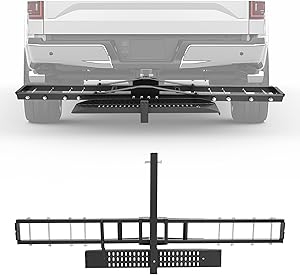
- Compatibility: Fits all 2-inch square receivers
- Load Capacity: 500 lbs max weight
- Stability: Anti-sway locking device included
- Loading: Dual-side loading capability
The ECOTRIC 500LB carrier is a highly versatile and budget-friendly option designed for universal application across Class II through V hitches. Its most unique feature is the ability to load your motorcycle from either side, which is a massive advantage in tight camping spots where space is limited. The frame is finished in a heavy-duty black powder coating to resist flaking and scratching during frequent use.
To ensure a quiet and safe ride, ECOTRIC includes a specialized stabilizing locking mechanism that eliminates the common “wobble” associated with hitch carriers. While it has a slightly lower weight limit than the 600lb models, it remains perfectly robust for motocross bikes and standard dirt bikes. Installation is straightforward with the provided mounting hardware, allowing you to be road-ready in just a few minutes.
- Pros:
- Dual-side loading is very convenient
- Effective anti-sway locking mechanism
- Lightweight enough for one-person setup
- Cons:
- Lower 500lb weight capacity
- Does not include hitch pins
- Shorter 38.5″ loading ramp
4. Mockins 83″ Tilting Motorcycle Hitch Carrier
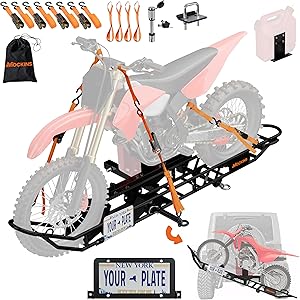
- Feature: Patent-pending tilting loading ramp
- Length: Extra-long 83″ frame for eBikes
- Accessories: Includes straps, lock, and bag
- Warranty: 10-year limited manufacturer warranty
Mockins has revolutionized the loading process with their innovative tilting ramp design. Instead of wrestling with a detached ramp, you simply pull a pin and tilt the entire carrier to the ground to roll your bike up. This is a game-changer for solo travelers and those with heavy eBikes. The 83-inch frame is one of the longest on the market, providing plenty of clearance for modern long-wheelbase electric bikes and scooters.
The carrier bundle is incredibly generous, featuring a license plate holder, hitch lock, stabilizer, and a full set of ratchet and loop straps. It even includes a carry bag for the accessories. Mockins stands behind their product with a 10-year warranty, reflecting the high quality of their weatherproof, corrosion-resistant steel. It is arguably the most user-friendly and feature-rich carrier available for modern RV adventures.
- Pros:
- Tilt-to-load design is effortless
- Comprehensive accessory bundle included
- Excellent 10-year warranty coverage
- Cons:
- 500lb capacity may limit heavy bikes
- Tilting mechanism requires flat ground
- Longer frame increases rear overhang
5. ECOTRIC 600LBS Heavy Duty Motorcycle Rack

- Strength: Maximum 600 lbs load capacity
- Security: Dual quick-release locking system
- Chock: Adjustable wheel stop stabilizer
- Track: 79″ long powder-coated steel rail
This heavy-duty version of the ECOTRIC carrier is built for those who need maximum strength and absolute stability. With its 600-pound capacity, it handles heavy motorcycles with ease, while the 79-inch rail accommodates bikes with significant wheelbases. The addition of two quick-release locks ensures that your bike stays fastened even when navigating bumpy backcountry roads or steep mountain passes often encountered during RV trips.
The carrier features a raised adjustable wheel stop that serves as a stabilizing chock, keeping the front wheel locked in place while you secure the straps. While the unit arrives in two separate packages and requires assembly, the process is straightforward and requires no modifications to your vehicle. It is a no-nonsense, industrial-strength hauler that prioritizes “solidness” above all else for peace of mind on the highway.
- Pros:
- Very stable for heavy motorcycles
- Adjustable chock fits various bike sizes
- Thick, rustproof protective coating
- Cons:
- Ships in two separate packages
- Requires more assembly than competitors
- Heavy to remove when not in use
6. Black Widow Dual Aluminum Motorcycle Carrier

- Design: Dual-track carrier for two bikes
- Material: High-strength lightweight aluminum
- Capacity: 600 lbs total (400 lbs per track)
- Device: Includes anti-rattle stabilizing bracket
The Black Widow Dual Carrier is the perfect solution for couples or families who need to transport two motorcycles or dirt bikes on a single hitch. Made from high-strength aluminum, it manages to be much lighter and more maneuverable than steel models while still supporting a total of 600 pounds. The roll-on, roll-off ramp can be installed on either side, making it highly adaptable to different loading environments.
Aluminum is naturally resistant to rust, making this an excellent choice for RVers who travel in coastal areas or wet climates. It includes a spacer bar adapter specifically designed for youth dirt bikes, making it family-friendly. The anti-rattle device is a vital addition, minimizing the vibrations and movement that can occur when hauling two vehicles simultaneously. It is the gold standard for multi-bike hitch transportation.
- Pros:
- Carries two bikes on one hitch
- Rust-proof aluminum construction
- Includes youth bike adapter bar
- Cons:
- 400lb limit per individual track
- Extends far back from the vehicle
- More complex loading for the inner bike
7. VEVOR 600LBS Steel Carrier with Long Ramp

- Space: Large 76″ x 7″ carrier rail
- Ramp: Integrated 47-inch loading ramp
- Strength: 600 lbs high-strength steel build
- Inclusions: 4 ratchet straps and loop straps
VEVOR provides a professional-grade hauling experience with this 600-pound capacity steel carrier. Its spacious 76-inch rail is designed to fit everything from scooters to heavyweight motorcycles comfortably. The 47-inch ramp strikes a great balance, offering a manageable incline for most RVs and trucks without being overly cumbersome to store. The entire structure is built from high-strength steel to ensure long-term durability and safety.
The VEVOR package is designed for immediate use, including four high-quality ratchet straps, four loop straps, and a carrying bag. The hook stabilizers are a crucial feature, significantly reducing lateral movement during highway speeds. It is a reliable partner for any RV adventure, fitting standard 2-inch receivers and providing a secure, vibration-free platform for your valuable motorcycle, regardless of the weather conditions.
- Pros:
- Excellent price-to-performance ratio
- Comprehensive strap set included
- Solid, vibration-free hitch stabilizer
- Cons:
- Steel ramp is quite heavy
- Assembly takes a bit of time
- Center hole height limitations
How to Choose the Best Motorcycle Carriers For Rv
Bringing a motorcycle on your RV trip adds a level of freedom that a large motorhome simply can’t provide. Whether you’re heading to the store or exploring narrow mountain passes, a motorcycle is the ultimate “toad” (towed vehicle) alternative. However, because RVs have unique suspension and hitch height characteristics, choosing the best motorcycle carriers for RV use requires careful consideration of several technical factors.
Understanding Tongue Weight and Hitch Classes
Before buying a carrier, you must understand your RV’s hitch limitations.
Hitch Class: Most motorcycle carriers require a Class III or Class IV hitch with a 2-inch receiver. Class III hitches are typically rated for 500 lbs of tongue weight, while Class IV can handle 1,000 lbs or more.
The Tongue Weight Rule: Tongue weight is the downward force exerted on the hitch. Remember that the “weight” of your motorcycle carrier setup is the weight of the bike PLUS the weight of the carrier itself. If your bike weighs 450 lbs and the steel carrier weighs 75 lbs, your hitch must be rated for at least 525 lbs of tongue weight.
RV Chassis Limits: Even if the hitch is rated for the weight, check your RV manufacturer’s manual. Some motorhomes have frame extensions that reduce the actual carrying capacity below what the hitch itself suggests.
Steel vs. Aluminum: Which Material is Best?
The material of your carrier affects both its durability and its impact on your RV’s handling.
Steel Carriers: These are the most common and typically the strongest. They are excellent for heavy motorcycles (400-600 lbs) because steel has higher fatigue resistance. The downside is that they are heavy to install and can rust if the powder coating is scratched.
Aluminum Carriers: Aluminum is significantly lighter, which is a massive benefit if you are close to your tongue weight limit. It is also naturally rust-proof. However, aluminum can be “springier” than steel, and cheap aluminum models may crack over time under the stress of heavy bikes on bumpy roads. Aluminum is best for dirt bikes and light scooters.
Loading Ramp Length and Incline
RV hitches often sit higher off the ground than standard SUVs, which can make loading a motorcycle a steep and dangerous task.
The Gradient Factor: A short ramp (under 40 inches) will create a very steep angle. This makes it difficult to push the bike up and increases the risk of the bike “bottoming out” where the ramp meets the carrier track.
Looking for Length: Aim for a carrier with a ramp length of at least 45 to 55 inches. Some innovative models even feature tilting tracks that eliminate the need for a separate ramp entirely, making them the best motorcycle carriers for RV owners who travel solo.
Carrier Stability and Anti-Wobble Devices
The most common complaint with hitch carriers is “hitch twist” or swaying.
Anti-Rattle Brackets: A good carrier must include an anti-wobble or anti-rattle device. This is a U-bolt or bracket that cinches the carrier tube tightly against the hitch receiver, preventing it from tilting or vibrating at highway speeds.
Wheel Chocks: Look for a carrier with an integrated front-wheel chock or an adjustable wheel stop. This locks the front tire in place, preventing the bike from sliding forward or backward while you are trying to attach the straps.
Clearance and Departure Angle
RVs have a long “overhang” behind the rear axle. When you add a motorcycle carrier, you are extending that overhang even further.
Ground Scaping: When you drive through a dip or up a steep driveway, the end of the carrier can scrape the ground. Look for carriers with a “riser” design that positions the bike track slightly higher than the hitch receiver to improve ground clearance.
Tail Light Visibility: A motorcycle sitting on the back of your RV may block your tail lights or license plate. Some high-end carriers include license plate brackets or integrated LED light kits to keep you legal and visible to other drivers.
Tie-Down Points and Strap Selection
The carrier is only half the battle; the straps do the actual work of keeping the bike attached.
Point Placement: A high-quality carrier will have dedicated, reinforced tie-down loops that are spaced far enough apart to provide a wide “triangulation” for the straps.
Ratchet vs. Cam Buckle: Always use high-quality ratchet straps for motorcycles. Cam buckles can slip under the heavy vibrations of an RV. Using “soft loops” to wrap around the handlebars or frame will prevent the metal hooks from scratching your bike’s finish.
Maintenance and Safety Checks
Hitch carriers are subject to extreme vibrations and weather.
Pre-Trip Inspection: Before every trip, check all bolts on the carrier to ensure they haven’t vibrated loose. Check the straps for fraying and ensure the anti-wobble device is tight.
During the Trip: Stop after the first 25 miles of your trip to re-tighten the straps, as the bike’s suspension will often “settle,” causing the straps to become slightly slack.
Corrosion Care: If you travel in winter or near the ocean, wash the carrier frequently to remove salt. Apply a touch-up paint or rust inhibitor to any scratches in the steel to prevent structural weakening.
Conclusion
The best motorcycle carriers for RV use provide a balance of weight, strength, and ease of use. By calculating your tongue weight accurately and choosing a model with a long ramp and a solid anti-wobble device, you can enjoy the freedom of having your bike with you wherever the road leads. Whether you choose a lightweight aluminum dual-carrier or a heavy-duty tilting steel model, a quality hitch rack is an investment in both safety and adventure.