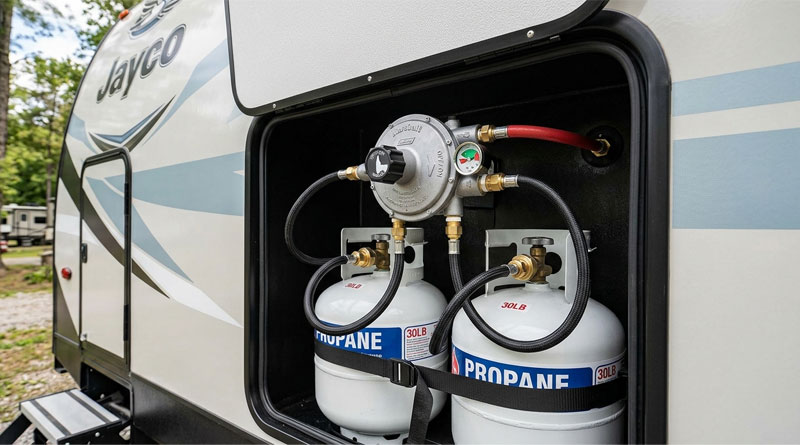
Imagine your RV is a living, breathing organism; propane is its lifeblood, and the regulator is its steady heart. Without this vital component, your furnace won’t roar, and your morning coffee remains a cold dream. Selecting the right regulator ensures your appliances receive the exact pressure they need to function safely and efficiently. Whether you are a weekend warrior or a full-time nomad, our curated list of top-tier regulators will keep your systems humming and your adventures fueled without interruption.
1. Stanbroil Horizontal Two Stage Propane Regulator

- Style: Horizontal
- Hose Type: 20″ Stainless Steel Braided ACME nut x 1/4″ male NPT
- Design: Double-stage for constant gas pressure
- Materials: High-strength, corrosion-resistant
The Stanbroil Horizontal Two Stage Propane Regulator serves as a masterclass in reliability for solo-tank travelers. Its primary strength lies in the dual-stage engineering, which tames high-pressure gas into a whisper-steady flow. This ensures that whether you’re simmering a delicate sauce or blasting the furnace on a frigid night, the pressure remains unfazed by demand. The standout feature is undoubtedly the 20-inch stainless steel braided hose, which mocks the elements and resists the kinking or cracking that often plagues cheaper rubber alternatives.
Constructed from premium, weather-hardened materials, this regulator is designed to endure the vibration and thermal shifts of life on the open road. Its horizontal profile is a spatial blessing, allowing it to tuck neatly into tight compartments without sacrificing accessibility. For the RVer who values “set it and forget it” hardware, this unit provides the durability required for multi-season excursions. It’s a rugged, low-maintenance guardian for your gas system, offering significant peace of mind for those who prefer the simplicity of a single-cylinder configuration.
- Pros:
- Durable stainless steel braided hose included
- Consistent gas pressure with dual-stage design
- High-strength, corrosion-resistant construction
- Cons:
- Designed for single tank use only
- No automatic changeover feature
2. BlueStars 2-Stage Auto Changeover RV Propane Regulator

- Certification: CSA C‑US certified (No.2055063)
- Capacity: Master 210,000BTU/Hr, Reserve 130,000BTU/Hr
- Hoses: Two 18″ Stainless Steel Braided Pigtails with Gauge
- Feature: Auto-changeover indicator (green to red)
For those hauling dual tanks, the BlueStars Upgraded Regulator is a sophisticated upgrade that eliminates the “midnight tank swap” blues. This CSA C-US certified unit is built like a tank, undergoing rigorous testing to ensure it stands up to the high-stakes environment of combustible gas management. The automatic changeover mechanism is its crown jewel; it senses the drop in the primary tank and pivots to the reserve instantly. The visual cue shifts from green to red, signaling it’s time for a refill without your furnace ever skipping a beat.
The hardware included is equally impressive, featuring two 18-inch braided hoses with a four-layer reinforcement strategy. These pigtails are designed to ward off UV damage and the abrasive grit of the highway. Beyond just basic regulation, the system incorporates an integrated gauge for quick status checks and excess flow protection to prevent hazardous leaks. It is a comprehensive safety suite for your camper, ensuring that high-demand appliances in your van or trailer receive a steady, managed diet of propane while you focus on the scenery outside.
- Pros:
- CSA-certified for superior safety
- Automatic changeover for uninterrupted supply
- Durable, 4-layer stainless steel braided hoses
- Cons:
- Specific 1/4″ SAE inverted flare inlets
- 18-inch pigtails may be short for some setups
3. Flame King 2-Stage Horizontal Compact Regulator
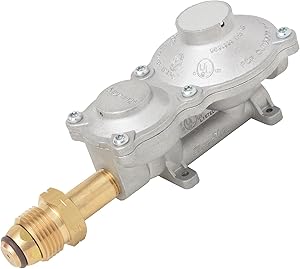
- Design: Dual-stage, horizontal
- Materials: Heavy-duty aluminum and solid brass
- Connections: POL Inlet, 3/8″-18NPT outlet
- Capacity: 160,000 BTU/HR
The Flame King Horizontal Super Compact Regulator is the heavy hitter of the small-footprint world. Specifically tailored for high-output single-tank systems—think food trucks, large generators, or stationary ASME tanks—this device specializes in stability. The dual-stage process is fine-tuned to maintain an 11-inch water column with surgical precision. This prevents the frustrating “flame flutter” that can occur when a single-stage regulator is overwhelmed by high-BTU appliances. Its ability to provide a smooth, laminar flow of gas is essential for sensitive modern electronics found in high-end RV appliances.
Durability is baked into the DNA of this unit, utilizing a combination of heavy-duty aluminum and solid brass. This prevents the thread stripping and corrosion common in cheaper alloys. While compact, it packs a 160,000 BTU/HR punch, making it more than capable of handling a full suite of kitchen and heating equipment. The POL inlet is designed for a secure, industrial-grade fit, making this a reliable choice for those who need a no-nonsense, high-capacity regulator for their mobile kitchen or off-grid power setup. It’s a professional-grade tool in a consumer-sized package.
- Pros:
- Dual-stage for consistent pressure
- Durable aluminum and brass construction
- High 160,000 BTU/HR capacity
- Cons:
- Single tank regulator only
- No auto-changeover feature
4. Flame King (KT12ACR-2) Propane Regulator

- Type: UL Listed 2-stage auto changeover
- Pigtails: Two 12-inch included
- Inlets/Outlet: 1/4″ SAE inverted flare / 3/8″ NPT female
- Capacity: Rated for 345,200 BTU
Efficiency meets automation with the Flame King KT12ACR-2, a powerhouse designed for the modern dual-tank RV. Its primary mission is to simplify your life; when your primary cylinder hits empty, the internal logic of the regulator takes over, pulling from the reserve tank without a single flicker of your stove’s flame. This seamless transition is a lifesaver during long-term winter camping when propane consumption spikes. Being UL Listed, it satisfies the safety requirements of even the most discerning insurance providers and park rangers, ensuring your setup is as safe as it is convenient.
This regulator is a “beast” in terms of output, boasting a massive 345,200 BTU rating. This makes it ideal for large fifth wheels or motorhomes with multiple slide-outs, outdoor kitchens, and high-recovery water heaters. The package comes ready to install with two 12-inch pigtails, making it a “plug and play” solution for standard dual-tank racks. If you’re looking for a regulator that can juggle a massive load while managing your fuel levels with professional-grade intelligence, this Flame King model is a top-tier contender that prioritizes both volume and safety.
- Pros:
- Automatic changeover for uninterrupted propane
- UL Listed for assured safety standards
- High 345,200 BTU capacity
- Cons:
- 12-inch pigtail length may be short for some installations
- No integrated propane tank gauge
5. RecPro Propane Regulator

- Max Pressure: 250 PSI
- Capacity: 287,500 BTU
RecPro has built a reputation on aftermarket excellence, and their RV Propane Gas Regulator is no exception. Designed specifically for the dual-tank enthusiast, it focuses on providing a “hands-off” experience. The automatic changeover is exceptionally responsive, shifting to the reserve tank the moment the primary pressure dips below the threshold. A vibrant red indicator window acts as your silent communicator, letting you know at a glance that it’s time for a trip to the filling station, all while your RV interior stays warm and your fridge stays powered.
What sets this unit apart is the attention to the “extras.” The included QCC1 hoses aren’t just conduits; they feature built-in flow limiters and check valves, adding extra layers of defense against accidental leaks. With a robust 287,500 BTU capacity, it sits in the “sweet spot” for most mid-to-large sized travel trailers. The addition of a mounting bracket and protective cover in the kit ensures that the regulator is shielded from road salt and debris, extending the life of the internal diaphragms and maintaining peak performance across thousands of miles.
- Pros:
- Automatic changeover with clear indicator
- QCC1 hoses include safety features
- High 287,500 BTU capacity
- Cons:
- 11.5″ pigtail length may be short for some setups
- No integrated pressure gauge
6. Fairview GR-9984 RV Propane Regulator

- Type: 2-Stage Automatic Changeover
- Capacity: 345,000 BTU (service), 260,000 BTU (reserve)
- Outlet Pressure: 11″ water column
- Inlets/Outlet: Dual 1/4″ inverted flare / 3/8″ NPT female
The Fairview GR-9984 is the “workhorse” of the RV industry, often chosen for its brutal efficiency in cold climates. While other regulators might struggle when temperatures drop and gas vaporization slows, the Fairview maintains a death-grip on that 11-inch water column pressure. Its automatic changeover system is famous for its reliability, ensuring that even if one tank runs dry at 3 AM in the mountains, your heater won’t miss a beat. It’s a sophisticated piece of fluid dynamics engineering that makes managing dual tanks feel effortless.
With a massive service capacity of 345,000 BTU, it can power a mobile laundry unit, a furnace, and a cooktop simultaneously without a hint of pressure drop. This makes it a favorite for full-timers and those with large residential-style appliances in their rigs. Note that this unit is a “bare” regulator, meaning it’s designed for the RVer who wants to choose their own custom-length hoses or replace an existing unit without paying for extra pigtails they don’t need. It’s high-capacity, cold-weather ready, and built to the highest industrial standards.
- Pros:
- Automatic changeover for uninterrupted supply
- High BTU capacity, robust for cold weather
- Consistent 11″ WC low-pressure output
- Cons:
- Pigtail hoses are not included
- Mounting screws are not provided
7. Cavagna Kosan 924N RV Auto Changeover Regulator

- Inlets/Outlet: (2) 1/4″ Inverted Flare / 3/8″ Female NPT
- Capacity: 160,000 BTU
- Components: Stainless Steel Screws & Bolts
- Diaphragm: High temperature resistant
European engineering meets American road trips in the Cavagna Kosan 924N. This regulator is built with a focus on longevity and environmental resistance. Unlike many competitors that use standard fasteners, Cavagna utilizes stainless steel screws and bolts throughout, preventing the “rust-lock” that makes old regulators impossible to service or remove. The standout internal component is the high-temperature resistant diaphragm. This specialized material maintains its flexibility and sealing properties even in extreme heat, making it a superior choice for desert travelers or those with regulators mounted near engine heat.
While its 160,000 BTU capacity is more modest than some high-flow models, it is perfectly balanced for the average travel trailer or camper van. The automatic changeover is snappy and decisive, and the included ‘L’ bracket is pre-drilled to match most standard RV mounting plates. It’s a refined, durable choice for the RVer who wants a high-quality build without necessarily needing industrial-scale gas volume. If you value mechanical precision and rust-proof hardware, this Cavagna model is a smart, long-term investment for your propane system.
- Pros:
- Automatic changeover for continuous propane flow
- Durable with stainless steel screws and bolts
- High temperature resistant diaphragm
- Cons:
- Pigtail hoses are not included
- 160,000 BTU capacity may be lower than some needs
The Strategist’s Guide to Purchasing an RV Propane Regulator
Navigating the world of propane hardware can feel like learning a second language, but it is one of the most important safety skills an RVer can master. Propane is a pressurized, flammable liquid that turns into gas as it leaves your tank. This process creates high pressure—often over 200 PSI—which would literally explode your RV’s delicate stove or water heater if not managed. This is where the regulator comes in. Choosing the right one isn’t just about finding something that fits; it’s about matching your lifestyle, your climate, and your safety requirements.
Mastering the Mechanics: Why the Regulator Matters
To choose the right device, you must understand the “pressure journey.” A regulator’s job is to step down that intense tank pressure to a standard 11 inches of water column (WC). If the regulator is too weak, your appliances will sputter. If it’s poorly constructed, it can leak. Understanding the difference between single and two-stage designs is your first hurdle. Single-stage regulators are relics of the past for RV use; they struggle to maintain pressure as the tank empties. Two-stage regulators, however, use a “middle-man” chamber to drop pressure twice, ensuring a rock-solid flow until the very last drop of propane is gone. Always prioritize a two-stage model for your rig.
Decoding Changeover Systems: Manual vs. Automatic
The “changeover” is the mechanism that handles dual-tank setups.
- Manual Changeover: These are the “old school” option. When your tank runs out, your furnace stops. You have to go outside, flip a lever, and restart your appliances. These are cheaper and have fewer moving parts, but they are a nightmare in the rain or late at night.
- Automatic Changeover: This is the gold standard. These regulators “see” the pressure drop in Tank A and instantly pull from Tank B. They include a visual indicator that turns red, telling you to go fill the empty tank at your convenience while your hot water keeps running. For most modern travelers, the convenience of an auto-changeover is worth every penny.
The BTU Math: Don’t Starve Your Appliances
BTU (British Thermal Unit) is a measurement of heat energy. Every appliance in your RV has a BTU rating. To select a regulator, you need to perform some simple math. Add up the BTU requirements of your furnace (usually 20k-40k), your water heater (10k-12k), and your stove (7k-10k per burner). If your total is 80,000 BTUs, a 160,000 BTU regulator is perfect. However, if you have a massive fifth wheel with a residential fridge and outdoor kitchen, you might need a high-capacity model rated for 300,000+ BTUs. Over-buying on BTUs is safe; under-buying will cause your furnace to shut off every time you try to cook.
Materials and Environmental Resilience
Your regulator lives outside, exposed to road salt, rain, and humidity. Look for bodies made of die-cast aluminum and internal components made of solid brass. Cheap plastic components are a red flag. Furthermore, consider the diaphragm—the rubbery heart of the regulator. If you travel in the desert, look for “high-temperature resistant” diaphragms. If you are a winter camper, look for models noted for their performance in sub-zero temperatures. A frozen regulator is a useless regulator.
The Connectivity Puzzle: Hoses and Fittings
Even the best regulator is useless if it won’t connect to your tanks.
- QCC1 (Type 1): These are the modern, large black or green nuts you can tighten by hand. They are safer and have built-in thermal shut-offs.
- POL: The older style that requires a wrench. While rugged, they lack some of the modern safety “smarts” of the QCC1.
- Pigtail Quality: Do not skimp on the hoses (pigtails). Stainless steel braided hoses are vastly superior to rubber. They resist the “off-gassing” that can gum up your regulator and are immune to rodents who love to chew on rubber.
Safety Certifications: The Non-Negotiables
Never, under any circumstances, buy a propane regulator that lacks a UL (Underwriters Laboratories) or CSA (Canadian Standards Association) stamp. These certifications mean the regulator has been pressure-tested and won’t burst or leak under normal operating conditions. Propane is a “low-error” system—buying an uncertified regulator from a mystery brand online is a gamble with your safety that is never worth the $10 savings.
Installation and the “Soapy Water” Rule
While many RVers install their own regulators, it requires precision. You must use yellow Teflon tape (specifically for gas) or a gas-rated pipe dope on the NPT threads. Never use white plumbers’ tape, as propane will eat through it. Once installed, the “soapy water test” is mandatory. Spray every connection with a mix of dish soap and water. If you see bubbles—even tiny ones—you have a leak. Shut the tank off immediately and tighten or reseal the connection. If you aren’t 100% confident, hire a mobile RV tech. It’s a 20-minute job for them and ensures you sleep soundly.
Maintenance: The 10-Year Rule
Regulators are not “forever” parts. The internal rubber diaphragm eventually dries out and loses its flexibility. Most manufacturers and safety experts recommend replacing your regulator every 10 to 12 years, regardless of how it looks on the outside. Additionally, keep an eye on the vent hole. Spiders and mud daubers love to build nests in these small holes, which can block the diaphragm from moving and cause your pressure to spike dangerously. A quick monthly check of the vent can save you a world of trouble.
Final Checklist Before You Click “Buy”
Before finalizing your purchase, ask yourself three questions:
- Does the BTU capacity exceed my maximum possible appliance load?
- Are the inlet and outlet sizes compatible with my existing hoses and pipes (usually 1/4″ inverted flare and 3/8″ NPT)?
- If I have two tanks, do I want the peace of mind that comes with an automatic changeover?
By prioritizing these factors over price, you ensure that your propane system remains a silent, reliable partner in your travels. A high-quality regulator is the difference between a cozy night in the mountains and a cold, frustrating ordeal. Invest in quality, install with care, and enjoy the road.