If you’ve ever felt your travel trailer wobble or lean too much while driving, you know it can be a nerve-wracking experience. Sway bars are simple but powerful tools that help keep your trailer stable and safe on the road. In this article, we’ll break down the best sway bars for travel trailers, comparing easy-to-understand options so you can tow with confidence.
1. Husky Round Bar Weight Distribution Hitch

- Max Tongue Weight: 1,200 lbs
- Gross Trailer Weight: 12,000 lbs
- Adjustment Range: 8-inch total height
- Finish: Black polyester corrosion-resistant
The Husky Round Bar system is engineered for versatility and quick setup. Its unique hitch head design allows for rapid installation and easy access to the hitch ball shank, while the built-in sway control platform provides a stable mounting point for friction sway bars. This hitch is a heavy-duty powerhouse, capable of handling large travel trailers with tongue weights up to 1,200 pounds without compromising on ride quality.
Durability is a standout feature, as the polyester finish effectively resists rust and the rigors of outdoor exposure. The interchangeable spring bars can fit either side of the hitch head, simplifying the hook-up process. While the hitch ball is sold separately, the comprehensive assembly hardware and lift brackets ensure that you have the structural components needed to level your load and maintain steering control on long highway stretches.
- Pros:
- Highly versatile spring bar capacity
- Excellent rust resistance
- Easy access to hitch ball
- Cons:
- Hitch ball not included
- Requires 1-1/4 inch shank ball
- Significant assembly required
2. CURT TruTrack 2P Weight Distribution Hitch
- Sway Control: Integrated 2X system
- GTW Rating: 8,000 to 10,000 lbs
- Shank Size: 2-inch with 7-hole adjustment
- Construction: Fabricated steel with carbide finish
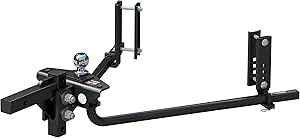
The CURT TruTrack 2P stands out by integrating sway control directly into the weight distribution logic. This eliminates the need for separate friction bars, streamlining your towing setup. The tilting head design is a major convenience, allowing users to adjust the angle for precise leveling without the hassle of completely disassembling the hitch. It uses powerful round spring bars to distribute weight evenly across the vehicle axles.
Built for the long haul, the TruTrack features a high-strength fabricated head and a durable carbide black powder coat. This ensures the system remains functional and looks great even after years of exposure to salt and rain. Rated for up to 10,000 pounds, it is a perfect match for mid-to-large travel trailers. The included pre-torqued 2-5/16-inch ball means you can get on the road faster with professional-grade security.
- Pros:
- Integrated sway control design
- Easy-tilt head adjustment
- Includes pre-torqued hitch ball
- Cons:
- Heavy head unit assembly
- Specific to 2-inch receivers
- Adjustment requires large tools
3. VEVOR Weight Distribution Hitch with Sway Control

- Sway Tech: 4-point swivel control
- Tongue Weight: 1,000 lbs capacity
- Material: Hardened alloy steel
- Installation: Pry bar tool included
VEVOR provides a robust solution for trailers up to 10,000 pounds with a sophisticated 4-point swivel control system. This architecture limits lateral movement effectively, utilizing fixed support brackets that counteract sway at multiple points. The result is a much smoother ride with significantly reduced shaking during high-speed turns or sudden wind gusts. The solid steel shank ensures that the connection to your vehicle remains rigid and secure.
The double-layer electroplating finish offers superior protection against corrosion, making it ideal for campers who travel in varying climates. Installation is made easier with the provided pry bar tool, which assists in tensioning the spring bars safely. By distributing weight onto all axles, it relieves the burden on your vehicle’s bumper, improving braking and steering response. This kit is a complete package for safe, balanced, and stable trailer maneuvering.
- Pros:
- Advanced 4-point sway resistance
- Rust-proof electroplated finish
- Complete kit with tools
- Cons:
- Initial setup is time-consuming
- Spring bars are very stiff
- Requires regular lubrication
4. Reese Pro Round Bar Hitch with Sway Control

- Capacity: 8,000 lbs GTW / 800 lbs TW
- Drop Shank: 8.5-inch depth included
- Mounting: No-drill clamp-on brackets
- Frame Fit: Up to 7-inch trailer frames
The Reese Pro Round Bar system is a classic choice for RV enthusiasts looking for a balance of comfort and control. It uses tapered spring bars that provide constant weight distribution over the axles, which enhances ride comfort by absorbing road shocks. This model is particularly valued for its “no-drill” installation, utilizing clamp-on brackets that safely secure to trailer frames up to 7 inches, preserving the integrity of your camper’s frame.
Included in the kit is a deep 8.5-inch drop shank, making it an excellent choice for lifted trucks or vehicles with high receivers. The system is designed to reduce trailer sway through friction control, providing a secure towing experience. With the hitch ball pre-installed on the high-strength steel head, the Reese Pro reduces the technical barrier for new owners, offering a professional-grade setup that is ready for the campground right out of the box.
- Pros:
- No drilling into trailer frame
- Tapered bars improve ride comfort
- Deep drop shank for tall trucks
- Cons:
- 8,000 lb limit is lower than others
- Friction sway bar is external
- Can be noisy during sharp turns
5. Fastway Connect Weight Distribution Hitch

- Max Ratings: 10,000 lbs GTW / 1,000 lbs TW
- Adjustment: Chain-link tensioning system
- Shank Specs: 3-inch drop and 7-inch rise
- Hitch Ball: 2-5/16-inch pre-installed
Fastway Connect utilizes a time-tested chain-link design to manage load distribution. This system is prized for its simplicity and ease of adjustment; users can quickly correct weight distribution by simply changing which link of the hardened steel chain attaches to the frame hook. This flexibility makes it an ideal choice for owners who may switch between different load levels or trailer types frequently without needing complex tools for re-adjustment.
The universal compatibility of the Connect hitch means it installs easily on RVs, cargo trailers, and horse trailers without the need for frame drilling. By improving steering and braking control, it turns stressful towing situations into manageable journeys. The kit includes a standard shank capable of significant rise or drop, ensuring your trailer stays level regardless of your vehicle’s height. It is a straightforward, reliable, and highly adjustable towing companion.
- Pros:
- Simplest weight adjustment system
- Universal no-drill frame compatibility
- Pre-installed 2-5/16 inch ball
- Cons:
- Chains provide less sway resistance
- Can clank while driving
- Requires more manual lifting effort
6. Reese Pro Integrated Sway Control Kit (6K)
- Capacity: 6,000 lbs GTW / 600 lbs TW
- Hardware: Tapered spring bars and drop shank
- Ball Size: 2-5/16-inch pre-installed
- Fitment: Fits up to 7-inch trailer frames
The Reese 49911 is the compact sibling in the Pro Round Bar lineup, specifically tailored for mid-sized travel trailers and campers. With a 6,000-pound capacity, it provides the same high-end weight distribution technology as the larger models but in a package that isn’t overkill for lighter loads. The tapered spring bars are a highlight, ensuring that the ride remains smooth rather than jarringly stiff, which is common with oversized hitches.
This kit is a “must-have” for RVers who value security and easy installation. Like its larger counterparts, it features no-drill brackets and comes with all necessary hardware, including the lift-assist bar and a pre-installed hitch ball. The integrated sway control helps keep your trailer tracking straight behind you, reducing the impact of crosswinds and passing semi-trucks. It is an efficient, durable, and user-friendly system for the modern weekend warrior.
- Pros:
- Perfect for mid-sized campers
- Superior ride comfort technology
- Complete out-of-the-box system
- Cons:
- Limited to 6,000 lbs capacity
- Friction bar needs removal for backing
- Heavy for its size
7. CURT Round Bar WD Hitch with Lubrication

- Max GTW: Up to 14,000 lbs
- Max TW: Up to 1,400 lbs
- Lube System: Integrated grease zerk fittings
- Bars: 31-3/16 inch forged steel
The CURT 17063 is a premium heavy-duty hitch designed for those who tow the largest travel trailers. Its standout feature is the integrated lubrication system; the hitch head is equipped with grease zerk fittings that allow for continuous lubrication, ensuring the system operates quietly and smoothly. This significantly reduces the groaning and popping sounds typically associated with weight distribution hitches during slow maneuvers and sharp turns.
Constructed with forged steel spring bars and a fabricated head, it offers massive strength, rated for up to 14,000 pounds. The kit is highly versatile, featuring an adjustable 2-inch shank that fits standard receivers and a pre-torqued 2-5/16-inch trailer ball. For the long-term owner, the carbide black powder coat provides a resilient barrier against the elements. This is a top-tier choice for maximum control, high capacity, and a noticeably quieter towing experience.
- Pros:
- Highest weight capacity in class
- Zerk fittings for quiet operation
- Extremely durable forged steel
- Cons:
- Requires frequent grease maintenance
- Very heavy to lift and install
- Expensive compared to basic models
How to Choose Sway Bars For Travel Trailer
Towing a travel trailer can be an intimidating experience, especially when you feel the trailer begin to “wag” behind your vehicle. This phenomenon, known as trailer sway, is caused by uneven weight distribution, crosswinds, or the draft from passing vehicles. Choosing the best sway bars or a weight distribution hitch with integrated sway control is essential for transforming a nerve-wracking drive into a smooth, controlled journey. This guide will walk you through the technicalities of selecting the right system for your RV setup.
Understanding Weight Distribution vs. Sway Control
It is important to distinguish between these two concepts, as they often work together in a single system.
Weight Distribution: This uses spring bars to leverage the trailer’s tongue weight, spreading it across the tow vehicle’s front and rear axles and the trailer’s axles. This prevents the back of your truck from sagging and keeps your front steering tires firmly on the road.
Sway Control: This specifically targets the side-to-side movement of the trailer. It can be a separate friction bar attached to the hitch or integrated into the weight distribution hitch head through specialized brackets or tension points.
Determine Your Ratings: GTW and TW
The most critical step in choosing a sway control system is knowing your weights.
Gross Trailer Weight (GTW): This is the total weight of your trailer when fully loaded with water, propane, and gear. You must choose a hitch rated for at least your GTW.
Tongue Weight (TW): This is the downward force exerted on the hitch ball. For travel trailers, this should be 10% to 15% of the GTW. If your TW is 800 lbs, you should buy a hitch rated for 1,000 lbs TW to ensure you have enough tension in the spring bars to level the load.
Round Bar vs. Trunnion Bar Hitches
Weight distribution hitches generally come in two styles: round bar and trunnion bar.
Round Bars: These bars insert into the bottom of the hitch head. They generally offer more ground clearance at the hitch head itself but may have lower clearance under the trailer frame. They are typically easier to install and more cost-effective.
Trunnion Bars: These bars insert into the front of the hitch head. They are often rated for higher weight capacities and offer better ground clearance throughout the setup, making them ideal for trailers that sit low to the ground.
Integrated Sway Control Features
When looking for the best sway bars, consider how the sway is controlled.
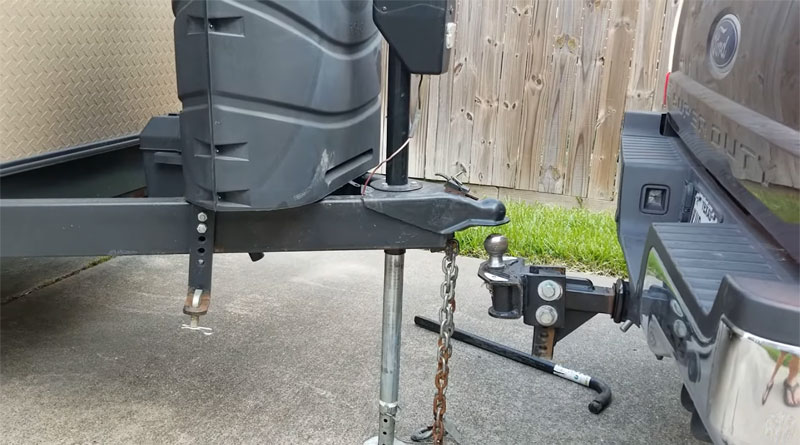
Friction Sway Bars: These are separate “mini-shocks” that connect your hitch to the trailer frame. They are effective but must be removed before backing up into a tight spot, as the sharp angle can damage the bar.
2-Point and 4-Point Systems: These hitches (like the VEVOR or CURT TruTrack) use the tension of the spring bars themselves against the trailer brackets to resist sway. These systems are superior because they do not need to be removed for reversing and offer more consistent resistance.
Shank Size and Adjustment
Most weight distribution hitches fit a standard 2-inch receiver, but if you have a heavy-duty truck with a 2.5-inch or 3-inch receiver, you will need a corresponding shank or an adapter. Additionally, look for hitches with a highly adjustable shank. A shank with multiple holes allows you to raise or lower the hitch ball to ensure your trailer is perfectly level when hitched—a level trailer is much less likely to sway than one that is “nose-up.”
Installation: Drill vs. No-Drill
Modern sway control systems often use “clamp-on” brackets that require no drilling into the trailer frame. This is highly recommended as it protects the integrity of your trailer frame and prevents potential rust points. Always check the maximum frame size the brackets can accommodate; most fit up to 6 or 7-inch frames, but some heavy-duty V-nose trailers may require wider brackets.
Ease of Hook-Up
Some systems are easier to engage than others. Hitches that include a lift-assist bar (a long metal pipe used to pry the spring bars onto the brackets) make the process much safer and less physically demanding. Systems that use chains (like the Fastway Connect) are often the easiest to adjust for tension but may provide less lateral sway resistance than rigid-bracket systems.
Noise and Maintenance
Weight distribution hitches are notoriously noisy, often producing loud metal-on-metal grinding or popping sounds during turns. If you value a quiet ride, look for hitches with integrated lubrication systems (like grease zerk fittings) or specialized friction pads that reduce noise. Remember that all hitches require some maintenance, including periodic greasing of the hitch ball and pivot points.
Compatibility with Surge Brakes
If you are towing a boat trailer or a specific type of utility trailer equipped with surge brakes, you must be careful. Many weight distribution hitches interfere with the “sliding” action required for surge brakes to engage. Look specifically for sway control systems labeled as “surge brake compatible” to ensure your trailer can still stop safely.
Brand Reputation and Warranty
A weight distribution hitch is a safety-critical component. Stick with reputable brands like CURT, Reese, Husky, or VEVOR, which have extensive histories in the towing industry. These companies provide reliable customer support and usually offer lifetime or long-term warranties on their hardware, giving you peace of mind for years of camping adventures.
Final Setup and Safety Checks
Even the best sway bars won’t work if they aren’t set up correctly. After installation, your tow vehicle should be level—not sagging in the rear or pointed upward in the front. Always re-check your hardware after the first 50 miles of towing to ensure the brackets haven’t shifted. With the right system properly dialed in, you’ll enjoy a stable, confident towing experience every time you hit the road.