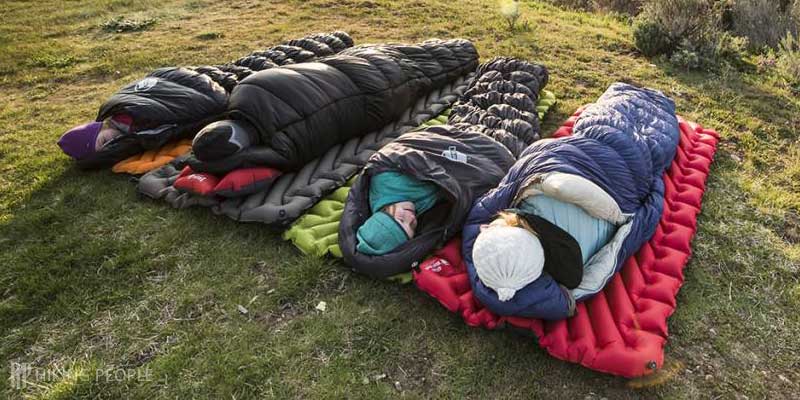
If you love camping but hate waking up sore and tired, a good sleeping pad makes all the difference. You don’t need to spend a lot to sleep well under the stars. This article rounds up the best affordable sleeping pads that are comfortable, light enough to carry, and easy on your wallet. Say goodbye to rocky ground and restless nights—here are great value pads that won’t break the bank.
1. REI Co-op Traverse Insulated

- Best Use: Backpacking
- Sleeping Pad Type: Air
- R-Value: 4.3
- Thickness: 3.5 inches
The REI Co-op Traverse Insulated air pad delivers a fantastic blend of luxurious trail comfort and lightweight performance. With a 3.5-inch thickness, it easily smooths out rough ground, making it an excellent choice for dedicated backpackers who refuse to compromise on a good night’s rest.
Boasting a 4.3 R-value, this rectangular mattress provides impressive warmth on chilly backcountry nights. It includes a repair kit and stuff sack, ensuring you are fully prepared for your outdoor adventures across multiple seasons while keeping your pack weight manageable.
Pros: Excellent thickness, high R-value, includes a repair kit.
Cons: Only available in a single-person capacity.
See the REI Co-op Traverse Insulated
2. KLYMIT Insulated Static V

- Insulation Type: Klymalite Synthetic
- R-Value: 4.4
- Fabric: 75D polyester
- Weight: 24 ounces
The Klymit Insulated Static V brings the comfort of home directly to your campsite with an innovative design. It features exclusive V-Chamber technology that limits internal air movement and dynamically conforms to your body shape while keeping you centered on the mat.
Designed for 4-season insulation, the chambers are filled with lightweight Klymalite to block the cold ground. It inflates in just 10 to 15 breaths using a simple air valve and is built from rugged 75D polyester fabric to withstand tough outdoor environments.
Pros: Four-season warmth, rapid inflation, durable fabric.
Cons: Fixed size may not suit taller campers.
See the KLYMIT Insulated Static V
3. NEMO Switchback

- Best Use: Backpacking
- Sleeping Pad Type: Closed-cell Foam
- R-Value: 2
- Thickness: 0.9 inches
The NEMO Switchback showcases the best attributes of a classic closed-cell foam design. It is remarkably lightweight, rugged, and versatile, making it a reliable option for backcountry minimalist travelers who prioritize quick setup and absolute durability over thick cushioning.
This rectangular pad features an integrated heat-reflecting film that prevents ground chill from creeping through during cooler weather. Available in short and regular sizes, it offers a dependable, puncture-proof sleep surface that can easily double as a camp seat during breaks.
Pros: Ultra-lightweight, puncture-proof, versatile design.
Cons: Low thickness and modest R-value.
4. Coleman Silver Springs

- Best Use: Camping
- Sleeping Pad Type: Self-inflating
- R-Value: 5
- Weight: 5 pounds
The Coleman Silver Springs camping pad is a sure bet for a cozy night inside your tent, especially if you tend to run cold. Built with soft, insulating synthetic foam, this self-inflating mattress provides a plush and stable barrier against the hard ground.
With an impressive R-value of 5, it excels at keeping the chill away on cold autumn or winter nights. While its 5-pound weight makes it less suitable for hiking, it serves as a comfortable, easy-to-use choice for traditional car camping setups.
Pros: High R-value, easy self-inflation, plush comfort.
Cons: Heavy and bulky to transport.
See the Coleman Silver Springs
5. OGERY Self-Inflating Sleeping Pad

- Thickness: 3 inches
- Dimensions: 77 x 27 x 3 inches
- Fabric: Abrasion-resistant nylon
- Inflation: Self-inflating with foot pump
The OGERY sleeping pad upgrades outdoor rest by featuring a supportive hybrid foam-and-air structure. This 3-inch thick mattress eliminates the bouncy feel of traditional air beds, providing side, back, and stomach sleepers with stable pressure relief on their shoulders and hips.
Equipped with an integrated foot pump for fine-tuning firmness, this quiet mat avoids loud crinkling sounds. It has a textured, non-slip base that prevents shifting on tent floors, making it a rugged and well-insulated option for car camping or road trips.
Pros: Stable hybrid structure, integrated foot pump, quiet fabric.
Cons: Not suitable for ultralight backpacking.
See the OGERY Self-Inflating Sleeping Pad
6. Klymit Static V BASE

- Best Use: Backpacking and Camping
- R-Value: 1.3
- Weight: 1 pound 2.1 ounces
- Packed Size: 3 x 8 inches
The Klymit Static V BASE is a rugged and light air pad engineered to keep you comfortable when traveling fast. It utilizes an ergonomic V-chamber design that delivers proper body support while managing to pack down to a remarkably compact size in your backpack.
This single-person mattress inflates quickly with just 10 to 15 breaths and comes equipped with a handy repair kit and stuff sack. With an R-value of 1.3, it is optimized as a lightweight option for warm, summer-season outdoor excursions.
Pros: Lightweight, highly compact packed size, fast inflation.
Cons: Low R-value limits it to summer use.
7. Klymit Klymaloft BASE

- Sleeping Pad Type: Air
- R-Value: 1.6
- Thickness: 3.5 inches
- Weight: 1 pound 8 ounces
The Klymit Klymaloft BASE ensures you never have to compromise on a great night of sleep while exploring nature. Featuring specialized I-beam baffles, this air pad creates a plush loft alongside stable internal air chambers that gently cradle your body all night.
At 3.5 inches thick, it offers a generous cushion against rough roots and rocky terrain. The high-performance valve allows for effortless inflation and deflation, making it a reliable choice for both backpacking and general camping trips in mild conditions.
Pros: Generous thickness, stable I-beam baffles, easy valve operation.
Cons: R-value is low for cold weather.
8. FUN PAC Camping Sleeping Pad
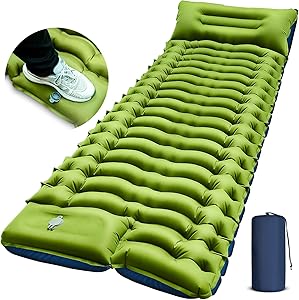
- Dimensions: 78 x 27 x 8 inches
- Material: 40D Nylon and TPU
- Inflation Time: 30-60 seconds
- Design: Egg-shaped air cells with built-in pillow
The FUN PAC sleeping pad offers an extra-wide and thick sleep surface featuring innovative egg-shaped air cells. These specialized cells, along with a built-in pillow, work together to alleviate back and neck pressure whether you sleep on your back or your side.
Crafted from hard-wearing 40D nylon and TPU, it includes an integrated pump for fast inflation and side buttons to connect a second pad. It packs down to the size of a water bottle, making it an incredibly portable option for hiking and climbing.
Pros: Includes built-in pillow, fast integrated inflation, connectable sides.
Cons: Listed dimensions show unusual thickness ratios.
See the FUN PAC Camping Sleeping Pad
9. Klymit Static V SUMMIT

- Insulated: Yes (Synthetic)
- R-Value: 2.4
- Shape: Rectangular
- Included: Repair kit and stuff sack
The Klymit Static V SUMMIT is designed to keep outdoor enthusiasts warm and cozy during cold-weather adventures. Featuring advanced synthetic insulation, this rugged air pad acts as an efficient thermal barrier against chilly ground temperatures throughout your winter backpacking journeys.
This mattress is engineered with dynamic side rails that help keep you safely centered on the pad all night. Available in both regular and roomy XL sizes, it includes its own repair kit and stuff sack for added peace of mind on the trail.
Pros: Features insulation, side rails keep you centered, multiple sizes.
Cons: Moderate R-value for true winter conditions.
See the Klymit Static V SUMMIT
10. Andola Self-Inflating Sleeping Pad

- Fabric: 60D stretch knit fabric
- R-Value: Up to 9.5
- Thickness: 3 inches
- Inflation: 30-second rapid self-inflation
The Andola sleeping pad brings premium comfort to your outdoor adventures with high-density memory foam and a noiseless 60D stretch knit fabric. This breathable, tear-resistant mat is tested to withstand heavy pressure without leaking, keeping you elevated off the cold ground.
Featuring an upgraded dual-layer valve system, it self-inflates rapidly in about 30 seconds and deflates efficiently without letting air back inside. With a remarkable R-value reaching up to 9.5, it provides outstanding thermal insulation for extreme autumn and winter camping.
Pros: Extremely high R-value, noiseless stretch fabric, rapid expansion.
Cons: First inflation is slower due to vacuum packaging.
See the Andola Self-Inflating Sleeping Pad
How to Budget for Your Perfect Sleeping Pad
Planning an outdoor adventure involves a lot of gear decisions, but few impact your well-being as directly as your sleeping pad. A good pad does more than cushion your body from rocks and roots; it acts as a critical thermal barrier against the freezing ground. However, with options ranging from basic foam mats to high-tech insulated air mattresses, prices vary wildly. Budgeting for a sleeping pad requires a balance between cost, comfort, and the specific demands of your outdoor activities.
Understanding the Types of Sleeping Pads
To create a realistic budget, you must first understand the three primary categories of sleeping pads available on the market. Each type offers a distinct balance of price, weight, packability, and comfort.
Closed-Cell Foam (CCF) Pads
Closed-cell foam pad ia the cheapest option available. Made from dense foam filled with tiny, closed air bubbles, these pads are virtually indestructible. They cannot puncture, leak, or pop, making them incredibly reliable in rugged environments. On the downside, they are bulky, difficult to pack inside a backpack, and offer minimal cushioning for side sleepers. Price-wise, they are highly accessible, usually ranging from $20 to $60.
Self-Inflating Foam Pads
Self-inflating pads offer a middle ground in terms of price and comfort. They utilize a combination of open-cell foam and air. When you open the valve, the foam expands and automatically draws air into the pad. You typically only need a few extra breaths to achieve your desired firmness. These pads provide excellent support and good insulation, but they are heavier and bulkier than standard air pads. Expect to spend between $60 and $150 for a quality self-inflating model.
Air Pads
Air pads represent the premium segment of the market. They rely entirely on air pressure for support and often include internal baffles, reflective films, or synthetic insulation to keep you warm. They pack down to the size of a water bottle and offer the most cushioning, which is ideal for side sleepers. However, they are susceptible to punctures and can be noisy when you toss and turn. High-quality air pads generally cost anywhere from $100 to over $250.
Decoding R-Value and Warmth Requirements
One of the biggest mistakes buyers make is underestimating the importance of a pad’s R-value. The R-value measures a sleeping pad’s capacity to resist heat loss to the ground. The higher the number, the warmer the pad will keep you.
When budgeting, matching the R-value to your camping season can save you from overspending on insulation you don’t need, or conversely, freezing on a cheap summer pad. For warm summer camping, an R-value between 1.0 and 2.5 is sufficient. For three-season use (spring, summer, and autumn), look for an R-value between 3.0 and 4.5. If you plan to camp in winter conditions or on snow, you will need an insulated pad with an R-value of 5.0 or higher. Insulated pads cost more to manufacture, so expect to pay a premium for higher R-values.
Key Trade-Offs: Weight vs. Comfort vs. Price
When finalizing your budget, you will face the classic gear dilemma: you can rarely have a pad that is ultra-lightweight, incredibly comfortable, and cheap all at the same time. You must prioritize based on your style of camping.
Car Camping Priorities
If you primarily camp next to your vehicle, weight and packed size do not matter. You can allocate your budget toward maximum thickness, width, and comfort. Heavy, thick self-inflating pads or oversized air mattresses give you the best value for your money here, offering luxury comfort at a reasonable price point.
Backpacking Priorities
When carrying everything on your back, weight and packability become critical. Lightweight materials and compact designs require advanced engineering, which drives up the price. If you have a tight budget for backpacking, you may need to sacrifice some comfort by opting for a lightweight foam pad, or accept a bit of extra weight by choosing a entry-level, heavier air pad.
Smart Strategies to Save Money
You do not always have to pay full retail price to get a high-quality sleeping pad. Implementing a few strategic buying habits can stretch your budget significantly further.
Shop the Off-Season and Sales
Outdoor gear retailers frequently discount inventory during major holiday sales, such as Memorial Day, Labor Day, and Black Friday. Additionally, shopping for winter gear in the spring or summer gear in the autumn can yield substantial clearance discounts as stores clear space for new seasonal arrivals.
Consider Used Gear and Outlets
Many reputable outdoor retailers feature online outlet stores or used gear platforms where they sell returned items, floor models, or previous-season gear at a fraction of the original cost. Because sleeping pads can be easily wiped down and tested for leaks, buying a certified used pad is an excellent way to score a premium model on a limited budget.
Utilize Multi-Purpose Gear Styling
If you need a winter-ready sleeping system but cannot afford a premium high-R-value air pad, consider stacking your gear. You can place a cheap closed-cell foam pad underneath a moderate three-season air pad. Combining the R-values of both pads creates a warm, insulated winter sleep system for a fraction of the cost of buying a dedicated winter air mattress.
Long-Term Maintenance Protects Your Investment
A sleeping pad is only a good value if it lasts for multiple seasons. Protecting your investment through proper care eliminates the need for premature, costly replacements.
Always clear your tent site of sharp sticks, pine needles, and rocks before setting up your sleep system. When storing your pad at home, leave self-inflating and air pads unrolled with the valves open in a dry place; storing them tightly compressed can degrade the internal foam or trap moisture inside from your breath, leading to mold. Finally, always carry a patch kit on your trips. A tiny puncture does not mean the pad is ruined, and a quick field repair can save both your trip and your wallet.
Summary of Budgeting Allocations
To conclude your planning, categorize your budget into realistic expectations based on your needs. A budget of under $50 is perfect for minimalist backpackers, festival-goers, or summer car campers using simple closed-cell foam. A mid-range budget of $50 to $120 serves general three-season campers well, offering a solid variety of reliable self-inflating options and entry-level air pads. A premium budget of $120 and above is necessary for dedicated ultralight backpackers, side sleepers demanding thick cushioning, or extreme cold-weather winter adventurers.